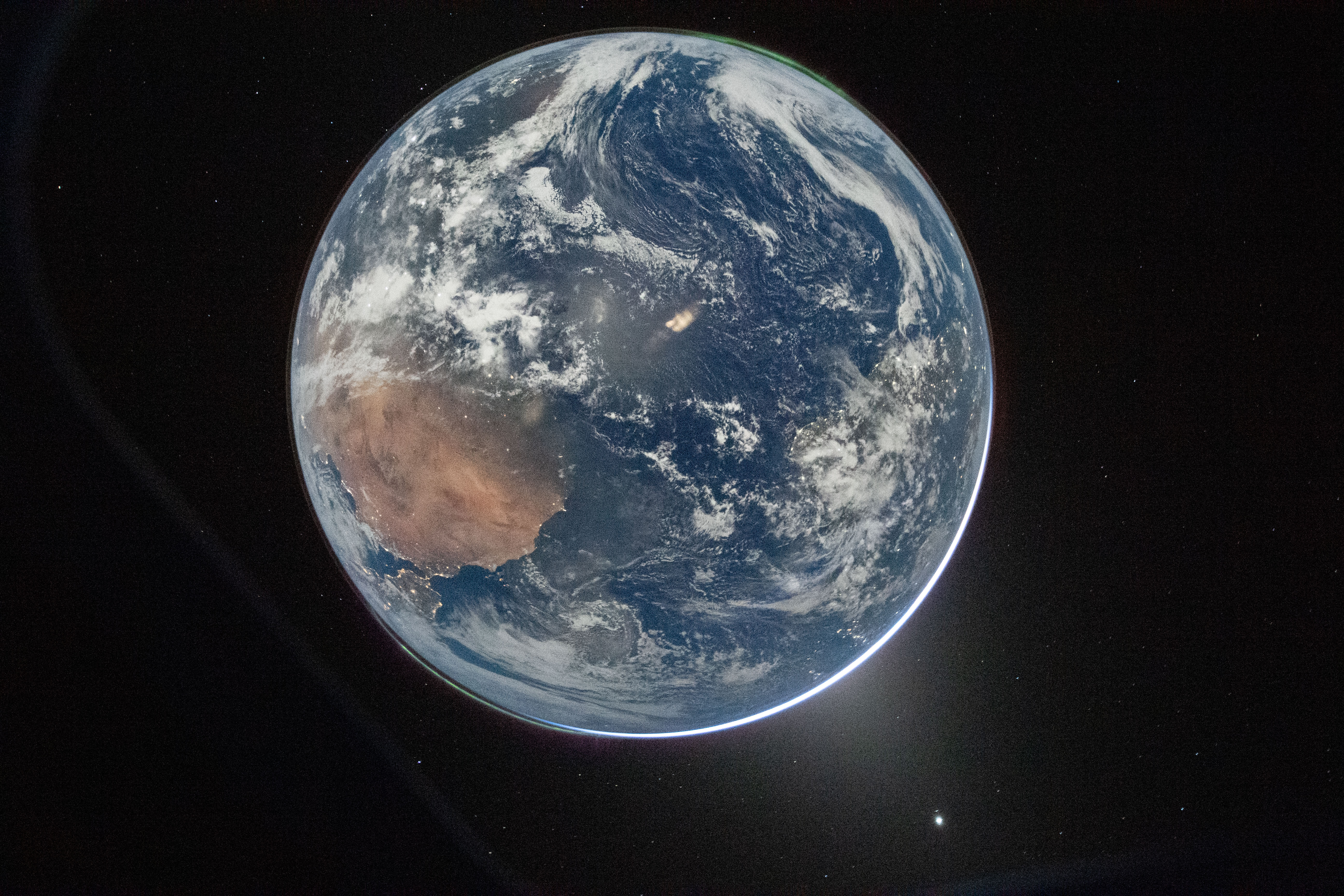
NASA released a photograph last week that stopped people mid-scroll. Earth, suspended in the black void, shot from the Orion spacecraft during the Artemis I mission. The image was captured on a Nikon D5, a workhorse DSLR that served the mission well. But for Artemis II and beyond, the agency is upgrading to the Nikon Z9, a mirrorless camera capable of 45.7 megapixels and 8K video recording.
The Case for Resolution
Space agencies have long understood that public support is the oxygen that keeps exploration alive. The Apollo program's most enduring legacy isn't the geological samples or the experiments left on the lunar surface. It's Earthrise. It's the bootprint. It's the images that landed in magazines and classrooms and shaped how an entire generation thought about our place in the cosmos.
The Nikon Z9's presence on Artemis II reflects a deliberate choice to maximize that cultural impact. Higher resolution means more than sharper edges. It means scientists can zoom into specific regions of a photograph for analysis. It means educators can project images on auditorium screens without losing detail. It means a teenager in Lagos or Lima can download the raw file and explore the lunar horizon pixel by pixel.
Mars Demands More
If resolution matters for the Moon, it becomes essential for Mars. A crewed mission to the red planet will take months each way. The landing sites, the terrain, the atmospheric phenomena will all be genuinely alien in ways that the Moon never was. Rust-colored dust storms spanning continents. Olympus Mons dwarfing anything on Earth. The Valles Marineris stretching wider than the United States.
Capturing these scenes with equipment that does them justice isn't a luxury. It's how you convince taxpayers that the expense was worth it. It's how you recruit the next generation of engineers and astronauts. The difference between a grainy video feed and 8K cinema-quality footage from the Martian surface could determine whether a Mars program survives its first budget review.
Entertainment as Infrastructure
There's a tendency in technical circles to treat public outreach as secondary to the real work. This misses the point. NASA's ability to conduct the real work depends entirely on sustained political and financial support. That support flows from public enthusiasm. And public enthusiasm responds to imagery that moves people emotionally.
The James Webb Space Telescope understood this. Its first images were released with the fanfare of a Hollywood premiere, and they deserved it. Pillars of gas illuminated by newborn stars. Galaxies colliding in slow motion across millions of years. Each photograph was both scientific data and cultural artifact.
The Artemis program's imaging choices follow the same logic. When astronauts return to the Moon and eventually travel to Mars, the cameras they carry will shape how humanity remembers these journeys. The sensor technology and optics matter because the stories we tell about space exploration depend on what we're able to show.
That Earth photograph from Artemis I? It worked. People shared it, talked about it, felt something looking at it. The Z9 will do more of that, better. And when the first human steps onto Mars, the camera watching will matter almost as much as the boot hitting the ground.