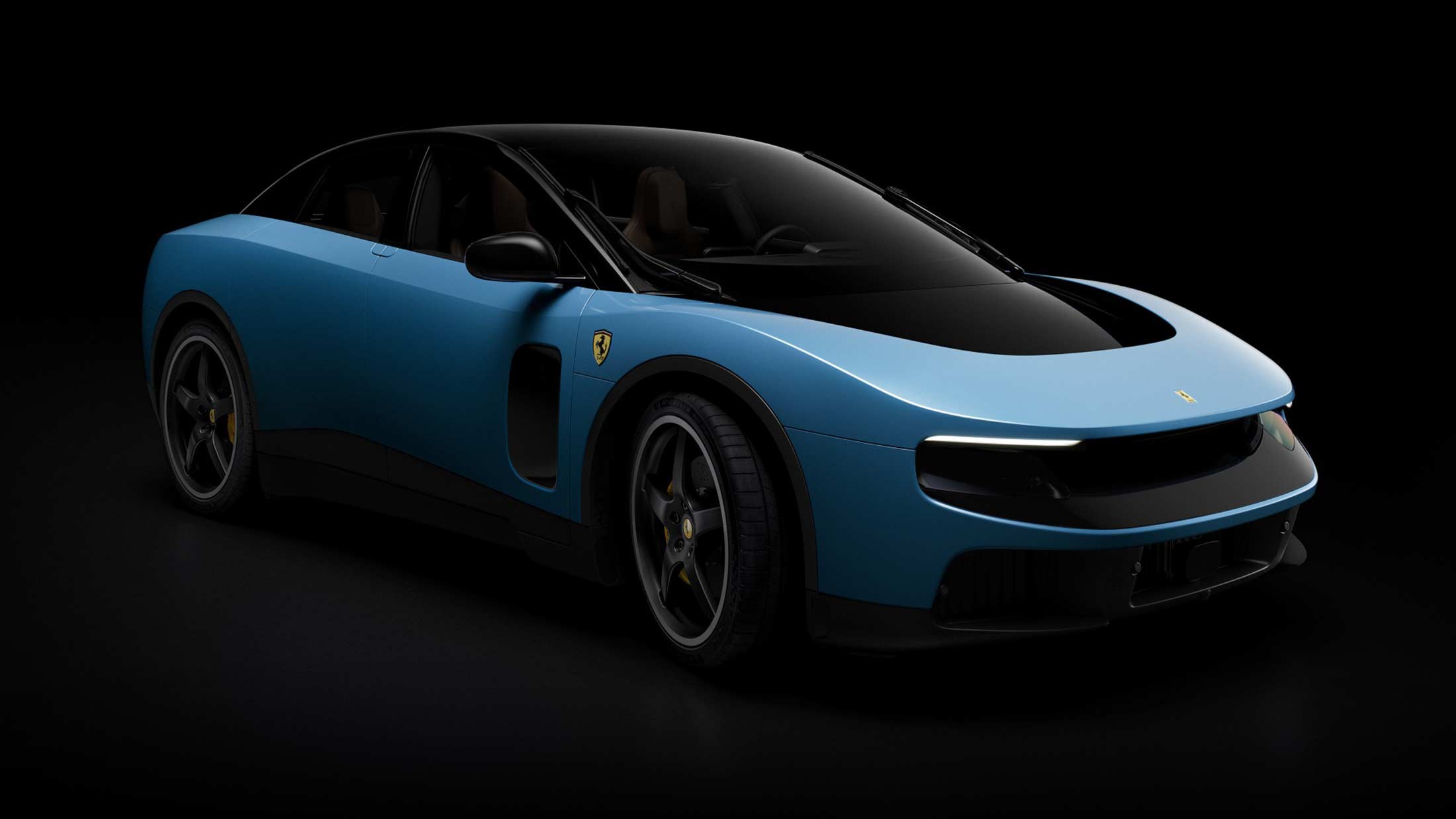
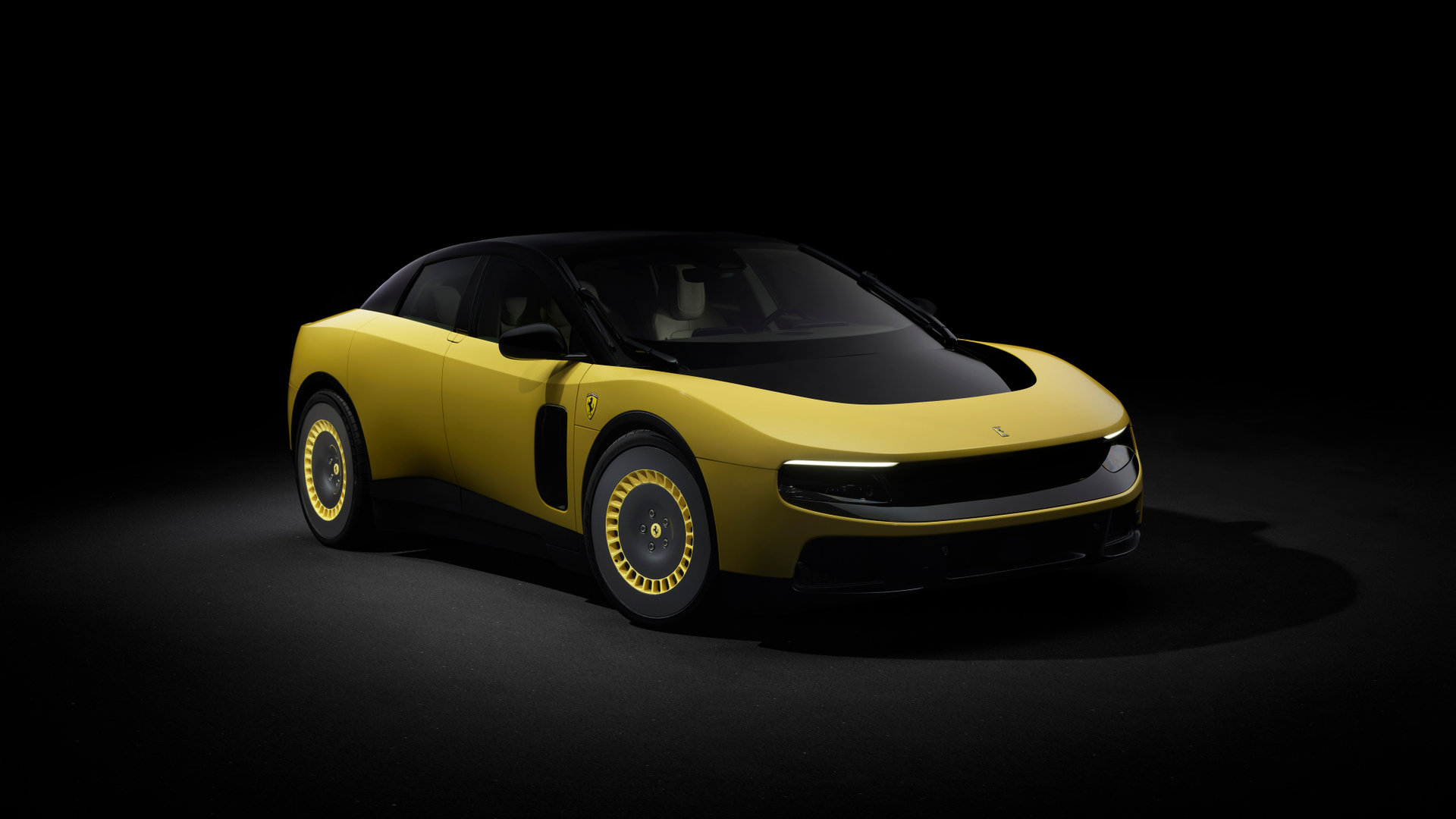
Ferrari unveiled its first electric vehicle today in Rome, bringing to a close a five-year secret collaboration with LoveFrom, the design collective led by Sir Jony Ive and Marc Newson. The Luce, Italian for "light," represents Maranello's most consequential product decision in decades.
The numbers tell part of the story. Four electric motors, one at each wheel, produce a combined 1,035 horsepower and 730 pound-feet of torque. The rear pair contribute 416 horsepower each while the front motors add 141 horsepower apiece. Ferrari claims a 2.5-second sprint to 62 mph and a top speed of 193 mph. A 122 kWh battery pack developed with SK On provides an estimated 530 kilometers (329 miles) of WLTP range. Charging tops out at 350 kW.
The architecture is bespoke: an 880-volt platform built specifically for this car. Weight distribution sits at 47:53 front-to-rear, and the vehicle tips the scales at roughly 4,982 pounds, making it the heaviest road car Ferrari has produced.
The Anti-Touchscreen Manifesto
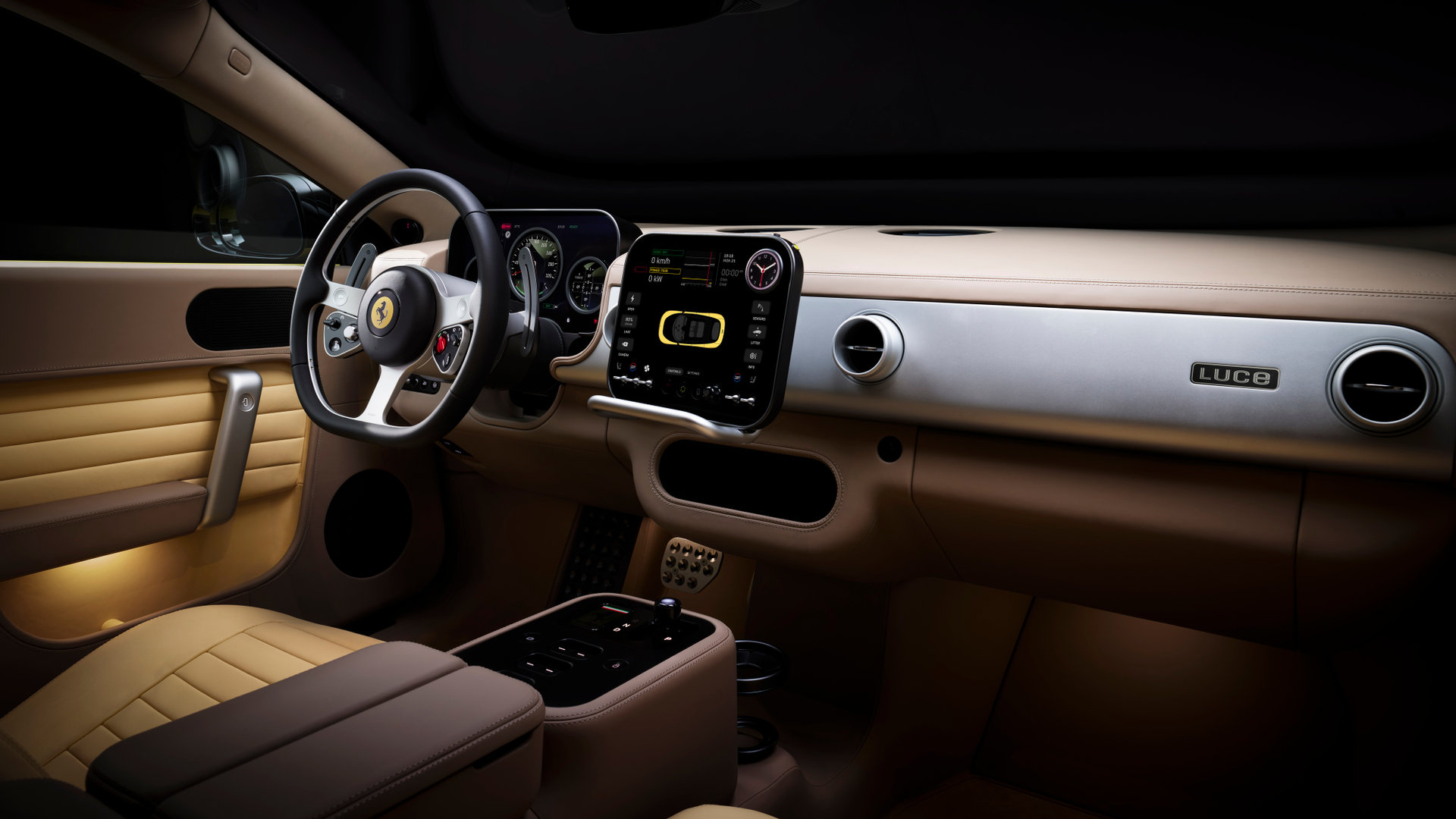
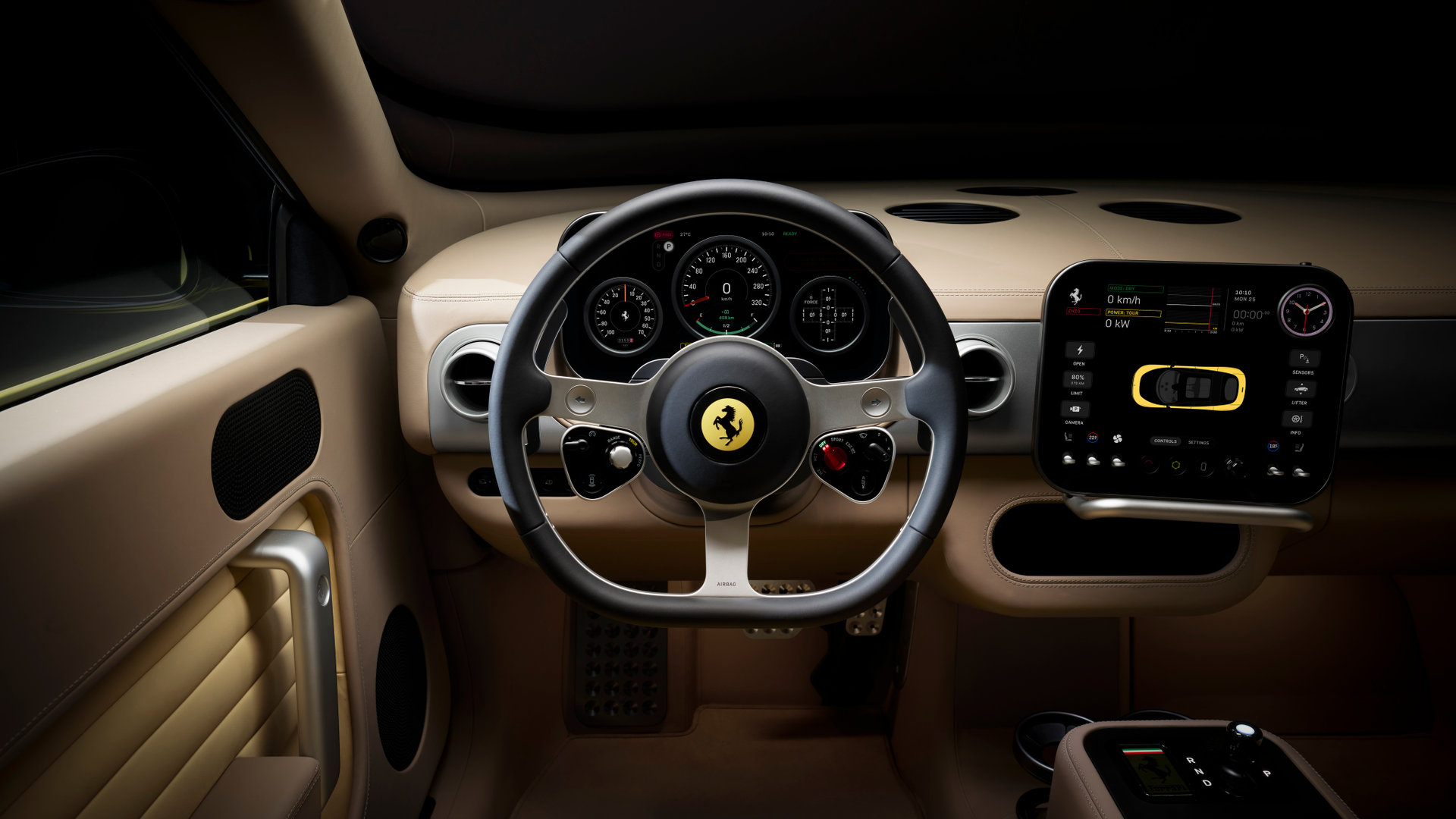
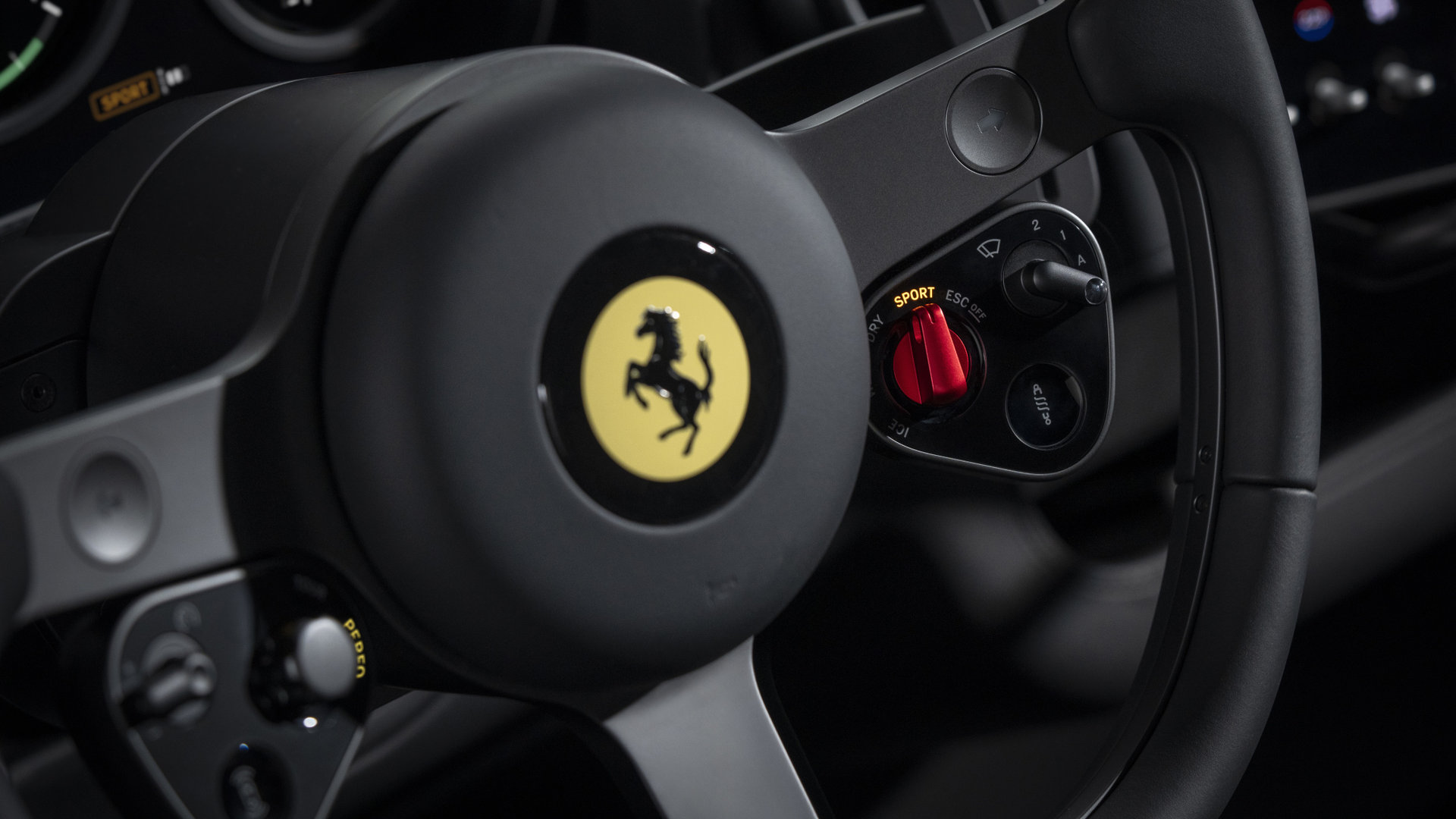
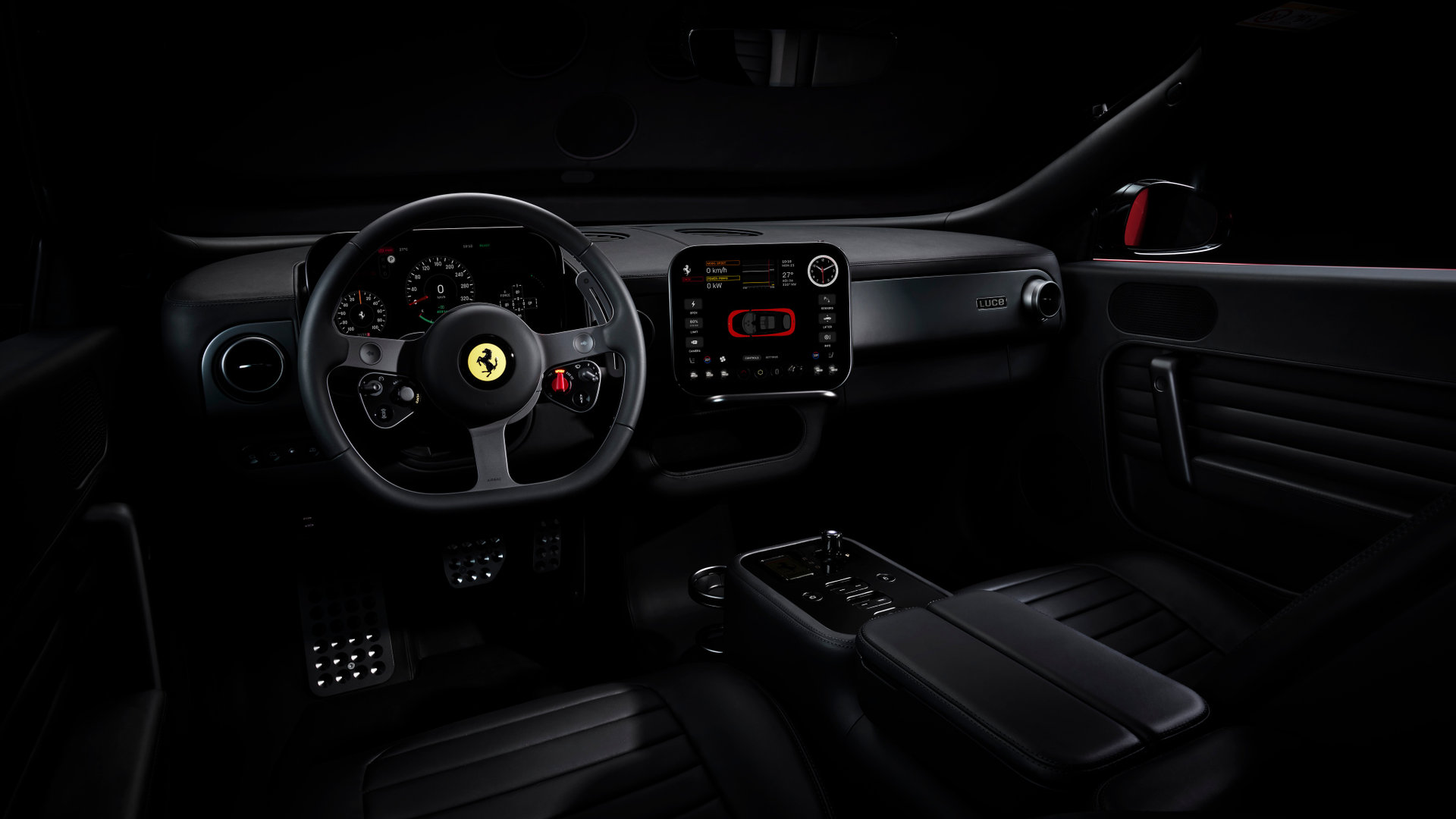
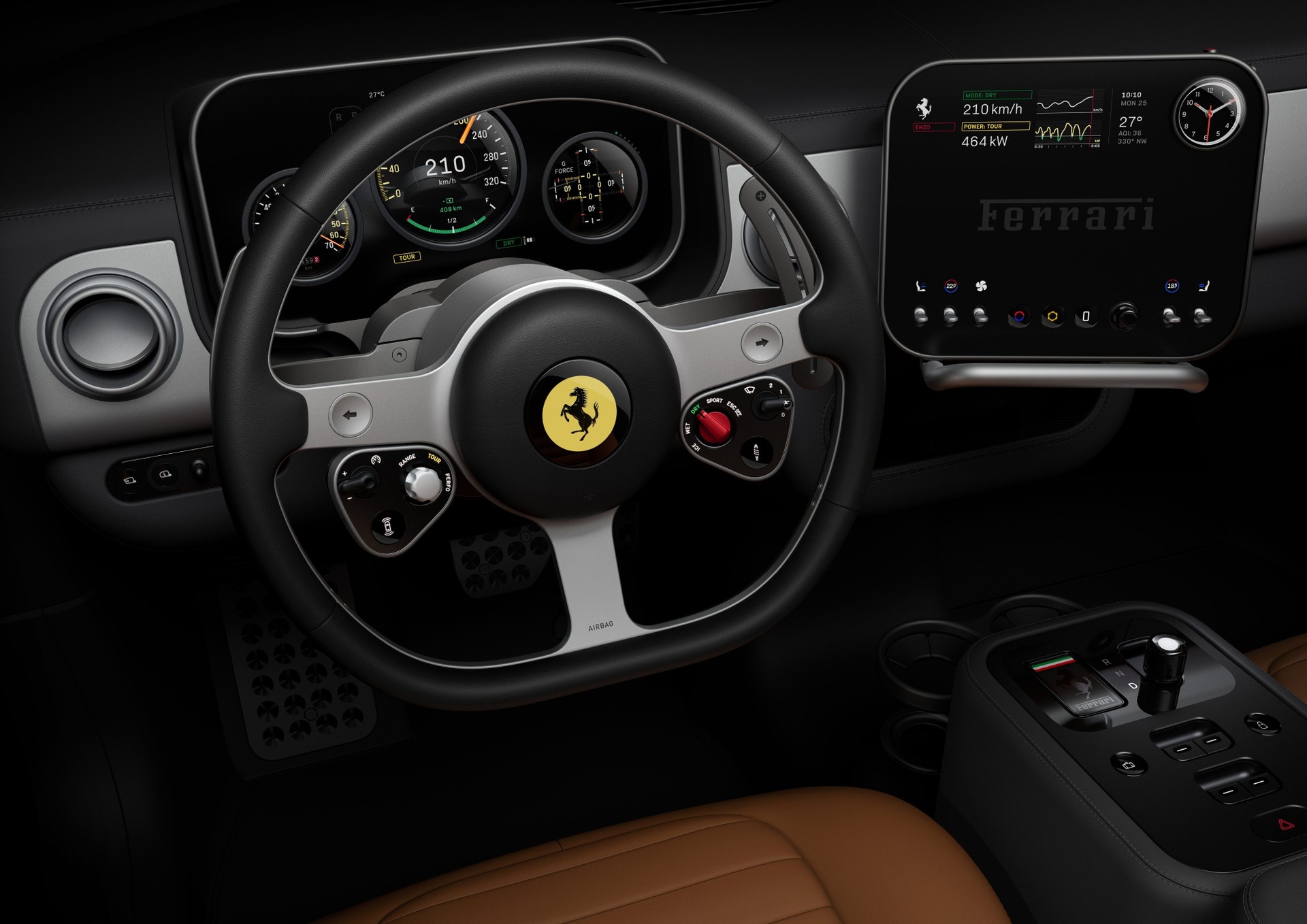
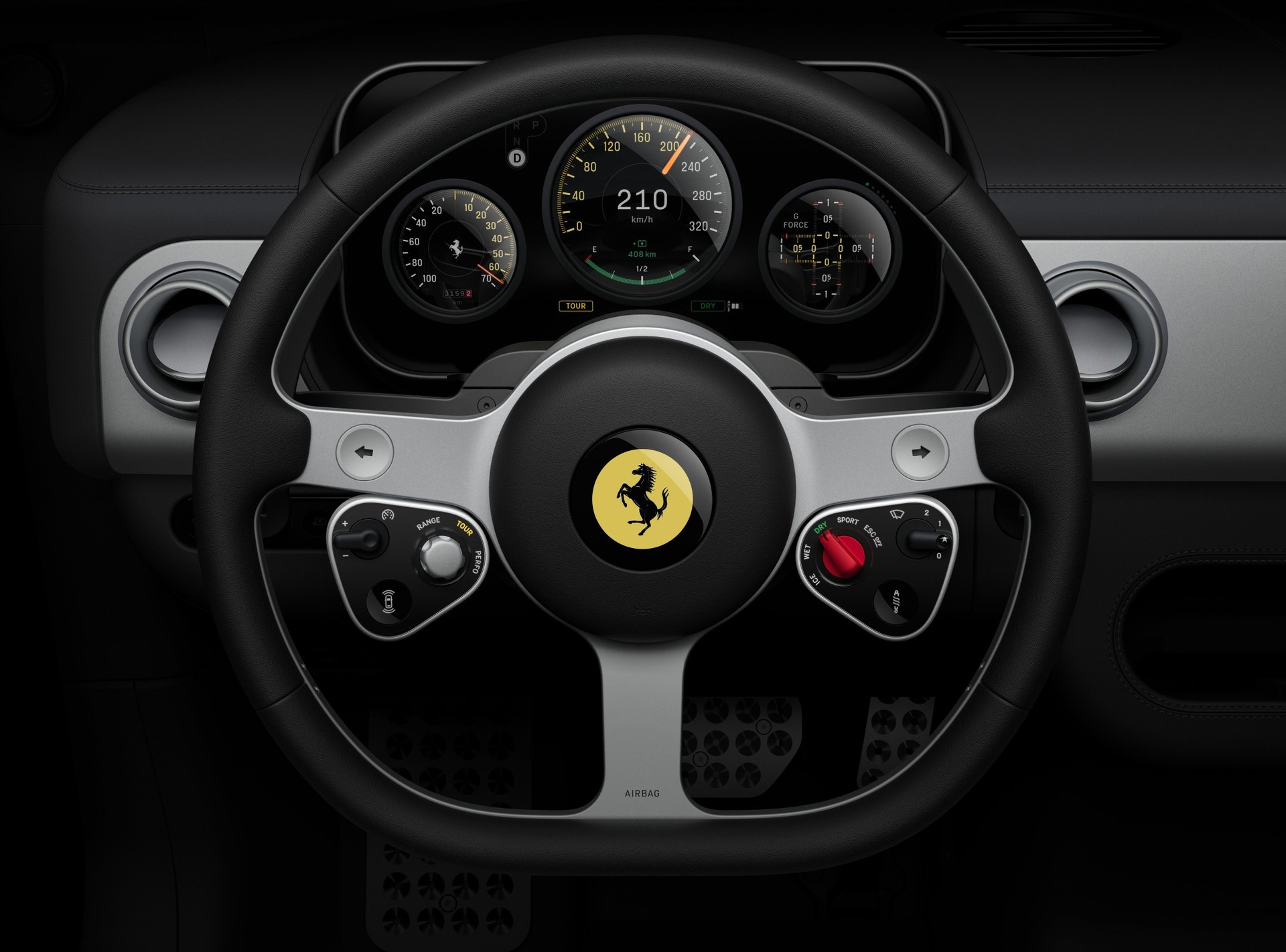
What sets the Luce apart is its cabin philosophy. In a deliberate rejection of the industry's screen-dominated interiors, LoveFrom designed an environment dominated by CNC-machined recycled aluminum buttons, toggles, and dials. The design team worked with Ferrari's Centro Stile under Flavio Manzoni to create what they describe as "mechanical and precisely engineered" controls that prioritize tactile interaction.
A glass key fob with an E Ink display fades from yellow to black when docked in the center console. Launch control lives on an aviation-style toggle switch in the overhead console. The instrument panel is mounted to the steering column, moving with the wheel, and combines analog elements with overlapping OLED displays developed by Samsung. Even the steering wheel, a three-spoke design made from recycled aluminum, was constructed from 19 separate CNC-machined components.
Ive reportedly described the team as "enormously excited, completely terrified, but also honoured" at the project's scope. Newson called Ferrari "by far and away the best partner we could have."
A Radical Shape
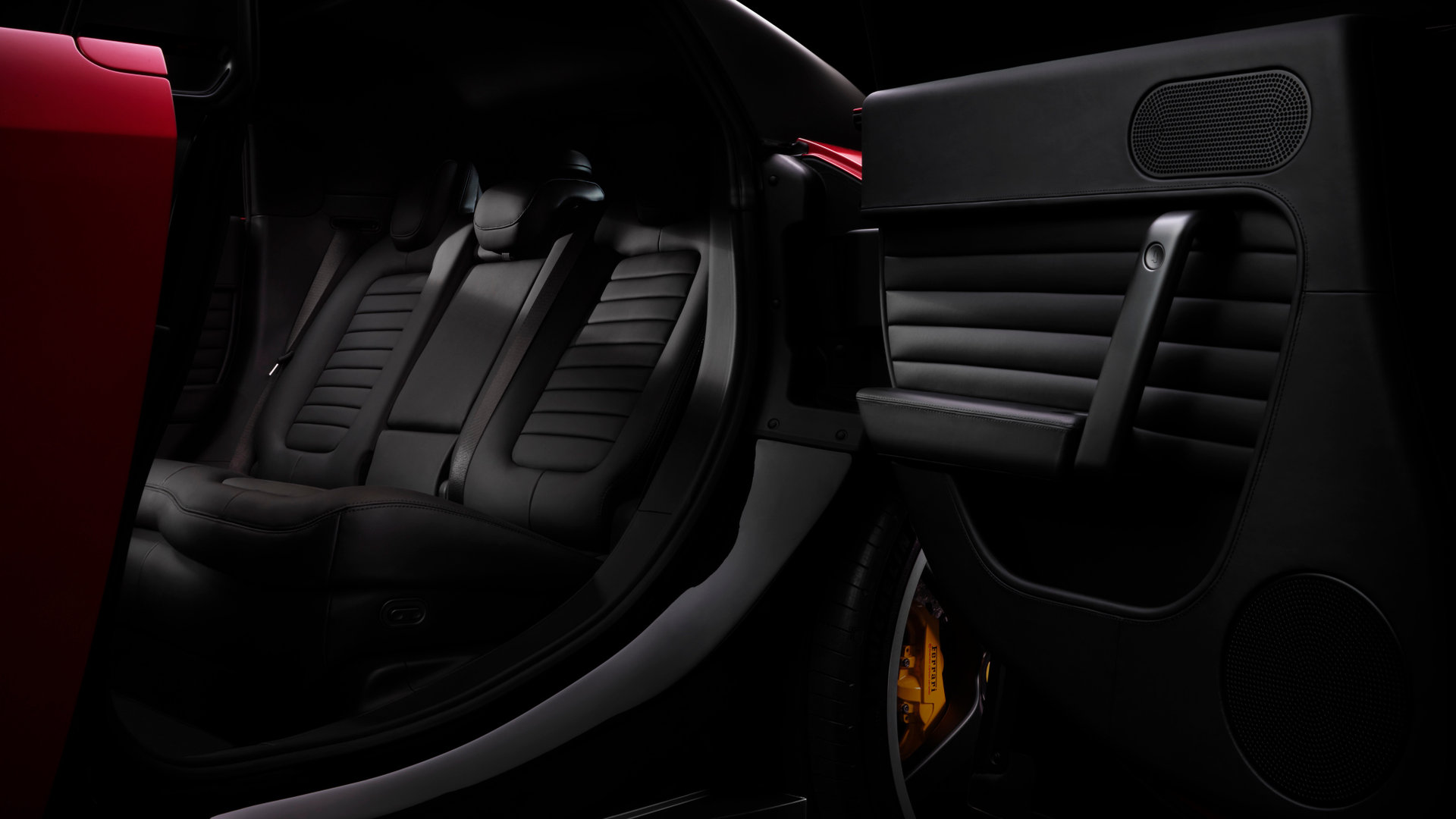
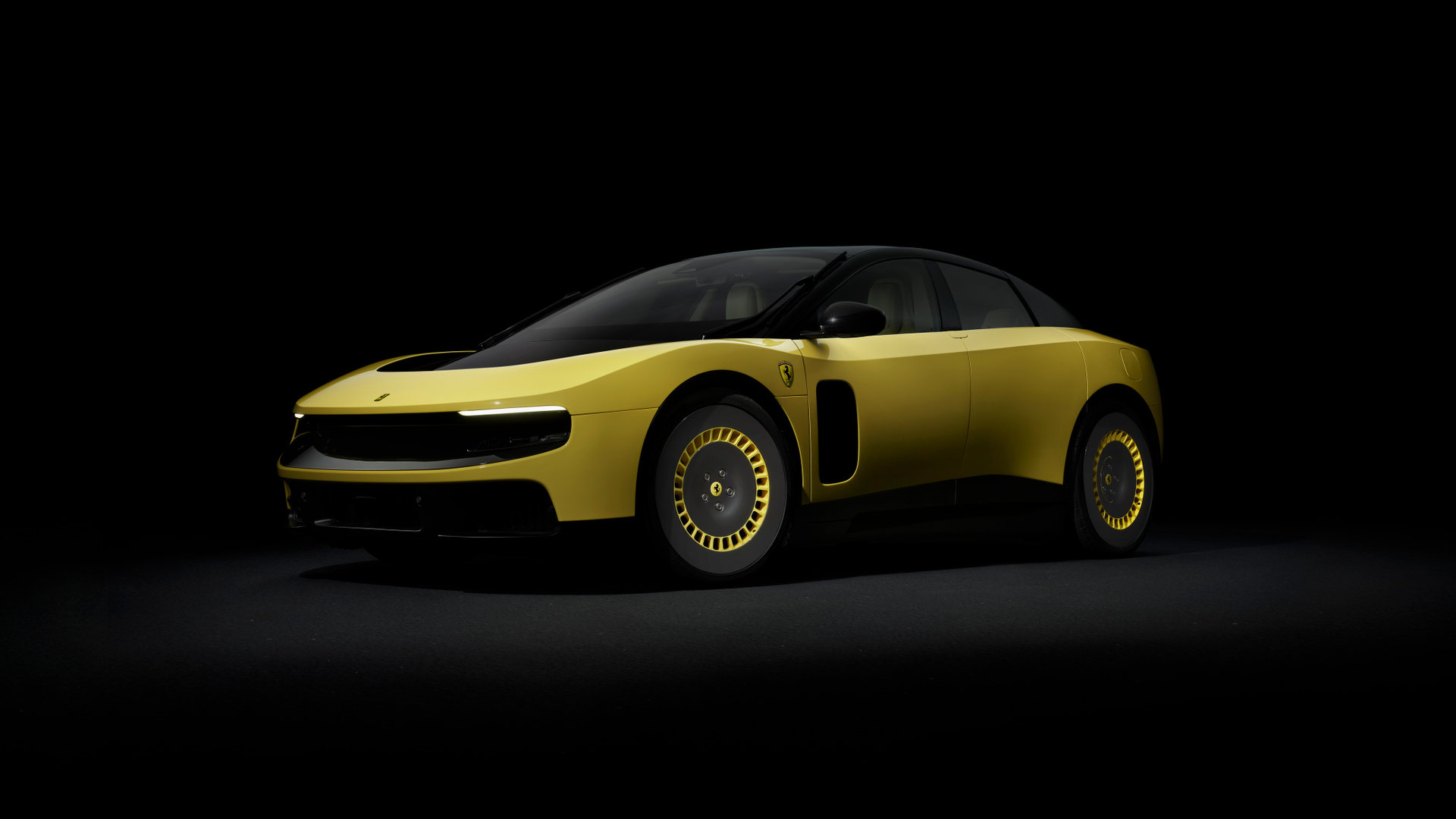
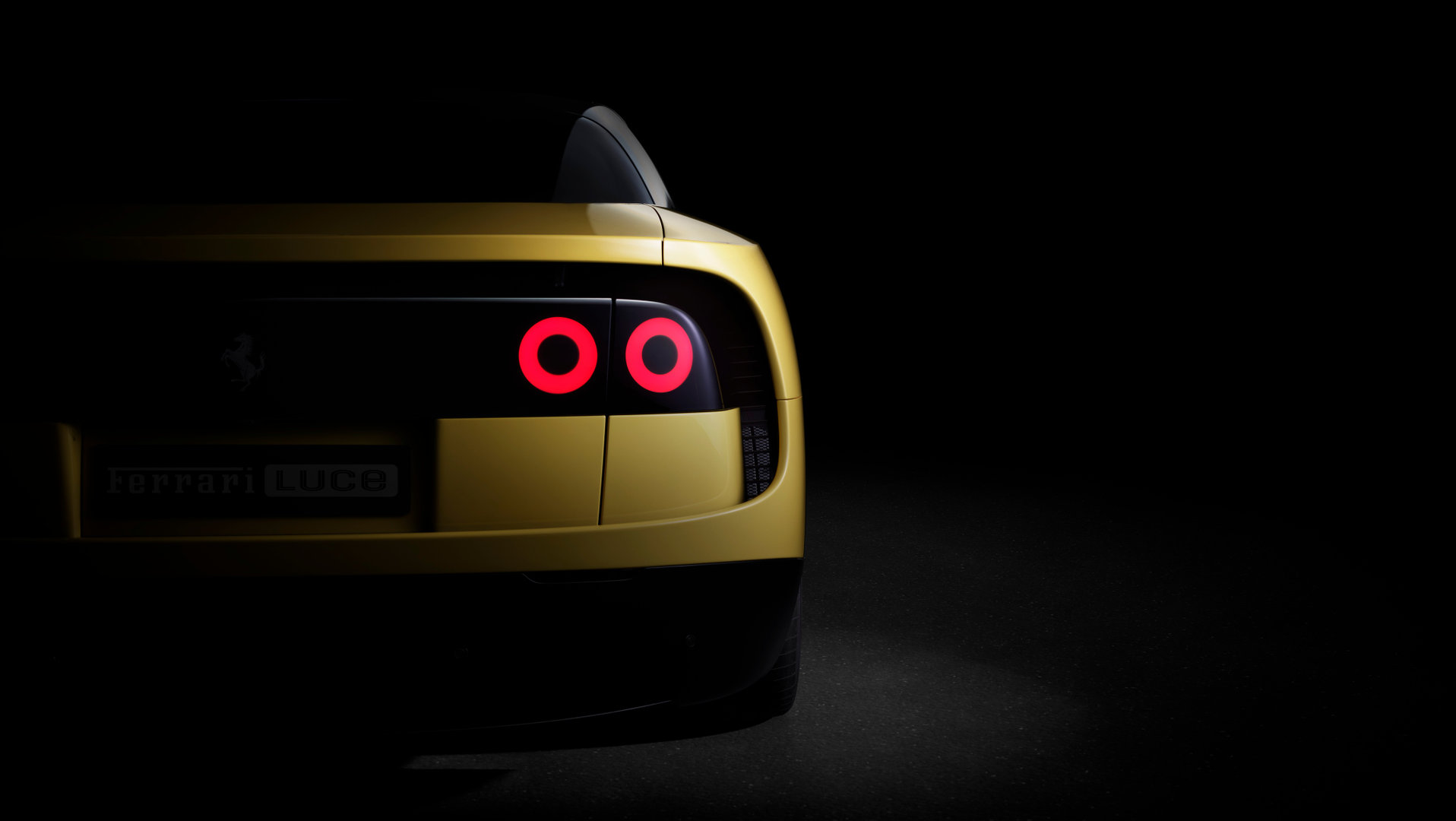
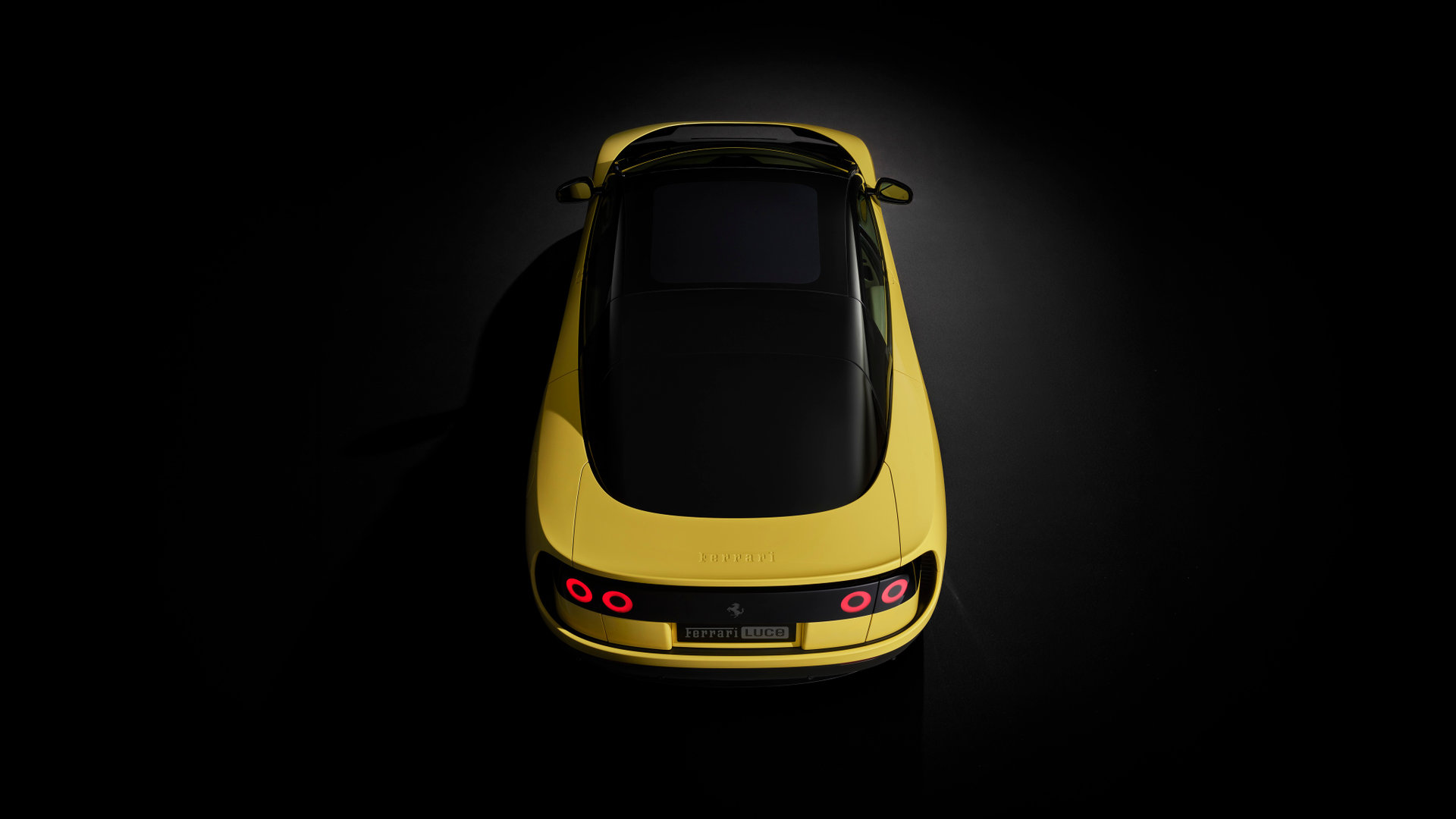
The exterior abandons traditional Ferrari proportions. The silhouette has been described as somewhere between a shooting brake, a wagon, and a sedan. Floating front and rear aerodynamic wings define the form, which Ferrari says was shaped around aerodynamic performance before styling. The Luce seats five, a first for the brand, enabled by an electric architecture that eliminates the longitudinal engine and transaxle gearbox that prevented a fifth seat in vehicles like the Purosangue and GTC4Lusso. Rear coach doors, similar to those on the Purosangue, open to allow access to the back seats.
The wheels are the largest ever fitted to a road-going Ferrari: 23 inches in front, 24 in the rear.
The Sound Problem
Rather than synthesizing fake engine noise, Ferrari fitted an acoustic pickup to the rear axle that captures vibrations from the electric motors. That signal is amplified and broadcast through the cabin, creating what Ferrari describes as an authentic sound that doesn't pretend to be something it isn't. The company compared the approach to an electric guitar's amplifier.
Pricing starts at €550,000 in Italy, approximately $640,000 at current exchange rates. That makes the Luce the most expensive series production Ferrari outside the F80 hypercar, positioned well above the $430,000 Purosangue. First deliveries are scheduled for October 2026.
The Luce represents the boldest strategic wager Ferrari has made since the company decided to build an SUV at all. Whether wealthy buyers accustomed to naturally aspirated V12s will pay a premium for battery-powered performance remains an open question. But with EV policy and emissions regulations tightening globally, the company had limited time to answer it. Assembly will take place at Ferrari's new E-Building facility in Maranello.