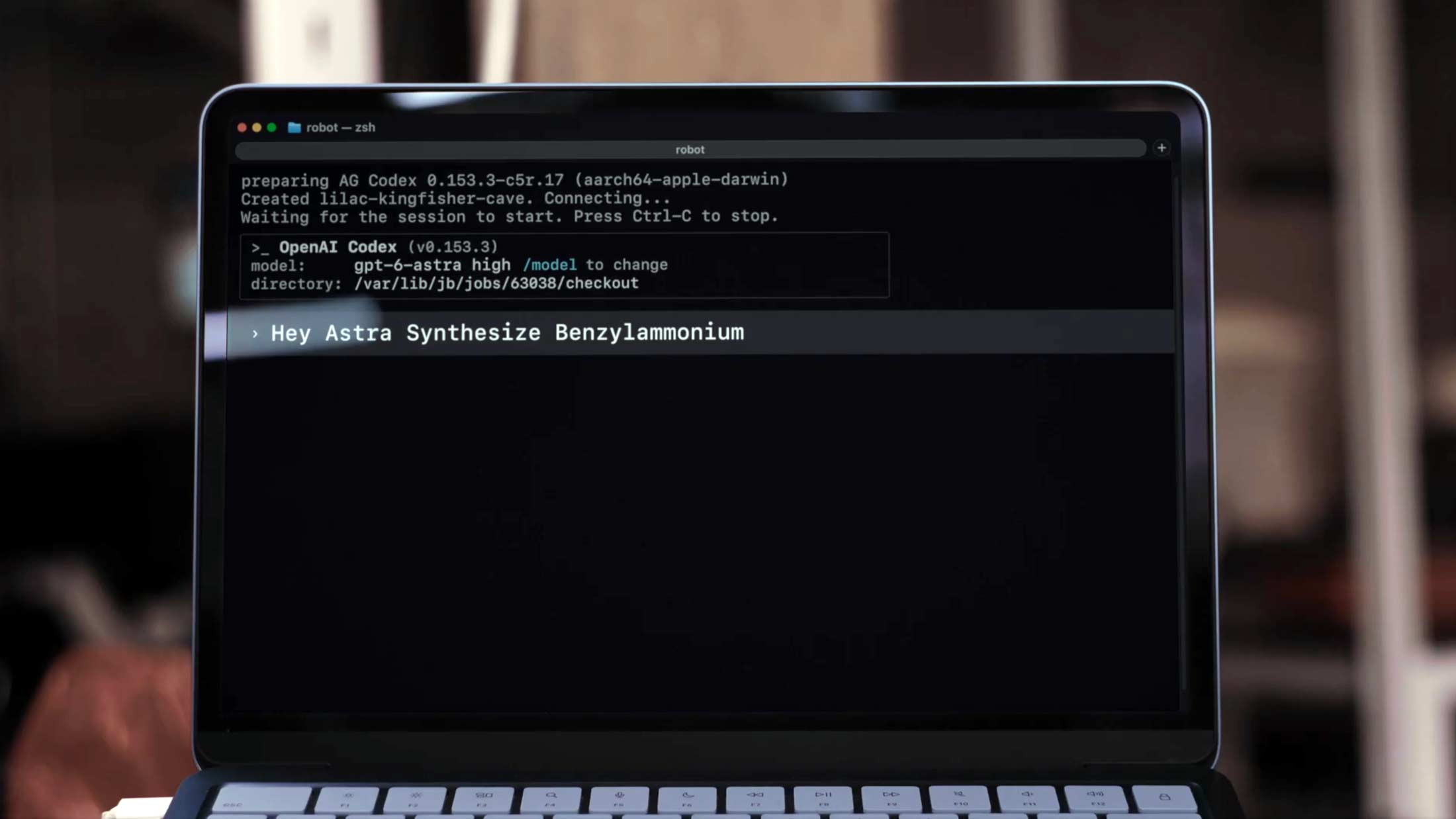
Palantir dropped a teaser on social media this week that reads less like marketing and more like a thesis statement: AI has solved software creation. The next frontier is distribution.
The post, accompanied by the tagline "Apollo provides the Ontology Primitives for Software Distribution," names five verbs: Deploy. Patch. Rollback. Validate. Govern. Then the kicker: "AI-native velocity with human accountability."
The framing is deliberate. Palantir has spent years positioning Apollo as its continuous delivery backbone, and the company is now making a bigger bet. The implicit argument is that as AI systems generate code at unprecedented speed, the real bottleneck shifts downstream. Writing software is increasingly trivial. Getting it deployed safely, across heterogeneous environments, under strict compliance regimes, with rollback capability and auditability? That remains brutally hard.
AI solved software creation.
— Palantir (@PalantirTech) May 26, 2026
Now comes software distribution.
The future will not run on blind deployment pipelines.
Apollo provides the Ontology Primitives for Software Distribution. Deploy. Patch. Rollback. Validate. Govern.
AI-native velocity with human accountability. pic.twitter.com/d9tPCVjbU9
Apollo's Origin Story
Apollo started as Palantir's internal deployment engine, the infrastructure that manages upgrades, security patches, and configuration changes across the company's own products. According to Palantir's documentation, the platform encodes operational best practices refined over years of running mission-critical systems. Apollo centrally manages software across independent environments regardless of connectivity, including air-gapped setups.
The platform uses what Palantir calls a "pull" model rather than the traditional push-based deployment pipeline. Developers define constraints and release criteria. Environment operators subscribe to release channels. Apollo orchestrates the rest.
What makes this more than an internal tooling story is how Palantir has externalized Apollo as a commercial product. The company has FedRAMP High authorization covering its entire product suite, including Apollo, AIP, Foundry, and Gotham. The Defense Information Systems Agency has also granted IL5 and IL6 provisional authorizations, extending Apollo's reach to on-premises and tactical edge deployments.
The Zero-Day Context
Palantir's Q1 2026 earnings call provides useful context for the teaser's timing. CTO Shyam Sankar described what he called a "Sputnik moment" in AI security, noting that current-generation AI models running on Palantir's platform have discovered thousands of zero-day vulnerabilities across major operating systems and browsers.
The rate of vulnerability identification, Sankar argued, is about to skyrocket. Finding bugs is no longer the constraint. As he put it: "Rapid-fire remediation with exact precision, immediacy, and absolute certainty is the new hard problem." Knowing exactly what versions of what software are running where, and closing the remediation chain autonomously. Apollo, he said, was built for exactly this.
The company is positioning itself at the intersection of two accelerating trends: AI-driven code generation and AI-driven vulnerability discovery. Both produce software artifacts that need to be deployed, tracked, patched, and governed. Both strain traditional CI/CD pipelines that were designed for human-paced development cycles.
Partnerships and Distribution
Palantir has been building out Apollo's commercial reach through several high-profile partnerships. The company's collaboration with defense contractors includes a partnership with Lockheed Martin focused on modernizing the U.S. Navy's Aegis Combat System. Apollo addresses what Lockheed's vice president for Naval Combat & Missile Defense Systems called "last-mile delivery challenges" across secure government networks, cloud environments, and on-platform environments.
Google Cloud has also announced support for Palantir's FedStart program, which uses Apollo to streamline FedRAMP High and IL5 accreditation for independent software vendors. The offering will include access to Anthropic's Claude alongside Palantir's stack.
Palantir's revenue trajectory suggests the Apollo story is landing. The company guided for 61% year-over-year revenue growth in 2026, and U.S. commercial revenue grew 137% year-over-year in the previous quarter. The July 2025 U.S. Army Enterprise Service Agreement, valued at up to $10 billion over 10 years, consolidated 75 separate data and software contracts into a single vehicle.
What the Teaser Signals
The phrase "Ontology Primitives for Software Distribution" is the kind of jargon that invites either enthusiasm or eye-rolling depending on your familiarity with Palantir's architecture. The Ontology is Palantir's abstraction layer for representing real-world objects and their relationships. Applying that framework to software distribution suggests Apollo will model deployments, patches, and rollbacks as first-class entities that can be queried, governed, and audited through the same interfaces customers use for other Palantir workflows.
The teaser's timing, coming after Sankar's zero-day remarks and amid mounting interest in software supply chain security, suggests Palantir sees distribution as the next competitive moat. The company's bet: as AI floods the zone with code, whoever controls the deployment layer controls the chokepoint.
Whether that framing proves prescient or self-serving will depend on how the broader market evolves. For now, Palantir is claiming territory.