Tim Cook does not say things like "unavoidable" lightly. The outgoing Apple CEO has spent decades managing supply chains and absorbing shocks that would have crushed lesser companies. But in an interview with The Wall Street Journal this week, Cook admitted that the current memory chip crisis has overwhelmed even Apple's legendary operational buffer.
"Unfortunately, price increases are unavoidable," Cook said. "We're doing our best to mitigate the huge increases that are being passed to us, and we've been trying to shield our customers from the increases, but the situation has become unsustainable."
Cook likened the memory shortage to a "hundred-year flood," adding: "I've never seen anything like it in any area in over 40 years."
The tech research firm TechInsights estimates that if Apple passes through the full cost increases, the next iPhone Pro could cost an additional $200 to $270. That would push the iPhone 18 Pro's retail price north of $1,300. Cook did not confirm specific pricing or timelines, nor did he say which products would be affected first.
What Broke the Memory Market
The root cause is not mysterious. AI data centers are consuming an extraordinary share of global memory production, and the three companies that control over 95% of DRAM manufacturing have made a strategic choice to prioritize them.
According to industry analysis, up to 70% of all high-end memory chips produced globally in 2026 will be consumed by AI data centers. High-bandwidth memory, the specialized DRAM used in AI accelerators, now consumes 23% of total DRAM wafer capacity. Two years ago, it was in the single digits.
The math is brutal: one gigabyte of HBM consumes roughly four times the wafer capacity of standard DRAM. Every wafer allocated to AI is a wafer not producing memory for iPhones, MacBooks, or Galaxy phones.
Samsung and SK Hynix have reportedly raised server DRAM prices by 60% to 70% compared to late 2025. TrendForce projects conventional DRAM contract prices rose 55% to 60% in Q1 2026 alone. SK Hynix's capacity is "essentially sold out" for 2026. Micron has exited the consumer memory market entirely to focus on enterprise and AI customers.
Hyperscalers Are Outbidding Everyone
The spending driving this reallocation is staggering. Amazon, Alphabet, Meta, and Microsoft are collectively on track to spend between $630 billion and $700 billion on capital expenditures in 2026. That figure has roughly doubled from 2025 levels. Microsoft's CFO attributed $25 billion of the company's record capex budget directly to rising memory chip and component costs.
Hyperscale cloud providers are signing multi-year supply agreements with memory manufacturers, locking up production capacity at premium prices. Consumer device makers are left to compete for what remains. As Cook put it: "There's less supply at a time when consumers want devices, and the memory guys are passing along huge price increases."
Apple, notably, is "willing to use our balance sheet to help be a part of the solution." What that means in practice remains unclear, but it signals the company may be considering direct investment in memory supply or longer-term purchase commitments.
Apple Is Not Alone
Apple's announcement follows similar moves across the industry. Dell and Lenovo raised PC prices by 15% to 20% in late 2025 and early 2026. Samsung, Microsoft, Sony, and Dell have all implemented or announced price increases. HP's CEO warned that the second half of 2026 could be "especially tough."
The budget end of the market is getting hit hardest. Counterpoint Research has documented 10% to 20% price increases across some Android OEM portfolios, and the sub-$200 smartphone segment could see unit volumes drop by 20%. TrendForce has revised its 2026 notebook shipment forecast from 1.7% growth to a 2.4% decline.
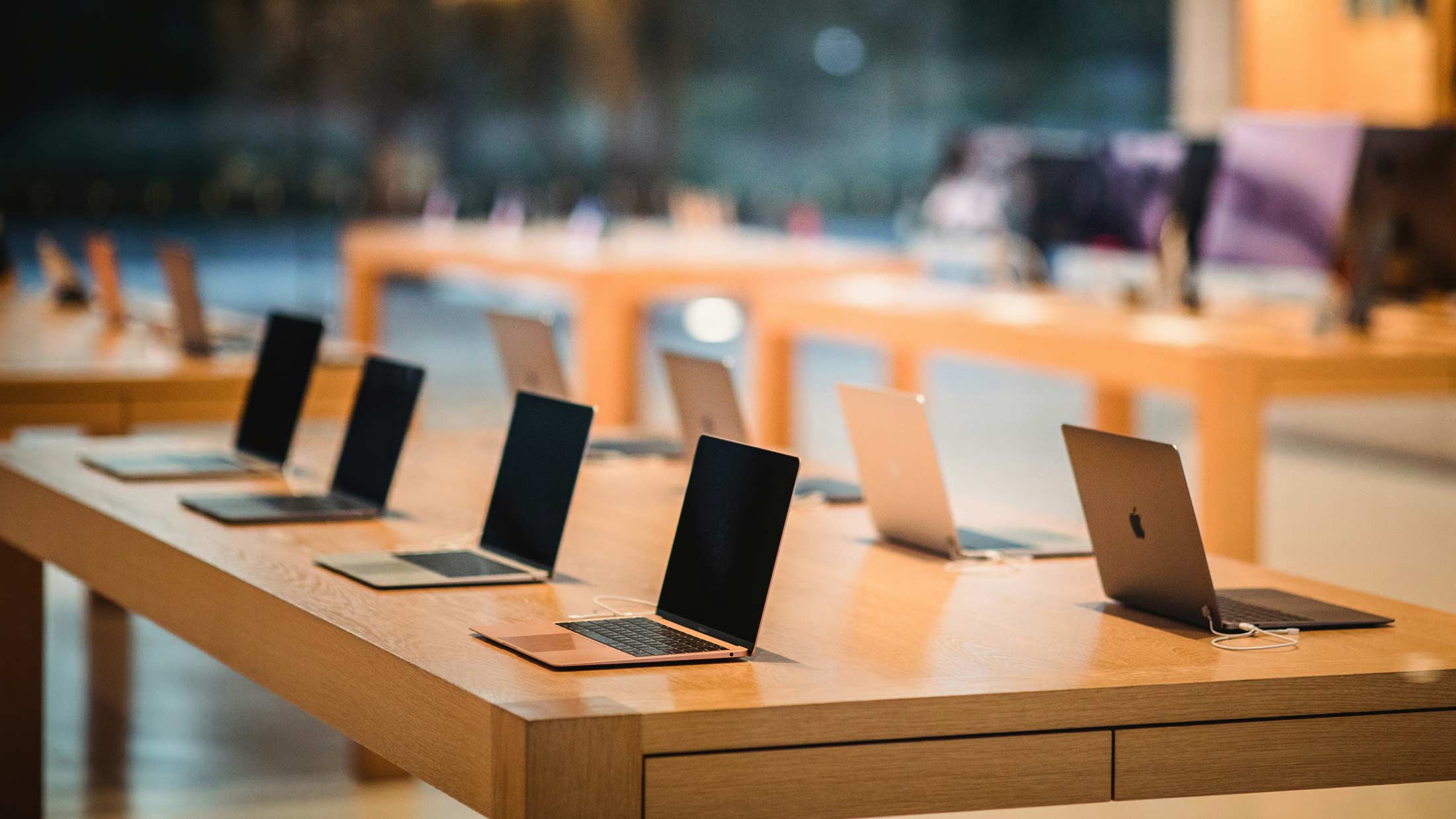
Apple has historically used its scale to negotiate preferential pricing, and it still pays less than many competitors. But the company already raised the Mac mini's entry price from $599 to $799 by eliminating its lowest-tier model. More adjustments are likely coming for the iPhone 18 lineup expected in September.
When Does This End?
Not soon. Industry analysts describe this as a structural shift rather than a cyclical disruption. Memory manufacturers have expanded HBM packaging capacity, but new fabs take years to reach volume production. Most projections suggest supply constraints will persist into 2027 or 2028.
The chair of SK Group, SK Hynix's parent company, said the global memory chip shortage could stretch toward the end of the decade.
For consumers, the practical effect is straightforward: the devices in your pocket, on your desk, and in your bag are all about to cost more. The AI boom is being financed, in part, by everyone who buys a phone, laptop, or tablet over the next several years. Call it the invisible AI tax. It arrives whether or not you use ChatGPT or Claude.
Apple's stock fell roughly 1.1% on Wednesday following Cook's comments before recovering slightly in after-hours trading. The market is still processing what sustained memory inflation means for margins. The company's next major product launches will provide the clearest signal of how much Apple intends to pass through to customers.