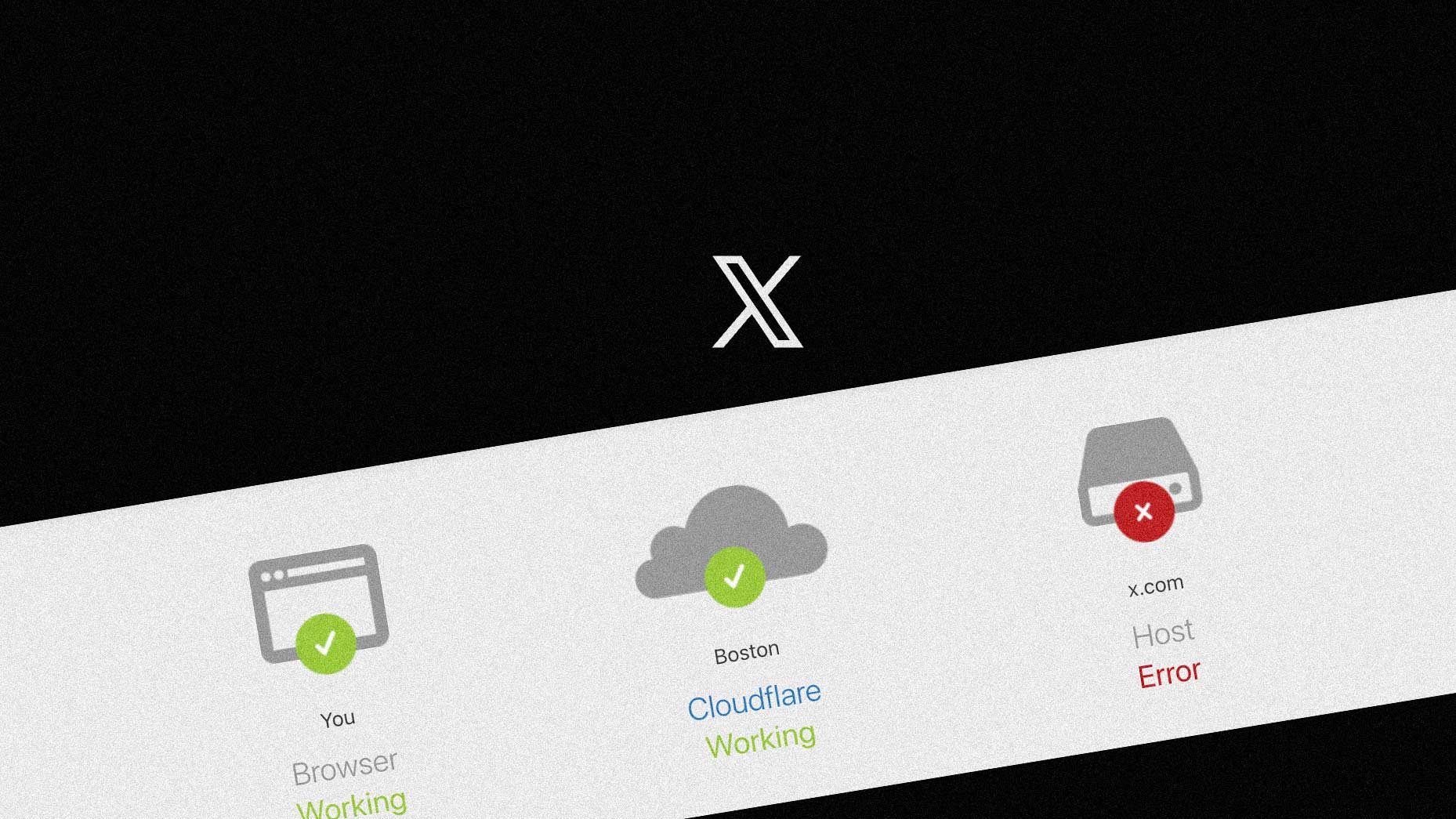
X is down. Users across the platform are being greeted with a black screen and the X logo. Nothing else loads. Posts, timelines, notifications: all inaccessible. The familiar experience of watching a service buckle under its own weight has become a recurring feature of the platform formerly known as Twitter.
This is not an isolated incident. The platform has a history of outages that has only worsened since Elon Musk's $44 billion acquisition in October 2022. In March 2025, X experienced a 15-hour outage that Musk attributed to a "massive cyberattack." That same month, a separate incident saw multiple brief outages over a 45-minute window. In August 2024, roughly two-thirds of users reported problems with the app, website, and server connections. Other issues have included impaired features in July 2023 and the infamous crash of Ron DeSantis's presidential announcement on Twitter Spaces in March 2024.
In one 2025 outage, the cause was traced to a fire at a data center in Hillsboro, Oregon. During a May 2025 disruption, X's engineering team confirmed a data center outage and said they were "working 24/7 to resolve this." Musk himself acknowledged that "major operational improvements need to be made" following that incident.
The Infrastructure Behind the Instability
These recurring problems are hard to separate from the structural changes Musk imposed on the company. After the acquisition, Twitter's workforce was cut by approximately 80 percent. The company went from around 7,500 employees to roughly 1,500 in six months. Musk confirmed the scale of the cuts in a BBC interview in April 2023, calling them "painful but necessary."
Some of the deepest cuts hit trust, safety, and security teams. According to disclosures made in response to an inquiry from Australia's online safety commissioner, X laid off 80 percent of its trust and safety staff following Musk's takeover. Before the acquisition, the company had 279 engineers on trust and safety teams globally. By mid-2023, that number was down to 55.
Experts and former employees have warned that reduced engineering staff and rapid organizational shifts have left the platform vulnerable to technical breakdowns. Network monitoring firm ThousandEyes observed a rise in application issues and disruptions following the acquisition, a trend that continued through the full migration to X.com in May 2024. Prior to Musk's ownership, the platform had an eight-year gap between major incidents, which industry analysts attributed to a resilient, well-tested architecture.
X Money: The Feature That Still Hasn't Fully Arrived
Today's outage arrives as X continues to stumble toward its long-promised payments feature, X Money. In October 2023, Musk said he expected a payments feature to launch by the end of 2024. It didn't. In January 2025, then-CEO Laura Yaccarino said X Money would debut in 2025. It didn't. In February 2026, Musk said at an xAI all-hands meeting that an external beta would launch within one to two months. In March, he said "early public access" would begin in April.
As of early June 2026, X Money's availability has been described as "gradually widening," suggesting a slow rollout rather than a full launch. The timeline has slipped again. The feature now offers peer-to-peer transfers, a Visa debit card, 3 percent cashback, FDIC-insured deposits, and a 6 percent APY on balances. But most users still don't have access. Crypto support, long teased by Musk, remains absent at launch.
The pattern is familiar: ambitious announcements followed by delays, partial rollouts, and shifting goalposts. It mirrors the operational instability the platform has demonstrated repeatedly.
Ownership Consolidation Hasn't Resolved Core Problems
In March 2025, xAI acquired X in a $33 billion all-stock deal. "xAI and X's futures are intertwined," Musk said at the time. Then in February 2026, SpaceX acquired xAI in a deal reportedly valued at $1.25 trillion. The corporate structure has changed, but the user experience remains subject to the same disruptions.
Some of these outages are brief. Some last hours. Some are regional; others are global. What they share is unpredictability. Users have no real visibility into what is happening, no estimated restoration time, and no communication channels that work when the platform itself is down. That is a problem for a service that bills itself as a real-time information utility.
The company has begun rehiring for security and safety roles, posting two dozen job openings split between safety and cybersecurity teams. Whether that signals a genuine infrastructure investment or simply a response to regulatory pressure remains unclear.
For now, users are staring at a black screen. Again.