Nuclear power's revival hinges on a simple question: can reactors get small enough, cheap enough, and fast enough to compete with natural gas? Apollo Atomics thinks it has a credible path to all three.
The Cambridge, Massachusetts startup is developing compact pressurized water reactors designed for electricity generation, industrial heat, and data center applications. The company, backed by Y Combinator in its Spring 2026 batch, recently announced a research collaboration with MIT's Department of Nuclear Science and Engineering to validate its reactor design through experimental testing.
The Technology Bet
Apollo's approach leans heavily on existing infrastructure. Pressurized water reactors already dominate global nuclear power, representing roughly 70% of the world's commercial reactor fleet according to Wikipedia. The company says it draws on over 15,000 reactor-years of PWR operating experience. Rather than betting on exotic new reactor chemistries like sodium or molten salt, Apollo is redesigning the system architecture around proven materials and commercially available fuel.
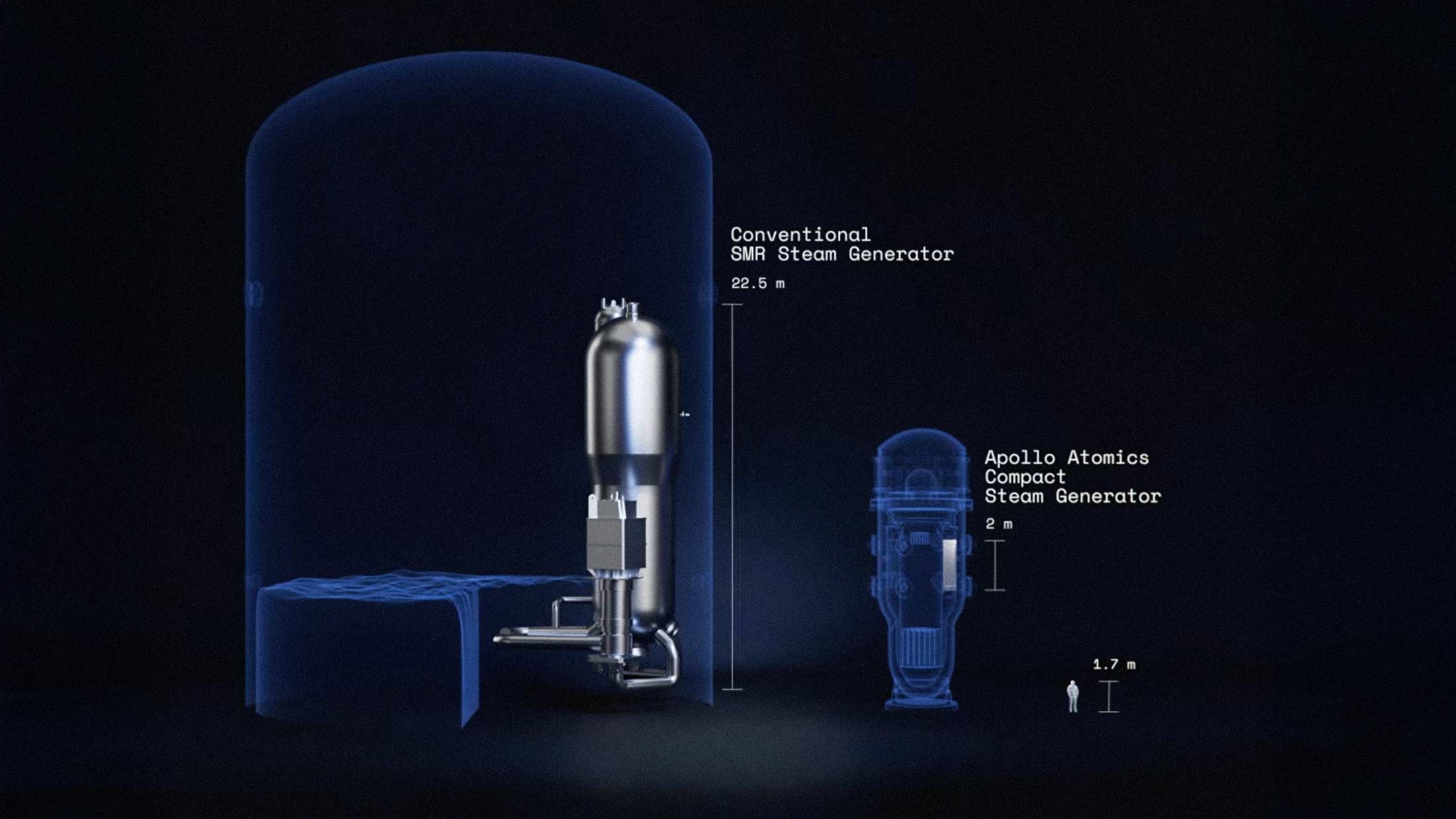
The company claims its proprietary architecture is an order of magnitude more compact than today's top-performing plants. That compactness, according to Apollo, enables standardized construction and faster deployment. The company is targeting 3 cents per kilowatt-hour at scale, a price point driven by higher power density, passive safety systems, and reduced plant complexity.
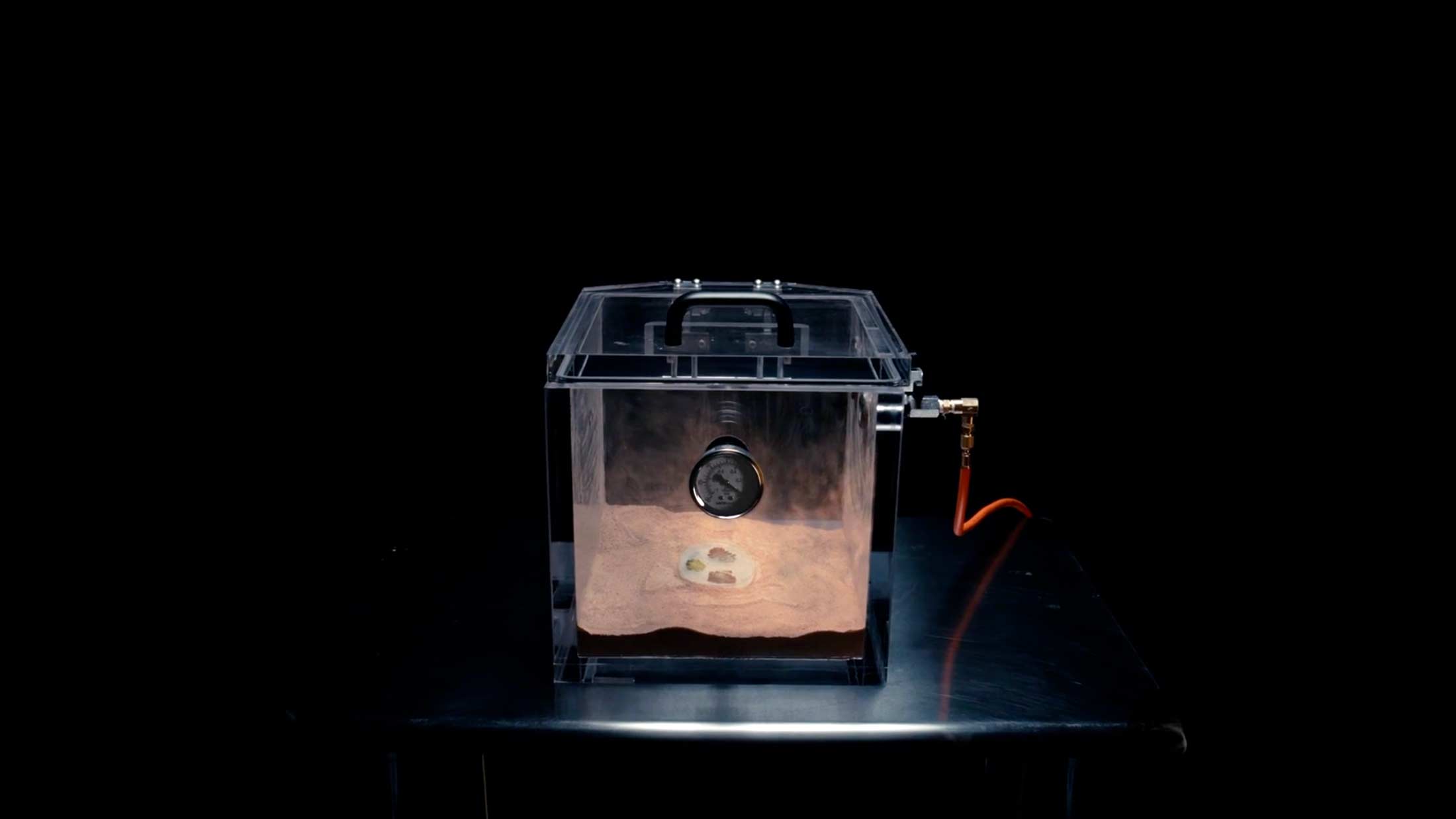
Whether Apollo has actually achieved a major breakthrough in steam generator design, as the company has suggested, remains to be proven through independent validation. The MIT collaboration is specifically designed to test two-phase flow behavior and heat-transfer performance under reactor conditions identical to commercial plants. The data generated will feed into Apollo's NRC licensing pathway.
Regulatory and Commercial Timeline
Apollo submitted its regulatory engagement plan to the Nuclear Regulatory Commission in early 2026 and is targeting a construction permit application in 2028. The company's website indicates a 10-megawatt commercial pilot is planned for that same year.
For context, conventional nuclear projects face brutal timelines. The average construction time for nuclear reactors was nearly nine years in 2024, according to data from the World Nuclear Association. When factoring in the licensing and permitting phase, the total span from initial planning to grid-connected electricity can exceed 15 years. Small modular reactors are theoretically faster, with some estimates suggesting construction times of roughly three years under ideal conditions. But actual performance data remains scarce.
Apollo's CEO, Assil Halimi, completed his PhD in Nuclear Science and Engineering at MIT in 2025, where he researched methods for improving small modular reactor design and high-burnup fuel under Professor Koroush Shirvan. That research background is foundational to the company's technical approach. As Halimi said in a company statement, "Energy infrastructure now demands reliability, rapid deployment, and strict cost discipline more than ever before."
The Competitive Landscape
Apollo enters a crowded field. Aalo Atomics, another Y Combinator-backed nuclear startup, has raised over $136 million and plans to demonstrate cold criticality for its sodium-cooled reactor at Idaho National Laboratory by mid-2026. NuScale Power became the first company to receive U.S. NRC design certification for a small modular reactor in 2020. Kairos Power and dozens of other startups are chasing the same hyperscaler and data center customers.
The data center angle is particularly relevant as compute infrastructure demands increasingly outstrip grid capacity. Nuclear offers baseload reliability that intermittent renewables cannot match, making it attractive for 24/7 AI workloads.
What distinguishes Apollo is its decision to work within the PWR paradigm rather than around it. That choice may limit theoretical efficiency gains, but it could simplify the regulatory path and reduce financing risk. Investors and regulators alike have decades of operating data on pressurized water systems. A radically novel design would require proving safety from scratch.
What Remains Unproven
Apollo's marketing claims are ambitious. The company has not publicly disclosed specific power output specifications beyond the 10-megawatt pilot target, nor has it published detailed cost breakdowns. The 3 cent per kilowatt-hour figure is a target, not a demonstrated outcome. The company's compact architecture and claimed deployment speed advantages have yet to be validated by independent parties.
The MIT collaboration is a step toward that validation. The company is running full two-loop tests on its actual hardware to generate experimental data. Until those results are published and reviewed, Apollo's claims remain promising but unverified.
Apollo Atomics has raised funding through Y Combinator and reportedly received backing from Genesis Fund, Intuition, New Era Ventures, Paperjet Ventures, and the US National Science Foundation, according to PitchBook. The company has not disclosed total funding amounts publicly.