For 50 years, driving on the Moon meant Boeing-built buggies from the Apollo era. Three rovers left behind at Hadley-Apennine, Descartes, and Taurus-Littrow. Total combined mileage: 56 miles. No one has driven on the lunar surface since December 1972.
That changes this year. Venturi Astrolab, a Hawthorne-based mobility company founded in 2020, is sending its FLIP rover to the Moon aboard Astrobotic's Griffin lander, now targeting a July 2026 launch. FLIP stands for FLEX Lunar Innovation Platform, a stripped-down testbed for the company's flagship vehicle. The destination is the Nobile Crater region at the lunar south pole, some of the most challenging terrain any rover has ever attempted.
Pathfinder Hardware, Full-Scale Components
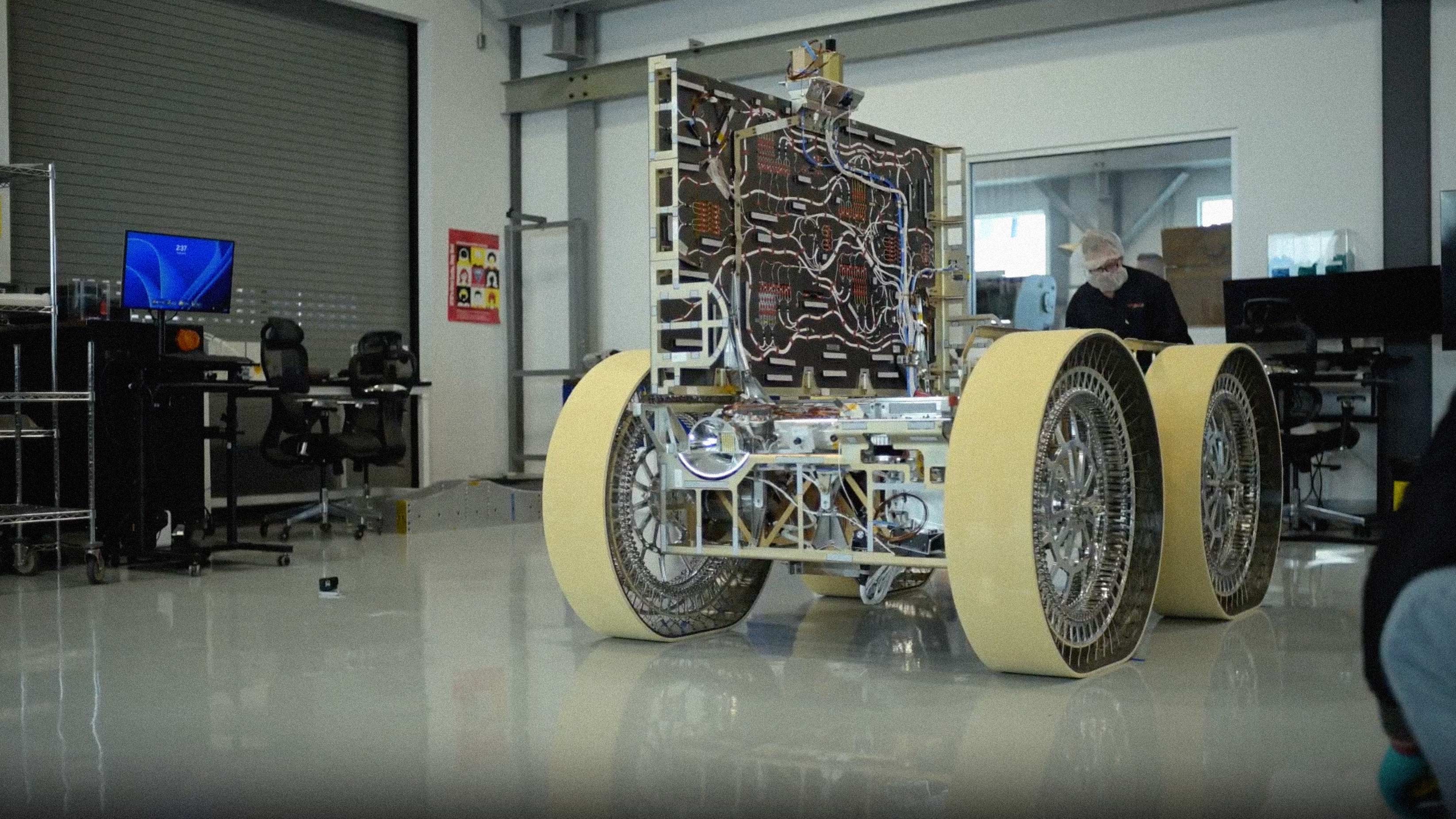
FLIP weighs roughly half a metric ton and carries a modest 30 kilograms of payload. On paper, it looks underwhelming compared to its bigger sibling. But the rover is loaded with flight-ready systems that matter: full-size Venturi batteries manufactured in Monaco, hyper-deformable wheels developed alongside Venturi Space, avionics, communications, and autonomous navigation software identical to what will power the larger FLEX vehicle. The company calls this approach "rapid spiral development." Build, test, fly, learn. Repeat.
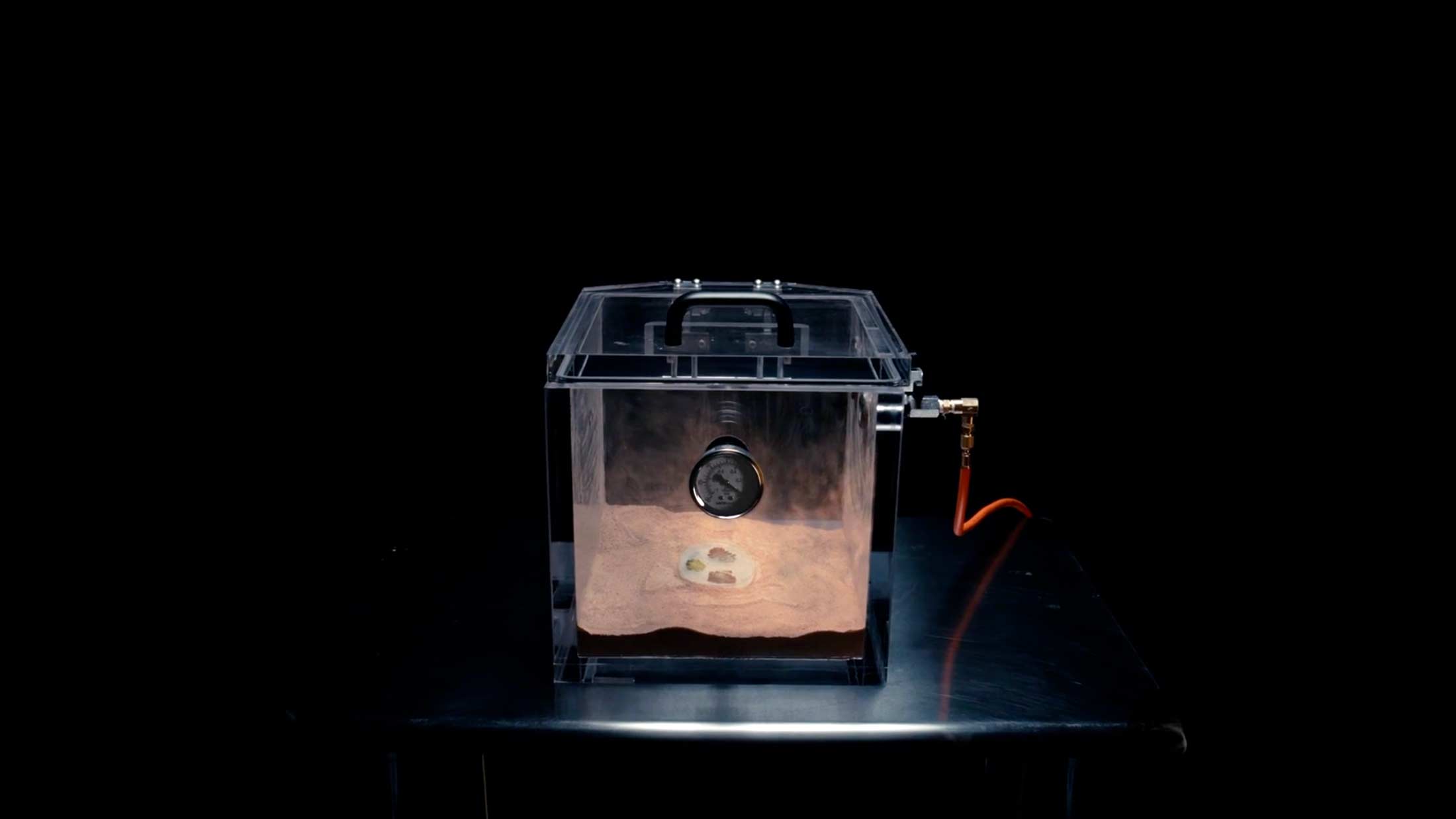
Jaret Matthews, Astrolab's founder and CEO, has framed FLIP as an opportunity "to demonstrate and test many of the critical technologies that will advance the commercial FLEX vehicle." That includes payloads dedicated to studying how lunar dust affects vehicle systems. Regolith is abrasive, electrostatically charged, and a known hazard for any surface hardware. The lessons gathered at the south pole will directly inform FLEX's design before its own mission, currently planned for late 2026 or 2027 aboard a SpaceX Starship.
The High-Stakes NASA Competition
Surface mobility is about to become a $4.6 billion question. NASA's Lunar Terrain Vehicle Services program selected three competing teams in April 2024 to build the first crewed rover since Apollo. Astrolab, partnered with Axiom Space and Odyssey Space Research, is one of them. The other two are Lunar Outpost, backed by Lockheed Martin, GM, and Goodyear, and Intuitive Machines, teamed with Boeing, Northrop Grumman, and Michelin.
The contract ceiling is substantial. Astrolab's potential share is worth up to $1.9 billion over 13 years. NASA wants these vehicles to carry two suited astronauts, traverse at least 20 kilometers on a charge, survive the 14-day lunar night at temperatures plunging below minus 280 degrees Fahrenheit, and operate both crewed and autonomously. The winner could drive Artemis astronauts as early as 2028, with extensive robotic operations filling the gaps between human visits.
Why FLIP Exists
FLIP's ride to the Moon is itself a story of opportunism. Astrobotic's Griffin lander was originally manifested to carry NASA's VIPER rover, a water-ice prospector that NASA canceled in July 2024 after costs ballooned to over $600 million. With the Griffin lander paid for but lacking a primary payload, Astrobotic ran a selection process and chose Astrolab.
For Astrolab, the timing was fortunate. Getting mission-tested data before the LTV contract decision means real-world validation of systems that competitors can only simulate. When FLIP's wheels touch regolith, they will become the most comprehensively tested lunar tires ever flown, according to the company. That kind of credential matters when NASA is choosing who builds the next generation of lunar transport.
The company's vision extends beyond NASA contracts. Astrolab is already working with Interlune on integrating excavation hardware onto FLEX for helium-3 harvesting. Other payload customers include Argo Space for water extraction demonstrations and Astroport Space Technologies for regolith 3D printing experiments. The goal is a modular logistics platform for whatever future lunar operations require: science, construction, resource extraction.
Fifty years is a long time between drives. If FLIP lands intact this summer, the wait will be over.