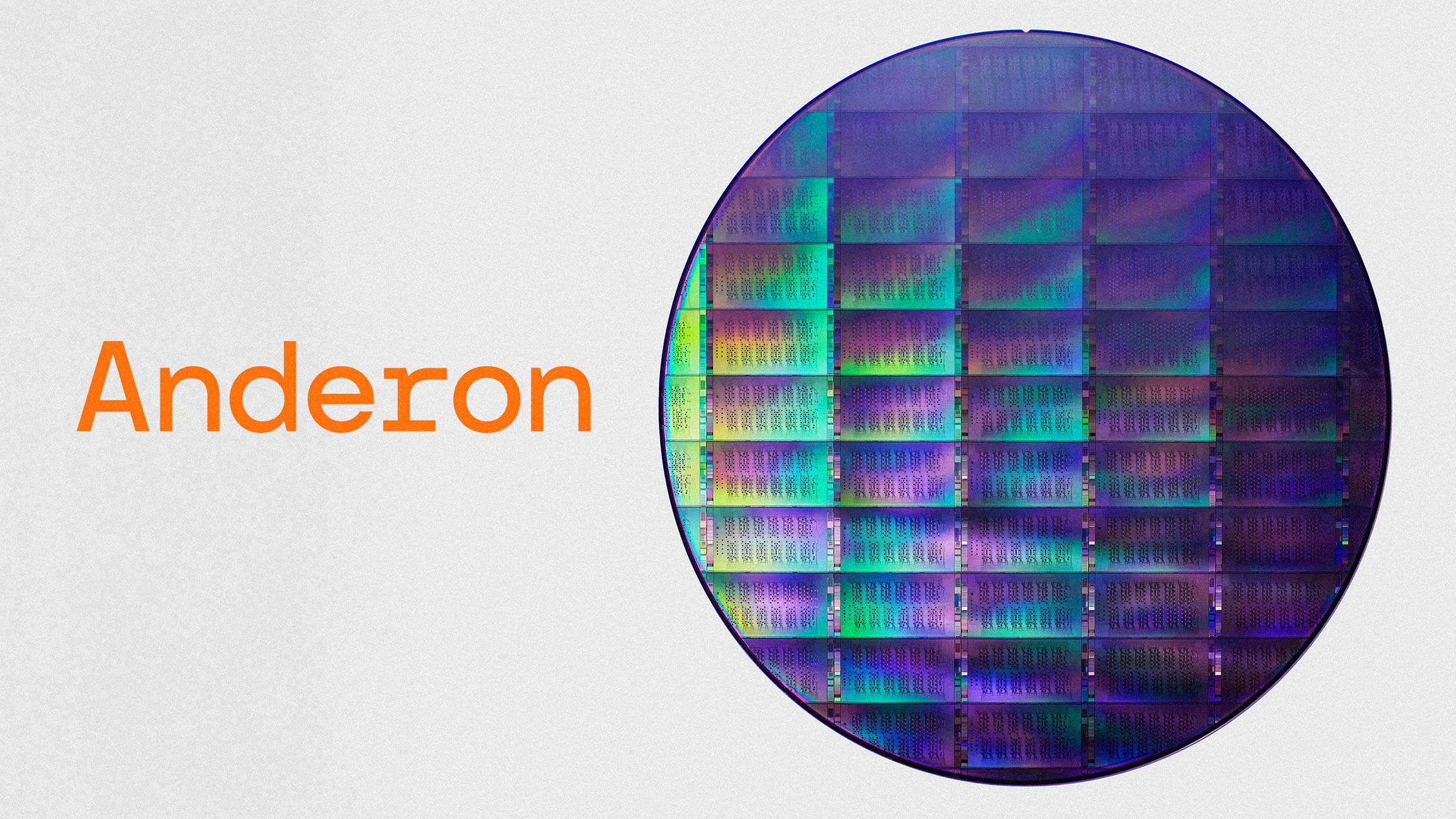
IBM and the U.S. Department of Commerce announced a Letter of Intent to create Anderon, America's first purpose-built quantum chip foundry. The deal pairs $1 billion in proposed CHIPS Act incentives with $1 billion in cash from IBM, plus intellectual property, assets, and workforce.
Headquartered in Albany, New York, Anderon will operate as a standalone company with state-of-the-art 300-millimeter quantum wafer fabrication capabilities. IBM says the foundry will serve as the anchor for a national quantum manufacturing ecosystem, producing wafers not only for IBM but for multiple quantum technology vendors worldwide.
A Major Federal Bet on Quantum
The announcement is part of a broader $2 billion quantum computing push from the Commerce Department, which is awarding grants to nine companies in exchange for equity stakes. GlobalFoundries will receive $375 million for its new Quantum Technology Solutions business, while D-Wave Quantum, Rigetti Computing, and Infleqtion are each in line for approximately $100 million. Diraq, a smaller startup, is slated to receive $38 million.
"With today's CHIPS Research and Development investments in quantum computing, the Trump administration is leading the world into a new era of American innovation," said Commerce Secretary Howard Lutnick. The approach mirrors deals the administration has previously struck with Intel and rare earth companies like MP Materials, where federal funding comes with government equity positions.
Bill Frauenhofer, Executive Director of Semiconductor Investment and Innovation at Commerce, described the initiative as a way to strengthen U.S. quantum leadership and technological resilience, citing "significant implications for national defense, advanced materials and biopharmaceutical discovery, financial modeling and energy systems."
What Anderon Will Actually Make
The foundry will initially fabricate superconducting qubit wafers and supporting electronics on 300mm substrates. According to IBM, Anderon's processes will include superconducting wiring, through-silicon vias, bumps, and dedicated process design kits, with goals to expand into additional quantum modalities over time. The company says it has already developed and tested scalable quantum wafer technology at the Albany NanoTech Complex, offering a clear pathway to commercialization.
IBM's shift to 300mm fabrication has already paid dividends. At its Quantum Developer Conference in November 2025, the company revealed that moving to the larger wafer format had doubled R&D; speed and increased chip complexity tenfold. The Albany facility now produces IBM's Quantum Nighthawk and Loon processors, with future iterations expected to support up to 15,000 two-qubit gates by 2028.
The Numbers Behind the Hype
The quantum computing industry is projected to generate up to $850 billion in economic value by 2040, according to Boston Consulting Group data cited in IBM's announcement. Whether that figure materializes depends heavily on achieving fault-tolerant quantum computing, which IBM targets for 2029.
IBM Chairman and CEO Arvind Krishna has been increasingly bullish on near-term progress. During the company's Q1 2026 earnings call, he said IBM's partners would "achieve the first examples of quantum advantage this year, leveraging IBM hardware." At IBM Think 2026 earlier this month, Krishna was more direct: "We believe quantum advantage will be reached this year. That's not 20 years away. That's not 10 years away."
To date, IBM reports deploying over 90 quantum systems, more than all other industry players combined. The company has built a partner ecosystem spanning more than 325 Fortune 500 companies, startups, universities, and government agencies, with longstanding collaborations with NIST, DARPA, and U.S. Department of Energy laboratories.
Still a Letter of Intent
Notably, the deal is not yet finalized. IBM states that launching Anderon is subject to negotiating and executing definitive agreements with the Commerce Department consistent with the signed LOI. The project is designed to complement, not replace, IBM's existing quantum computing efforts; the company says its mission to deliver market-leading quantum computers by 2029 continues independently.
The broader $2 billion quantum funding initiative marks one of the most significant U.S. government commitments to quantum R&D; to date. If executed, it positions the United States to manufacture most of the world's quantum wafers domestically. For an industry that has long promised transformation without delivering commercial-scale results, that is a substantial infrastructure bet.
Whether Anderon becomes the TSMC of quantum or another expensive government-backed initiative that fails to achieve scale will depend on factors beyond IBM's control: sustained federal commitment, customer demand from quantum startups still struggling toward profitability, and the fundamental physics question of whether error correction can actually work at scale. The progress in quantum hardware has been real. The business model for a foundry serving an industry that barely exists remains theoretical.