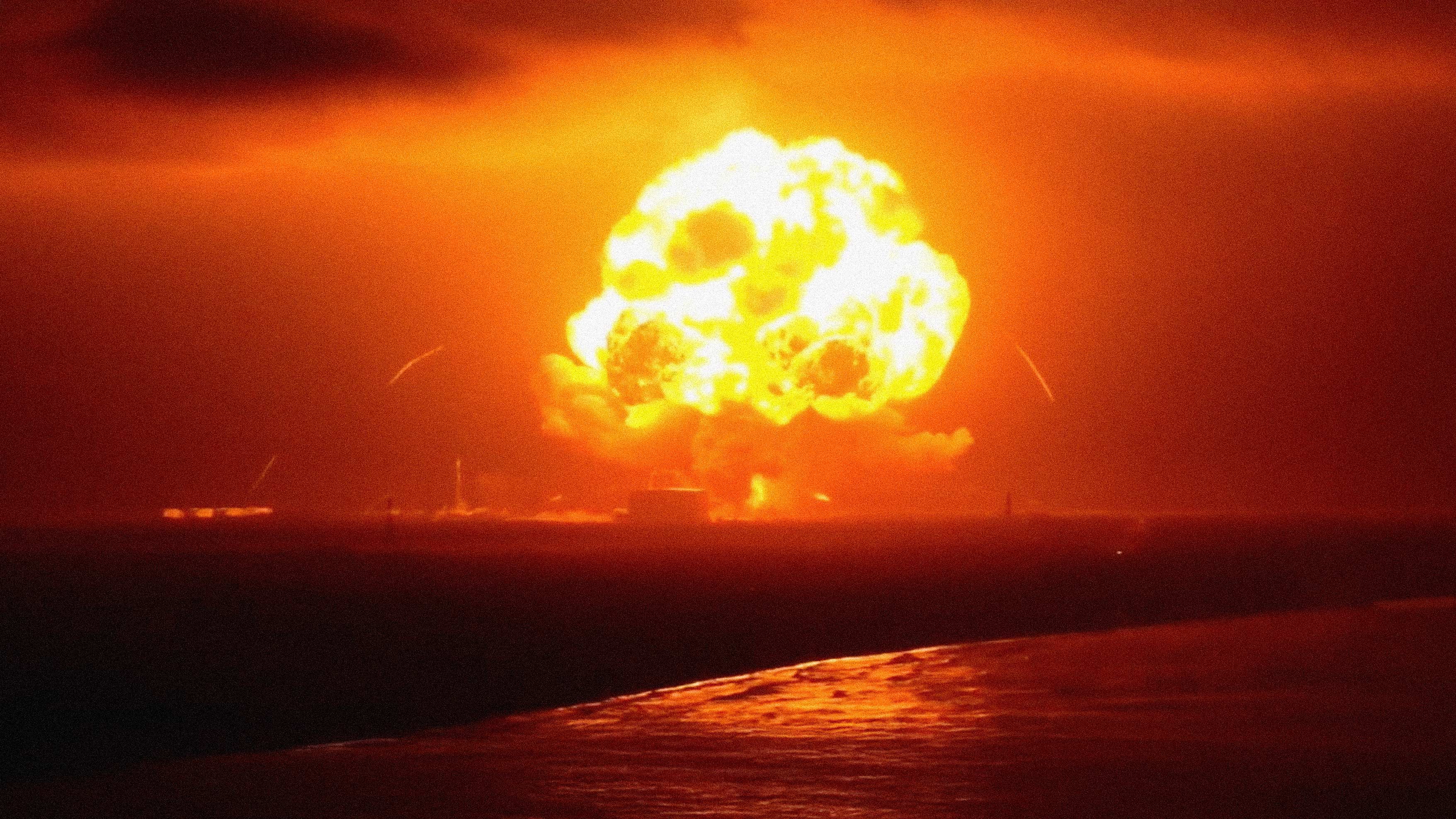
Blue Origin's New Glenn rocket exploded during a static fire test at Cape Canaveral Space Force Station on Wednesday, according to a live stream captured by NASASpaceFlight.com. The explosion occurred at Launch Complex 36 as the company was preparing for what would have been the heavy-lift rocket's fourth flight in the coming weeks.
The 320-foot vehicle, powered by seven BE-4 engines on its first stage, was conducting a routine engine firing when the failure occurred. Blue Origin, NASA, the FAA, and Space Force have not yet responded to requests for comment. Launchpads are typically cleared during such tests, but whether anyone was injured remains unconfirmed.
Elon Musk, whose SpaceX competes directly with Blue Origin in the heavy-lift market, posted on X shortly after: "Most unfortunate. Rockets are hard."
WATCH: Blue Origin's New Glenn rocket explodes on launch pad in Cape Canaveral, Floridapic.twitter.com/QXsGaAWuZL
Advertisement— BNO News (@BNONews) May 29, 2026
A Setback at the Worst Possible Moment
The explosion comes at a particularly vulnerable time for Jeff Bezos's space company. Just weeks ago, New Glenn's third flight ended in failure when an upper-stage malfunction stranded an AST SpaceMobile satellite in a useless orbit. Blue Origin traced the problem to an off-nominal thermal condition that prevented one of the BE-3U engines from achieving full thrust. The FAA cleared the rocket to fly again only last week, after the company implemented nine corrective actions.
That investigation appeared to address a second-stage problem. A static fire explosion, by contrast, involves the first stage and its methane-fueled BE-4 engines. If the issue lies with that engine cluster, the implications extend beyond Blue Origin. United Launch Alliance's Vulcan rocket also relies on BE-4s for propulsion.
The incident will almost certainly force an extended pause in New Glenn operations. Blue Origin had been planning as many as 12 launches this year, including the first mission to deliver satellites for Amazon's Leo constellation, formerly known as Project Kuiper. That flight had been cleared for a June 4 launch window. The company also intended to send its Blue Moon MK1 lunar lander to the moon's south pole this fall, carrying two NASA science payloads.
What This Means for Artemis
The stakes here go well beyond commercial launches. Blue Origin is one of two companies developing human landing systems for NASA's Artemis program. The Blue Moon Mark 2 lander, a larger crewed version of the MK1, is designed to ferry astronauts from lunar orbit to the surface and back. NASA recently installed a full-scale training mockup of the Blue Moon crew cabin at Johnson Space Center, where Artemis astronauts are now preparing for missions targeting 2027 and 2028.
The agency has indicated it will fly with whichever lander is ready when the time comes. SpaceX's Starship is the other option. Both programs have faced delays. But a launchpad explosion is a more severe setback than an upper-stage anomaly. Rebuilding hardware is one thing. Rebuilding confidence in a propulsion system is another.
Recovery Is Possible. It Has Been Done Before.
Rocket development is littered with explosions that looked catastrophic at the time. SpaceX lost a Falcon 9 and its payload on the pad at Cape Canaveral in 2016. The company was back flying within four months. Blue Origin itself invested more than $1 billion to rebuild Launch Complex 36 from the ground up, transforming a site that had sat dormant since 2005 into one of the most modern launch facilities in the world. That same determination will be tested now.
What matters most in the coming weeks is transparency. Blue Origin has been historically guarded about its operations, preferring to move slowly and announce results only after they succeed. That approach has benefits. But when hardware fails publicly, silence breeds speculation. The company's response, and the quality of its investigation, will determine whether customers and partners retain confidence in New Glenn's future.
The broader aerospace industry understands that setbacks are part of the path forward. The question is whether Blue Origin can turn this one into a lesson rather than a long-term liability. Development programs that learn fast tend to survive. Those that don't, don't.