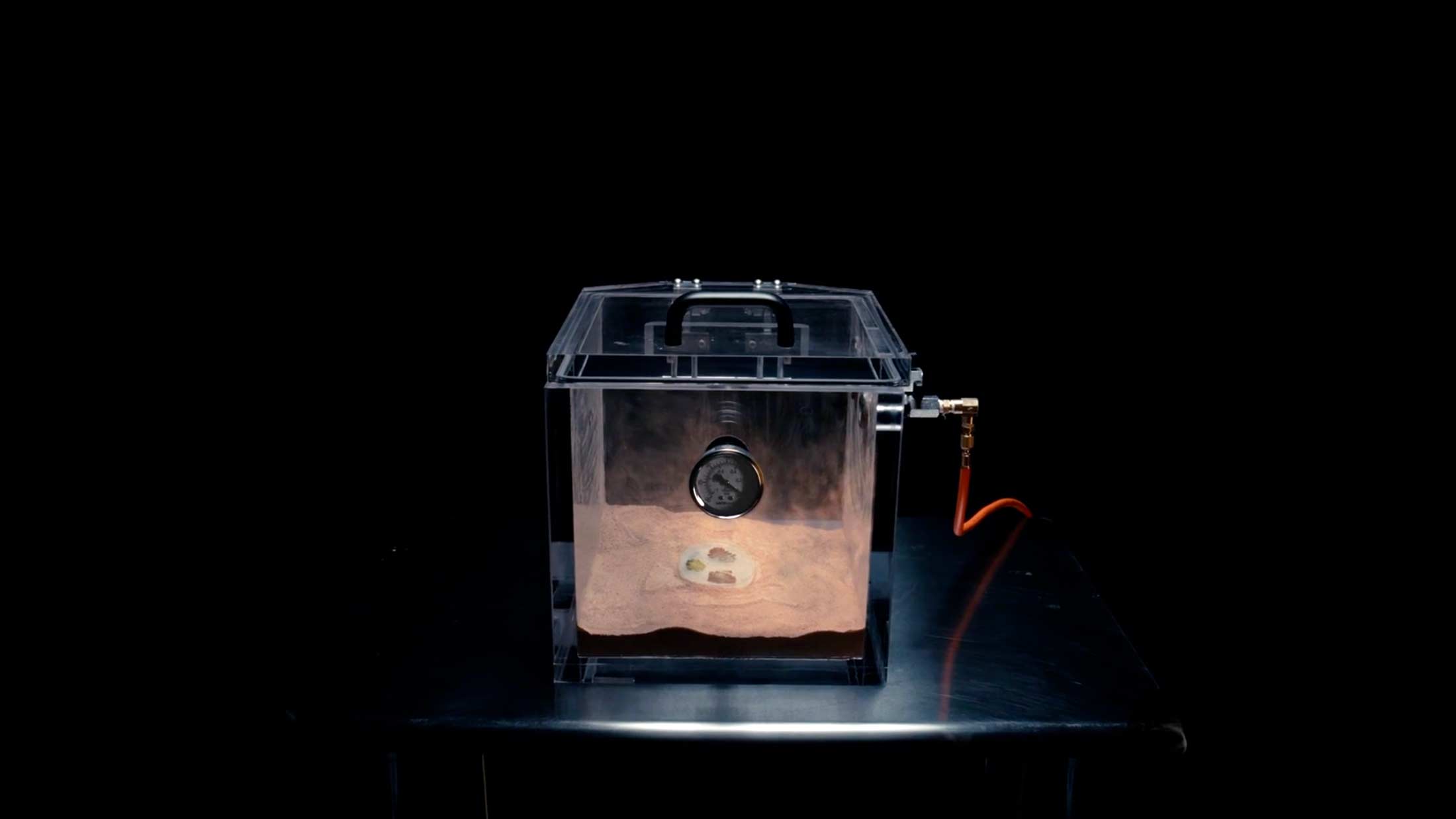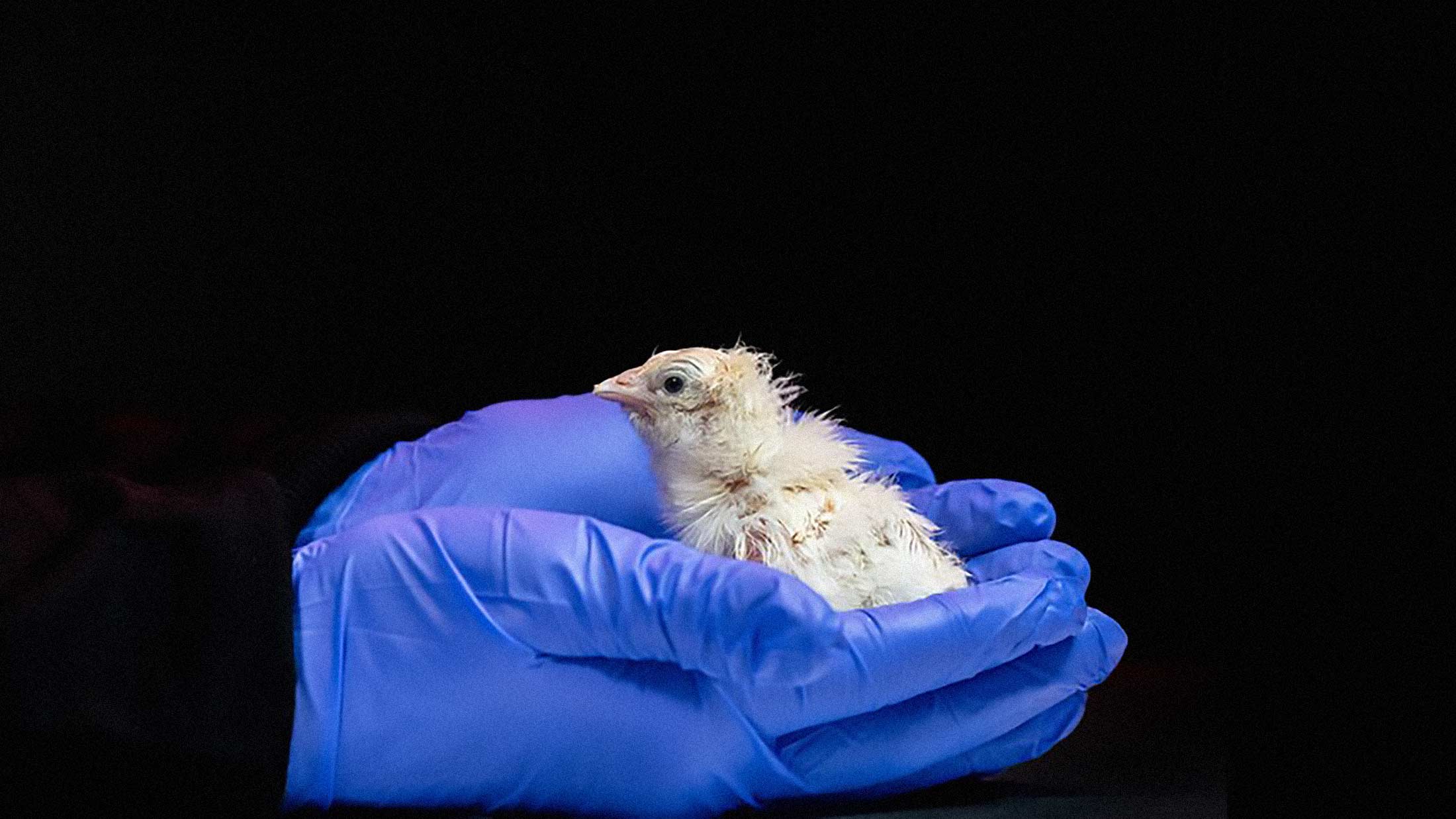
Colossal Biosciences, the Dallas-based company attempting to reverse extinction through genetic engineering, announced on May 19 that it has hatched 26 live chickens from fully artificial eggs. The 3D-printed incubation devices represent a technical milestone that could eventually allow the company to grow embryos of birds that have no living relatives capable of carrying them to term.
The artificial egg is constructed from a printed lattice shell coated with a bioengineered silicone-based membrane that replicates the gas exchange properties of a natural eggshell. A transparent window on top allows researchers to observe embryo development in real time. According to the company, the design can scale to any size, from hummingbird eggs to something much larger.
Why Size Matters for De-Extinction
Colossal's flagship avian projects are the dodo and the South Island giant moa. The moa, a flightless bird that once inhabited New Zealand, stood nearly 12 feet tall and weighed around 500 pounds before human hunters drove it extinct roughly 600 years ago. Its disappearance also doomed the Haast's eagle, which depended on moa as prey.
The moa's eggs were roughly the size of a soccer ball. No living bird produces eggs large enough to incubate a moa embryo. The company's plan involves taking primordial germ cells from a living relative like the emu or tinamou, editing them with moa genetic sequences, and growing the resulting embryo in a surrogate egg until it outgrows the container. At that point, researchers would transfer the embryo to one of Colossal's artificial eggs, scaled up to accommodate the larger chick. Staff have already begun calling the prototype for this larger version the "salad spinner."
For the dodo, the challenge is different. Colossal plans to use the Nicobar pigeon, the dodo's closest living relative, as a genetic starting point. Last fall, the company reported successfully culturing primordial germ cells from pigeons, a necessary precursor to producing edited embryos.
CEO Ben Lamm has declined to set a public deadline but told Time that he estimates a moa could hatch by the mid-2030s.
The Skeptics
Not everyone is convinced. Nic Rawlence, an associate professor of ancient ecology at the University of Otago who has studied moa extensively, questioned whether Colossal's work constitutes genuine de-extinction. "They're not what I would actually call de-extinct species," Rawlence said. "They're poor facsimiles of extinct species. Extinction is still forever."
Other critics worry that resurrected animals could suffer or go extinct again because their original habitats have been destroyed. Some raise the possibility that reintroducing long-gone species could cause unpredictable damage to ecosystems that have evolved without them.
Colossal has brushed off these critiques. "In the past, extinction was permanent," said Trevor Snyder, a bioengineer at the company.
Beyond De-Extinction
The artificial egg technology may have applications well beyond bringing back vanished species. Some researchers believe it could aid conservation efforts for endangered birds and reptiles. Because the platform provides continuous visual access to a developing embryo, it could also prove useful in avian biotechnology research, where precise observation of genetic edits is critical.
One area of particular interest is the use of transgenic chickens to produce therapeutic proteins. Pharmaceutical researchers have long explored chicken eggs as bioreactors for drugs like monoclonal antibodies and human cytokines, since egg white offers a relatively simple matrix from which to purify proteins. In 2015, the FDA approved the first pharmaceutical protein produced in the egg white of a transgenic hen. The bottleneck has always been the difficulty of manipulating avian embryos during development. An artificial egg with a modular, observable interior could help streamline that process.
Colossal, which has raised over $555 million and is now valued at approximately $10.2 billion, positions itself at the intersection of conservation, genetic engineering, and platform biotechnology. It has already claimed one de-extinction success with the dire wolf project, though scientists debate whether the resulting animals truly represent a resurrected species or merely gray wolves with edited genomes.
The artificial egg is the latest addition to what Lamm calls Colossal's "de-extinction toolkit." Whether it brings back the moa remains to be seen. For now, the company has proven it can hatch a healthy chicken without a biological shell. That is a narrow achievement, but the implications stretch in several directions at once.