Elon Musk posted something odd on X recently: "In the future, a trillion times a trillion dollars will be spent on making antimatter to travel to other star systems. Things won't be measured in dollars then, just mass & energy."
The phrasing is pure Musk. The economics are absurd by contemporary standards. But the underlying physics is sound, and a growing body of technical work suggests the underlying premise may be less fantastical than it reads.
Why Antimatter at All?
SpaceX's Starship runs on methane. The Falcon 9 uses highly refined kerosene. These are fine for getting to orbit and ferrying cargo around the solar system. They are useless for reaching other stars.
The problem is energy density. Chemical fuels release energy through molecular bonds. When antimatter meets ordinary matter, it annihilates completely, converting mass directly into energy via Einstein's equation E=mc². That c² term is roughly 10¹⁷. The result: antimatter is approximately 1,000 times more energetic than nuclear fission. According to researchers at UAE University, antimatter annihilation releases an energy density of 9×10¹⁶ joules per kilogram. One gram of matter-antimatter fuel releases approximately 90 petajoules, equivalent to roughly 1,500 Hiroshima bombs.
This makes antimatter the only known fuel source that could plausibly enable spacecraft to reach nearby stars within a human lifetime. Scientists have theorized that antimatter propulsion could unlock speeds approaching 40 percent the speed of light.
The Three-Part Problem
Casey Handmer, CEO of Terraform Industries, published a detailed technical analysis outlining how humanity could develop practical antimatter propulsion. The framework identifies three critical areas requiring breakthroughs: production efficiency, reliable storage systems, and engine designs that can safely harness the most energetic fuel physically possible.
Production is the first wall. Current estimates put the cost of antimatter at approximately $62.5 trillion per gram. CERN can produce around 10⁷ to 10⁹ antiprotons per second. At that rate, producing a single gram would take roughly 200 million years. Handmer's model treats antimatter as something produced on Earth using the power and skill of our entire industrial base, like aluminum, but far more condensed as a form of stored energy.
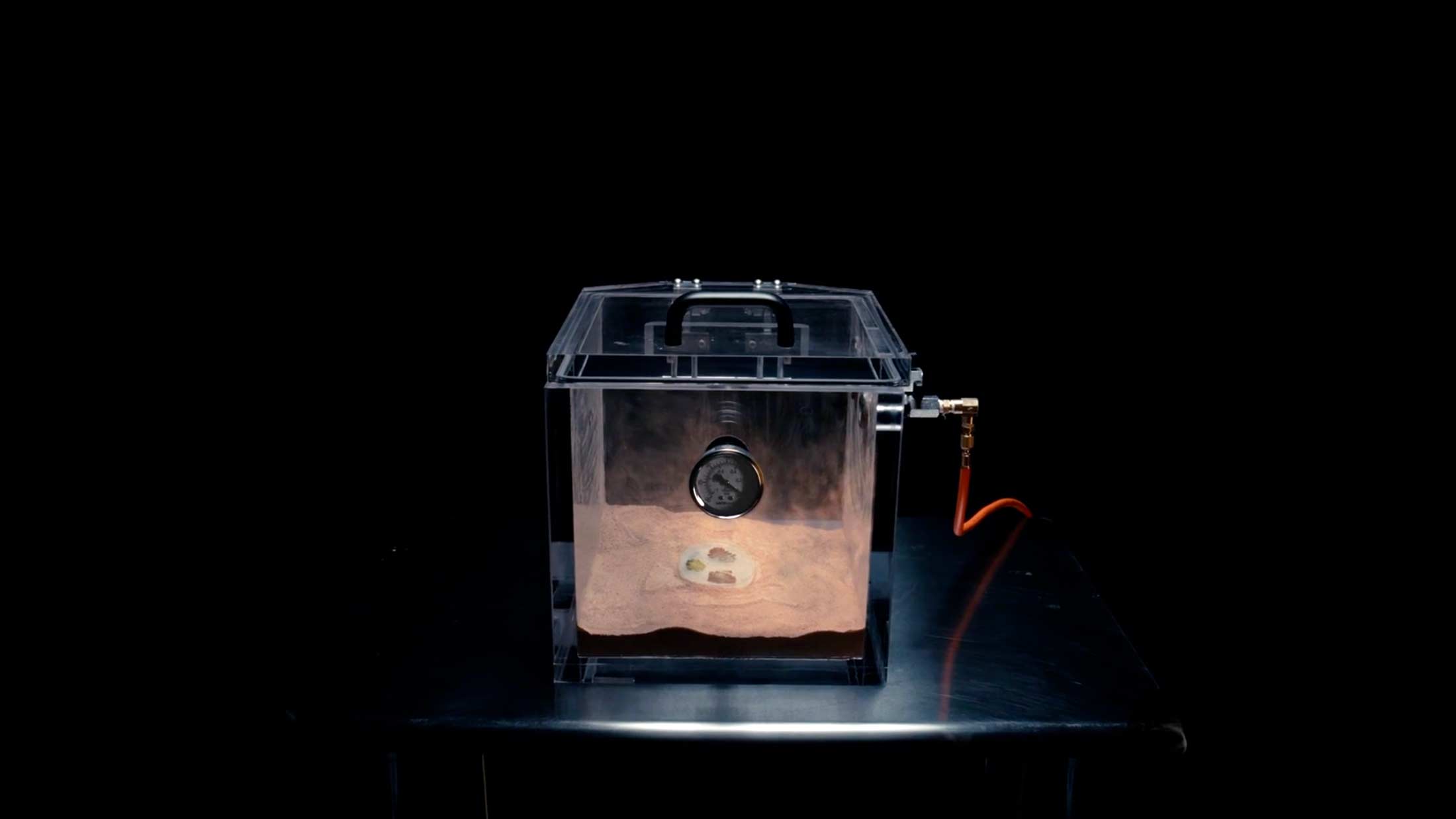
Storage is the second problem. Antimatter annihilates instantly upon contact with ordinary matter. CERN recently transported 92 antiprotons in a 2.5-ton magnetic trap as proof of concept. Scaling that to grams, let alone kilograms, requires technology that does not yet exist.
The engine problem is subtle. Simply shooting antimatter into an exhaust stream will not accomplish much. The annihilation produces gamma rays that penetrate about 10 centimeters through dense solids and roughly a kilometer through relatively sparse exhaust gasses. Practical engines will need mechanisms to convert the extreme energy of gamma rays into forms that can actually heat exhaust gasses. Handmer's analysis favors designs resembling plasma thrusters with extremely high exhaust velocity but terrible thrust-to-weight ratios. These would be vacuum-only, purpose-built for interstellar stages.
The Economics of Civilizational Scale
Musk's "trillion times a trillion" framing is deliberately unmoored from present-day economics. A trillion squared is 10²⁴, or one septillion dollars. Today, global GDP sits around $100 trillion. The number makes sense only if you assume energy becomes cheap and abundant at scales we cannot currently imagine.
Handmer, in separate writing, has sketched the outlines of this future: solar-powered particle accelerators producing vast quantities of antimatter, funded by a civilization that measures wealth in mass and energy rather than currency. When he wrote about antimatter production in the context of deep future economics, he priced it at $10¹⁹ at current energy costs.
Musk became the world's first trillionaire last week when SpaceX went public at a valuation exceeding $2 trillion. His stake in the company is now worth roughly $866 billion. He has more money than NASA has spent since its founding in 1958. But even a trillion dollars buys exactly zero grams of usable antimatter at current production rates.
Proxima Centauri in a Decade
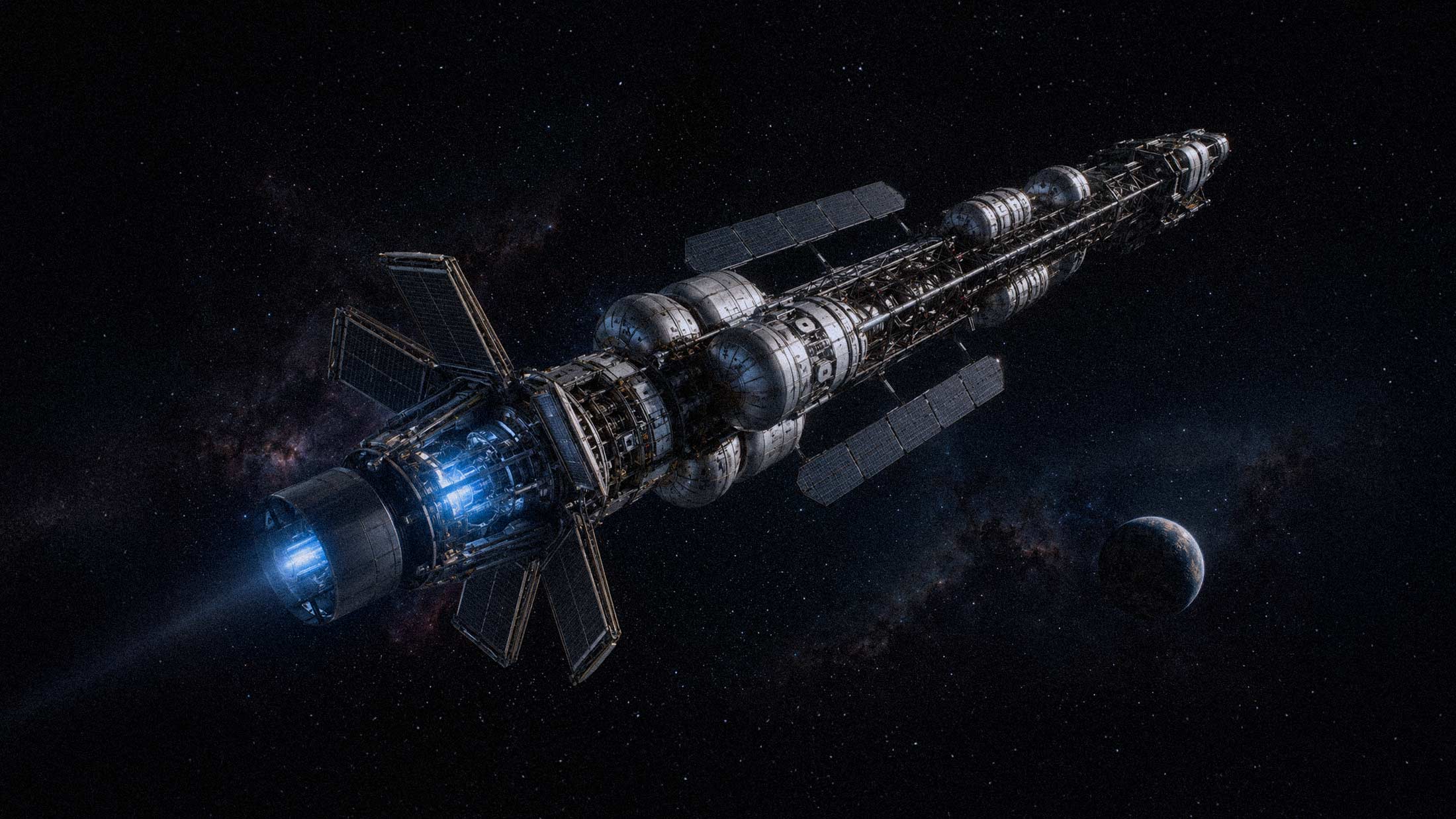
The destination that makes this worth thinking about is Proxima Centauri, our nearest stellar neighbor, sitting 4.24 light-years away. Current spacecraft would require roughly 80,000 years to reach it. At 40 percent light speed, that journey drops to about a decade.
Physics offers no fundamental barrier to antimatter propulsion. The challenges are engineering at scales we have never attempted. Other ambitious propulsion concepts are already attracting serious investment. Antimatter remains further out, but the physics is better understood than most alternatives.
Musk's post is marketing for a future that may or may not arrive. The technical literature suggests the path exists. Walking it will require energy production and industrial capacity that makes the current SpaceX economy look like a rounding error.