Supersonic passenger aviation has been dormant for more than two decades. The Concorde retired in 2003, grounded by poor fuel efficiency, restrictive routes, and a sonic boom loud enough to shatter windows. Now, a fresh wave of programs across three continents is attempting to solve the physics that made faster-than-sound commercial flight unworkable the first time around.
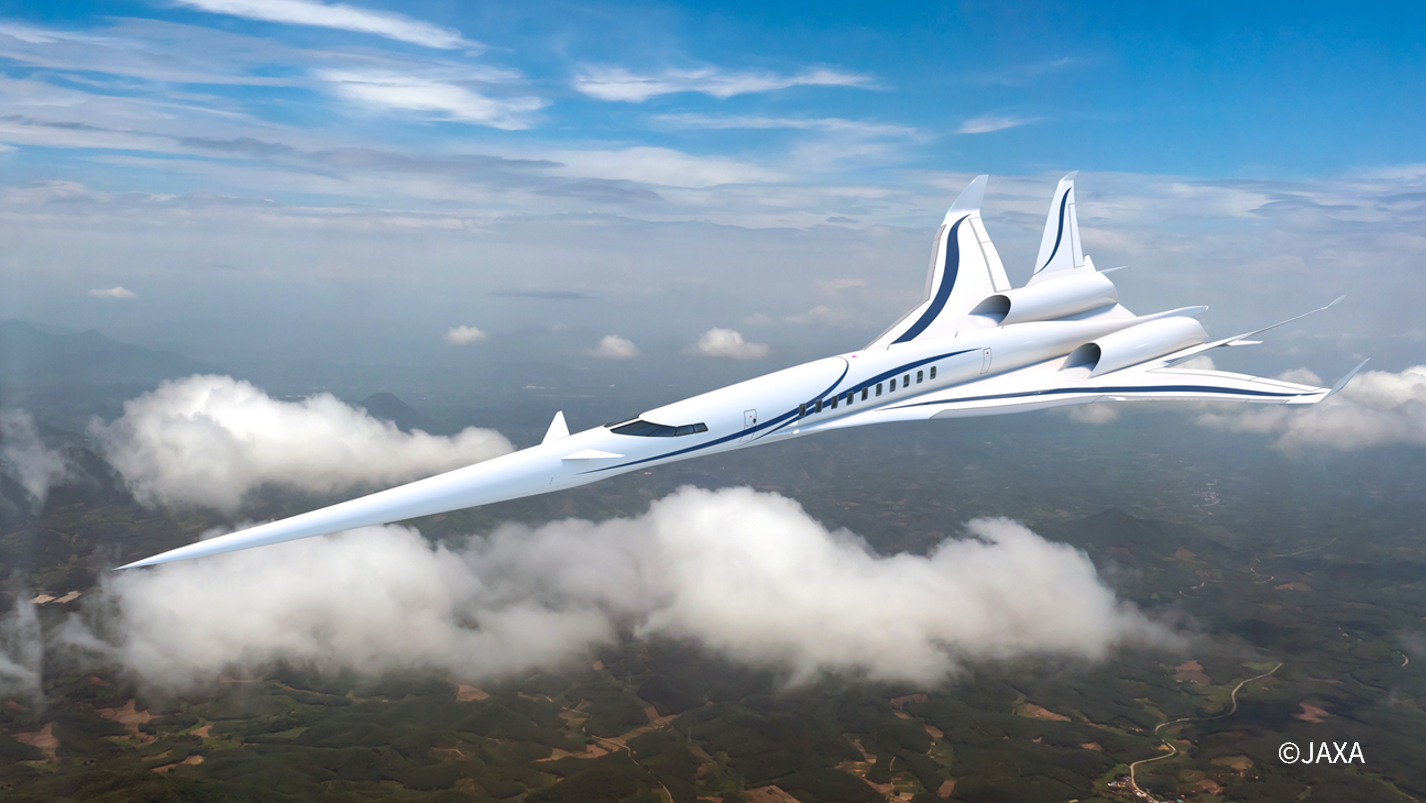
JAXA's Re-BooT project, formally launched in October 2024, is one of the more methodical entries in this field. The name stands for Robust en-route sonic-Boom mitigation Technology demonstration, and it reflects Japan's core thesis: if you want supersonic transports to fly over land, you have to make them quiet enough that nobody on the ground objects. The program aims to prove through flight tests that low-boom design can work at both cruise and climb speeds, across multiple atmospheric conditions and flight paths.
A Design Philosophy Rooted in Silence
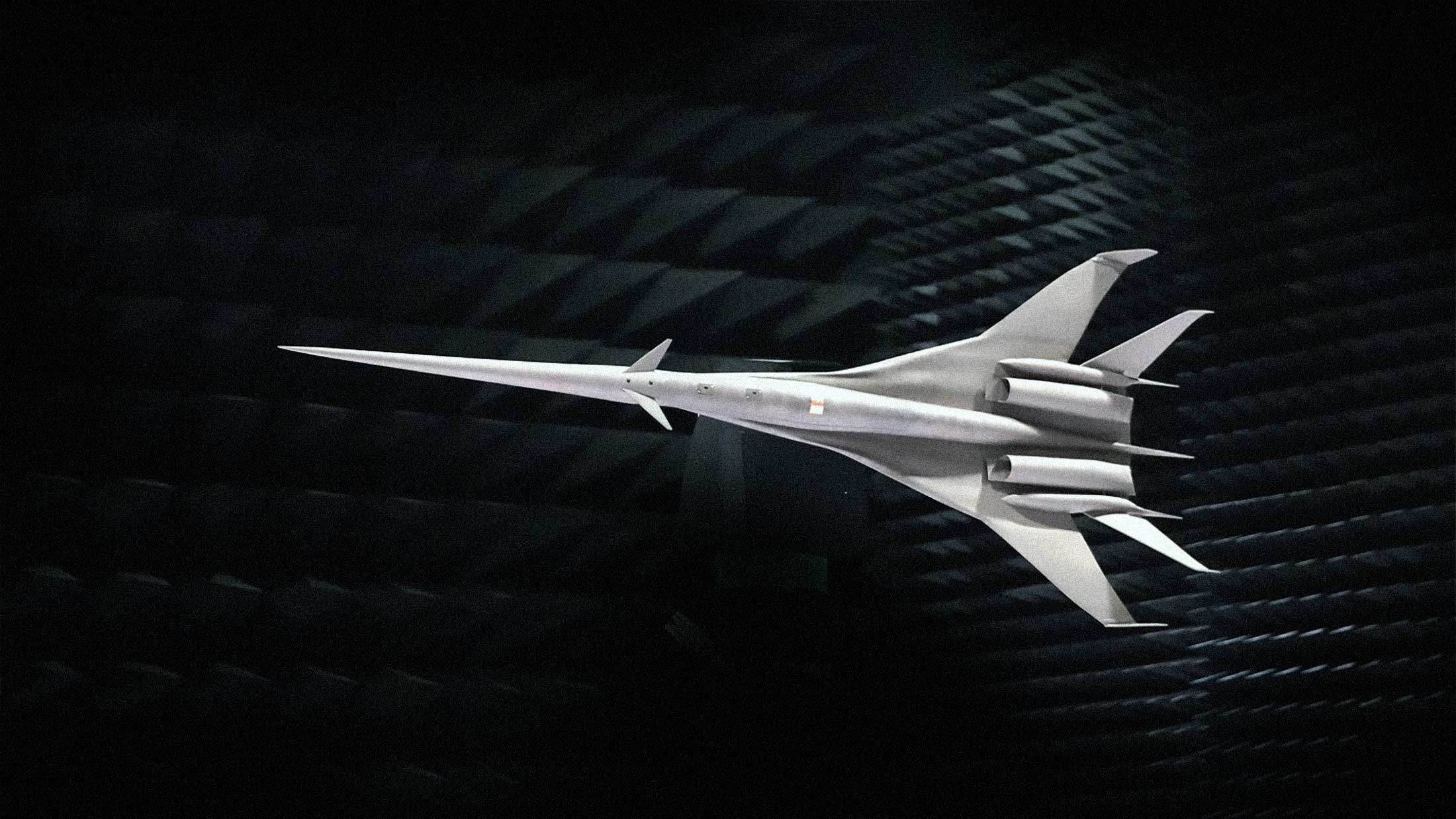
Japan's work on supersonic design predates Re-BooT by decades. Through an earlier program called S4, JAXA developed a conceptual 50-seat transport targeting Mach 1.6 with a range of roughly 6,300 kilometers. The agency set a sonic boom threshold of 85 PLdB or less to enable overland flight. It also aimed to cut structural weight by at least 15 percent compared to Concorde. Re-BooT builds on this foundation, with plans to validate those design assumptions through actual flight testing and feed the results into international rulemaking discussions at ICAO.
JAXA has collaborated with NASA and Boeing on wind tunnel testing for years. In 2023, the agency ran scale models of NASA's X-59 through its supersonic wind tunnel in Chofu, Japan. The cooperation runs both directions: JAXA's flight data is expected to inform global noise standards for next-generation supersonic aircraft.
NASA's X-59: The Regulatory Linchpin
While JAXA focuses on research, NASA's X-59 Quesst aircraft is trying to produce the empirical evidence regulators need to lift the ban on overland supersonic flight in the United States. Built by Lockheed Martin's Skunk Works division, the X-59 completed its first flight on October 28, 2025, after years of delays. The aircraft is designed to cruise at Mach 1.42 at 55,000 feet while producing a sound on the ground of roughly 75 EPNdB, which NASA describes as a quiet thump rather than a thunderclap.
By late April 2026, the X-59 had completed 12 test flights, reaching altitudes of 43,000 feet and speeds approaching Mach 0.95. NASA expects to complete envelope expansion and initial acoustic validation by the end of 2026. If the data shows what NASA hopes it will, the results could feed into new FAA noise standards as early as 2028.
Boom's Private-Sector Bet
The commercial race is being led by Boom Supersonic, whose XB-1 demonstrator became the first independently developed jet to break the sound barrier on January 28, 2025, over the Mojave Desert. The aircraft reached Mach 1.122 at 35,290 feet. Boom claims its Boomless Cruise technology, based on the well-known physics of Mach cutoff, allowed the XB-1 to go supersonic six times across two flights without producing an audible boom on the ground.
Boom's next step is the Overture, a 64- to 80-passenger airliner targeting Mach 1.7. The company has 130 orders and pre-orders from United Airlines, American Airlines, and Japan Airlines. Production is scheduled to begin in 2026 at a new factory in Greensboro, North Carolina. Boom is developing its own engine, Symphony, a medium-bypass turbofan designed to enable high-altitude acceleration without afterburners.
A Global Contest With Real Stakes
The supersonic jet market is projected to grow from roughly $31 billion in 2026 to $38.5 billion by 2030, according to industry estimates. Hermeus, based in Atlanta, is working on hypersonic aircraft targeting Mach 5. China's COMAC has proposed the C949, a Mach 1.6 airliner. Spike Aerospace is developing a windowless supersonic business jet with panoramic cabin displays.
JAXA's contribution is less flashy than some of its competitors, but potentially more consequential. The Re-BooT project is explicitly designed to position Japan for participation in future international supersonic aircraft programs. As JAXA has noted, no single nation can develop these aircraft alone. Japan's strategy is to own the technology that everyone else will need: the ability to fly fast without making noise.
The FAA's eVTOL pilot program recently demonstrated how quickly regulatory frameworks can shift when the technology is ready. Whether supersonic aviation follows the same trajectory depends on whether programs like Re-BooT and X-59 can deliver the data regulators are waiting for.