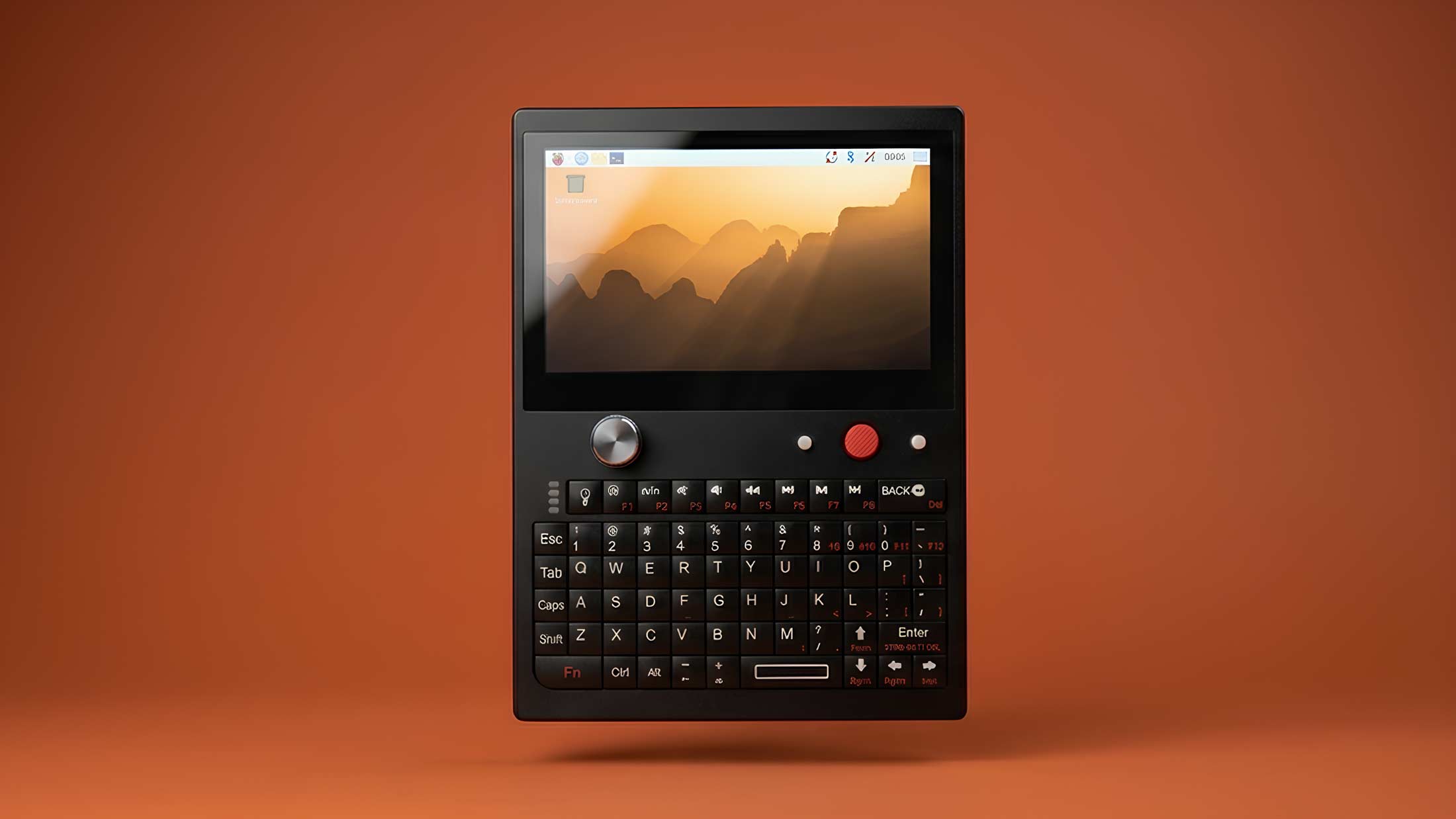
Staticcat is preparing to launch Lini, a portable computer built around the Raspberry Pi Compute Module 5. The device is marketed as an open-source workstation for developers and makers, and it enters a market increasingly crowded with Raspberry Pi handhelds competing for the same niche.
The Core Hardware
According to the company's website, Lini is powered by the Raspberry Pi Compute Module 5, positioning it alongside the most capable ARM-based portable Linux computers currently available. The CM5 brings a quad-core Cortex-A76 processor clocked at 2.4 GHz, support for up to 16GB of RAM, and proper PCIe connectivity for storage expansion.
The device includes a 10,000mAh battery, which Staticcat says will handle extended coding sessions and general productivity. If accurate, that capacity would give Lini an edge over competing devices like the HackberryPi CM5, which ships with a 5,000mAh cell.
Input comes from an HD touchscreen paired with a tactile physical keyboard and an integrated TrackPoint-style mouse. The TrackPoint inclusion is notable. Most Raspberry Pi handhelds have leaned on touchscreens or awkward trackpads. A pointing stick centered in the keyboard suggests Staticcat is thinking about actual text work, not just terminal commands.
An Increasingly Competitive Space
The portable Linux cyberdeck market has seen significant growth over the past year. ZitaoTech's HackberryPi CM5 launched with an aluminum chassis, 4-inch 720x720 display, and salvaged BlackBerry keyboards. Carbon Computers has introduced the Pi Slate and Pi Flux for penetration testing. Clockwork's uConsole and DevTerm have cultivated loyal followings. And the Pilet series from SoulsCircuit is live on Kickstarter, promising modularity and retro aesthetics.
Lini enters this field with a specific thesis: portable workstations for coding, not just pentesting or retro gaming. The rise of local AI development and on-device inference has created genuine demand for capable ARM-based Linux machines. Whether Lini can deliver on that use case depends on the details that Staticcat has not yet disclosed.
What Remains Unknown
The company's website is currently collecting email signups for early-bird pricing. Pricing has not been announced. Neither have display resolution, exact dimensions, weight, or the availability of expansion ports. Given that HackberryPi CM5 units sell for around $170 for barebones kits (CM5 sold separately) and assembled Pi Slate configurations range up to $700, Lini's price point will determine its position.
The open-source claim also needs clarification. Some portable Pi projects, like HackberryPi, publish full schematics and STL files on GitHub. Others use open-source hardware as marketing language without the follow-through. Staticcat has not yet published any design files or indicated what level of openness Lini will offer.
For developers who want portable computing power beyond what a smartphone provides, the CM5 represents the current ceiling for Raspberry Pi-based devices. Lini's combination of a large battery and proper input hardware could make it practical for real work. But until Staticcat releases specifications and pricing, the device remains a landing page with potential rather than a product.