Governor Kathy Hochul signed New York's FY27 budget last week, and buried in Part C of the Public Protection and General Government bill is one of the most aggressive regulations ever imposed on digital fabrication equipment. Every 3D printer and CNC machine sold in the state will now be required to include software that scans design files against a firearms detection algorithm before allowing any job to proceed.
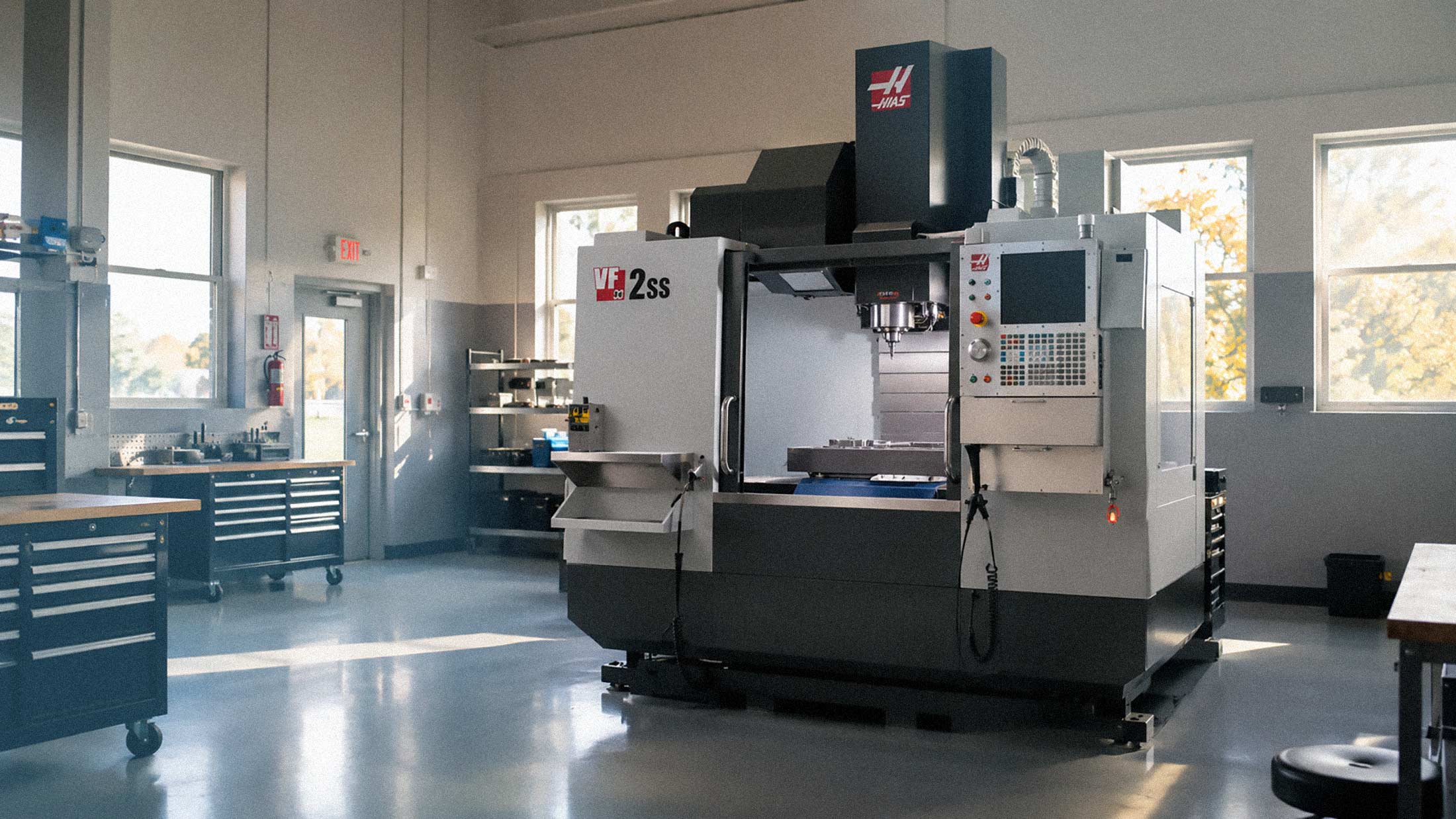
The law, contained in S9005/A10005, passed the Senate 39-22. Its scope is broader than most coverage has acknowledged. The statutory definition of "three-dimensional printer" includes not only consumer FDM and resin machines but also any equipment "capable of making three-dimensional modifications to an object from a digital design file using subtractive manufacturing." That's CNC mills. Lathes. Industrial machining centers. The kind of equipment that sits in every repair shop and manufacturing facility in the state.
How the Blocking Mandate Works
Under Part C Subpart B, every covered machine sold in New York must include what the law calls "blocking technology." The software must evaluate incoming print files through a firearms blueprint detection algorithm and refuse to operate if it flags a potential match. The state will maintain a library of forbidden design files with tightly restricted access.
Online sales are now prohibited. All purchases must happen in person, face-to-face. Penalties for manufacturers who sell non-compliant devices run up to $10,000 per violation.
There are no carve-outs. The Electronic Frontier Foundation notes that the restrictions apply to sales to researchers, commercial manufacturers, and even federally licensed gunsmiths. Universities get no exemption. Neither do repair shops.
The Technical Problem No One Can Solve
The fundamental issue is that geometry alone cannot reliably distinguish firearm components from ordinary machine parts. As Adafruit's Phillip Torrone put it, a detection algorithm would need to identify firearm components from raw STL and GCODE files "while not flagging pipes, tubes, blocks, brackets, gears, or any of the millions of legitimate shapes that happen to share geometric properties with gun parts."
One 3D printer manufacturer ran pilot tests of proposed print-blocking algorithms. The results were dismal: 17 percent of non-weapon prints were flagged due to superficial resemblance to firearm components. Film props. Kids' toys. Decorative models. Pipes and brackets. All blocked.
The EFF has characterized this as a "classification problem with enormous false positive and false negative rates." Anyone actually trying to print illegal weapon parts can trivially split files into segments or modify geometries to evade pattern detection. Meanwhile, legitimate users will find their workflow interrupted by an algorithm that can't tell a bicycle bracket from a trigger guard.
The Felony Provisions
Part C Subpart A creates new criminal penalties that extend beyond manufacturing. Possessing or distributing flagged design files is now a Class E felony. The law criminalizes selling or distributing files that can produce major firearm components to anyone who isn't both federally and New York-licensed as a gunsmith.
This creates legal exposure for researchers studying printable firearms, journalists reporting on the technology, or anyone who shares design files the state has decided to restrict. The EFF explicitly warned about this provision's chilling effect on lawful activity.
The Budget Bill Strategy
New York's budget bills are negotiated behind closed doors between the governor, Senate majority leader, and Assembly speaker. Individual provisions don't get standalone floor votes. They get bundled and traded. Most New Yorkers probably don't know these manufacturing restrictions exist until their next printer purchase requires an in-person trip and comes preloaded with scanning software.
The pattern is spreading. Washington already signed similar legislation. California has AB 2047 moving through its legislature. If the three states all pass comparable laws, that represents roughly a quarter of the U.S. economy. Manufacturers would have little choice but to comply nationwide rather than maintain separate product lines.
Open Source Gets No Compliance Path
The law's requirements fall hardest on the open-source ecosystem. Firmware like Marlin, Klipper, and RepRap is maintained by volunteers without the resources for compliance. The mandate effectively requires cryptographic signing of G-code, which would lock users into vendor-approved slicers and shut out community alternatives like open-source development tools.
Governor Hochul framed the legislation as addressing what she called the "Plastic Pipeline." Her office cited a 1,000 percent increase in 3D-printed gun recoveries across 20 cities over five years. The policy goal is real. But as Techdirt noted, the law doesn't require table saws to scan wood for weapon shapes or lathes to phone home before turning metal. The surveillance infrastructure being mandated here is novel in scope, and its expansion potential is limited only by future policy decisions.
The regulations take effect one year after the Division of Criminal Justice Services promulgates implementing rules. A working group will develop the actual technical standards. Privacy advocates are already warning that the details matter less than the infrastructure being built. Once mandatory content scanning exists on personal manufacturing devices, expanding the forbidden file list is a policy change, not a technical one.