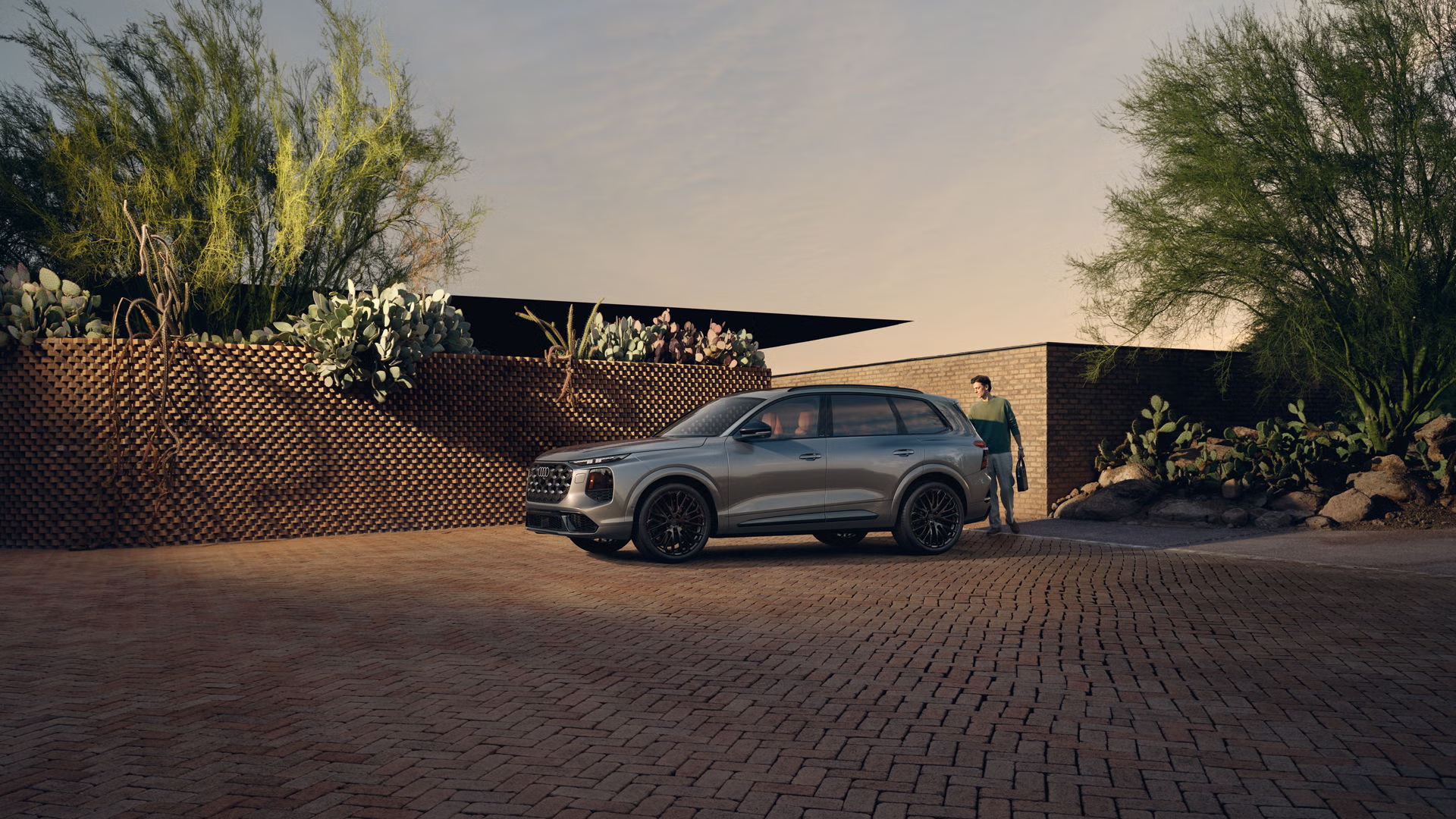
Audi has unveiled the third-generation Q7 and SQ7, ending an 11-year run for the outgoing model with a comprehensive overhaul that brings substantial power increases, lighting technology previously unavailable in the United States, and a redesigned interior that borrows liberally from the upcoming Q9 flagship.
The Q7's 2.9-liter turbo V6 enables 0-60 mph in 4.8 seconds, while the SQ7's 4.0-liter twin-turbo V8 delivers 0-60 mph in 3.7 seconds. The V6 produces 429 horsepower and 442 lb-ft of torque, while the V8 makes 591 hp and 590 lb-ft. Both models arrive at U.S. dealers in Q4 2026, with pricing to be announced closer to the on-sale date.
The V8 Gets the RS Treatment
The SQ7's power numbers represent an increase of 91 hp and 22 lb-ft of torque over its predecessor. The engine shares its basic architecture with the twin-turbo V8 found in the RS 6 Avant and RS 7, though those performance models push output slightly higher at 600 hp in standard form. The big news is that there isn't a hybrid in sight in the US market, just two V-shaped engine options including a V8 that's got RS power levels.
The SQ7 pairs its V8 with an 8-speed automatic and rear-based Quattro with an electrically controlled rear-axle differential lock. An electromechanical clutch modulates torque flow between the front and rear axles, and when needed, it can send almost 100% of the engine's torque to the rear wheels. With summer tires, the SQ7 will hit 155 mph.
Both models can tow up to 7,700 lbs. That's enough capacity for serious recreational use, and Audi seems to understand that American buyers shopping in this segment often have boats or trailers to consider.
The Lighting System America Has Been Denied
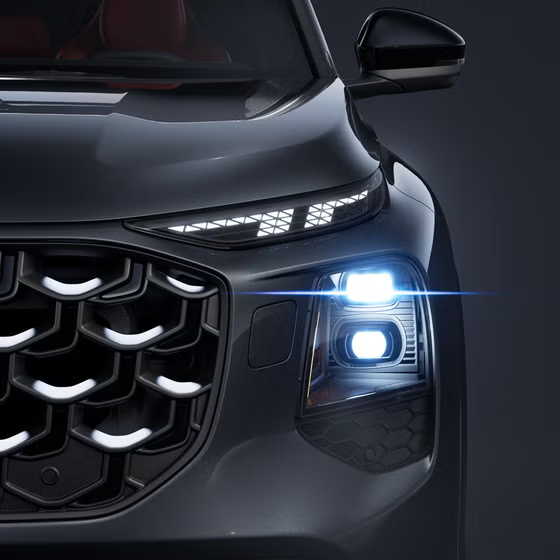
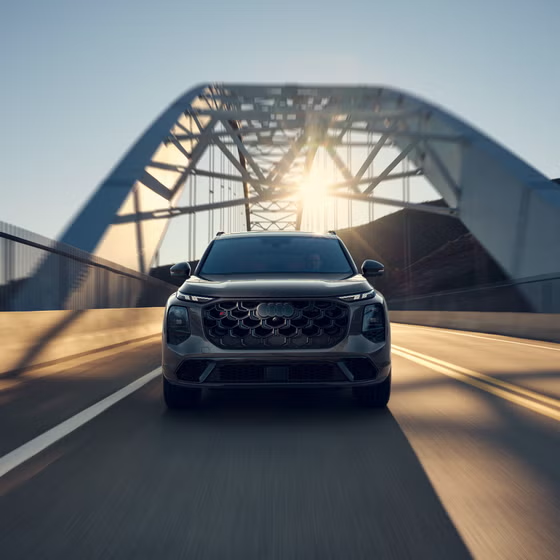
Up front, the Q7 features Digital Matrix LED headlights with adaptive driving beam capability. This Q7 marks the first time we get such tech here in the States, and Audi had to reinvent its own smart lighting tech to make it work. Each headlight adapts in real time using approximately 25,600 individually controllable micro-LEDs for maximum visibility while minimizing glare for other road users.
These systems have been available in Europe for years. Federal regulations previously prevented their use in the US, but changing federal safety regulations enabled the SUVs to feature Digital Matrix LED headlights, which balance the brightness of traditional high-beam headlights with the ability to turn off individual parts of the lighting pattern quickly and dynamically so they don't blind other drivers.
Both ends of the SUV feature illuminated Audi rings, and lighting is a big part of the new Q7's talents, with a world-first advanced turn signal system available, projecting turn signals onto the ground when the low beams are on. Digital OLED taillights let you customize the signature lights, but also provide warnings to other road users with warning triangle displays. The auxiliary headlamp and taillamp clusters project turn signals onto the road surface.
Bigger, Taller, More Upright
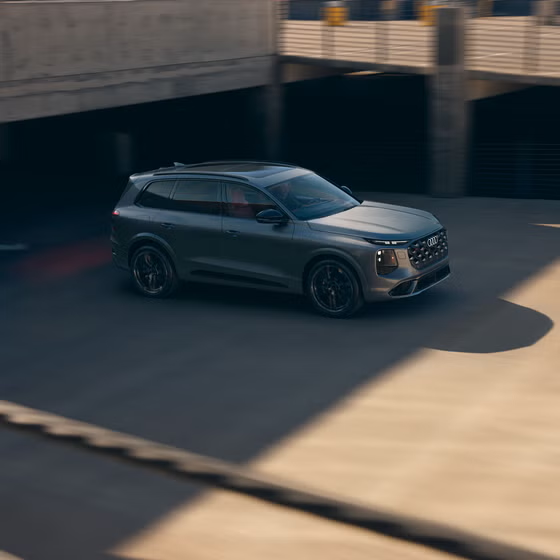
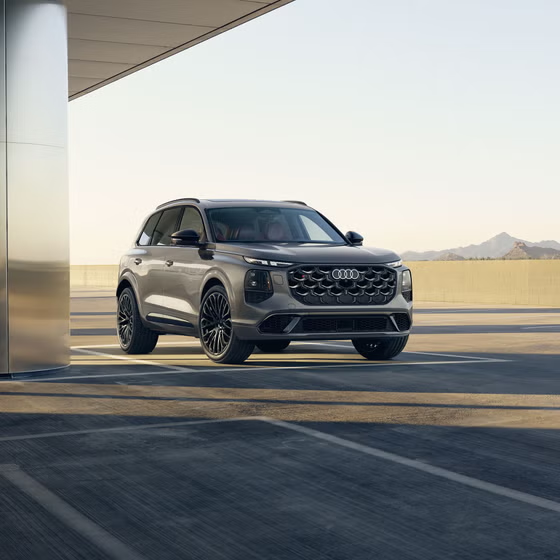
The new Q7 is 2.8 inches taller than the previous one, and that's a big difference generation over generation. Most of that height comes in at the rear end. Traditionally, Q7s have had a bit of a sloping roofline, but to give the car a more upright look and a lot more rear headroom, Audi's designers replaced the slope with a far flatter roofline.
Available with six or seven seats, the Q7 delivers maximum versatility and everyday usability. The choice is essentially between a bench or captain's chairs in the second row. Opt for the captain's chairs and you lose a seat but gain substantially more comfortable middle-row accommodations.
The 2027 model offers 15.7 cubic feet of cargo space behind the third row, 43.9 cubes behind the second row, and up to 78.1 cubic feet with all the rear seats folded. The Q7 weighs 5,137 lbs, while the SQ7 tips the scales at 5,467 lbs.
Interior Borrows From the Upcoming Q9
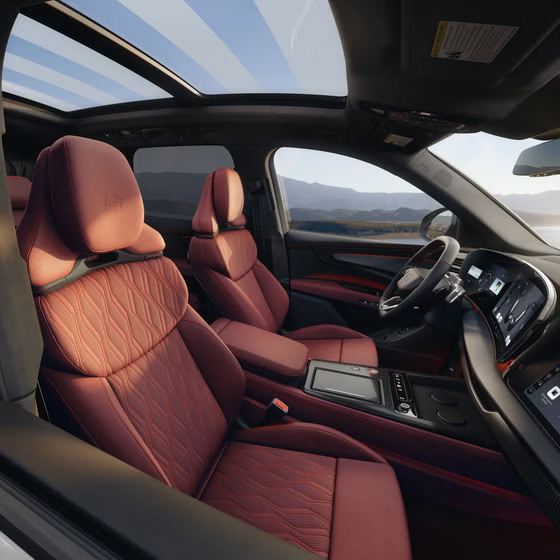
The interior design and layout have been previewed in the Q9's interior reveal. The Q9 is still a few months away from being revealed in full, but Audi is letting the Q7 inherit the new halo's cabin traits. The gloss plastic is gone, replaced by textured, matte finishes from open-pore wood and premium trim inlays.
An updated Bang & Olufsen audio system with 4D sound is available as an option on the SQ7 and higher Q7 trims. This 22-speaker, 1,360-watt system has actuators in the front seats that give a 4D feel to the music. Whether vibrating seats synchronized to your music is a feature worth paying for remains a matter of taste.
Two Qi2 wireless chargers at the front of the center console come standard. They're actually magnetized, so your phone won't go flying away at the first sign of a hard corner.
Chassis and Suspension
The SQ7 comes standard with air suspension, but it can be optioned with Audi's sport adaptive air suspension that drops the ride height by 1.2 inches. The SQ7 gets 16.5-inch front brakes from the factory, with 15-inch rotors in the rear.
The Q7's 2.9-liter V6 is paired with an eight-speed Tiptronic transmission and Audi's quattro permanent all-wheel drive, now featuring a new limited-slip center differential with preload for sharper turn-in and more stable load changes. Four-wheel steering is also available.
The recently unveiled Nuvolari supercar suggested Audi was rethinking its design language, and the Q7 represents a more practical application of that direction. The proportions are deliberately boxy and commanding. The base Q7's V6 delivers 429 horsepower, a full 168 more angry horses than the old Q7.
What This Means for the Segment
The 2027 Q7 enters a competitive field. The mid-size luxury SUVs have evolved in their rivalry against the Mercedes-Benz GLE-Class and BMW X5. For over 20 years the Q7 has been Audi's largest SUV, but that's about to change with the introduction of the new Q9.
The first two Q7 generations sold 550,000 units and 780,000 units respectively across the world. Audi has announced a price for the European-market Q7 of €87,900, which is equivalent to more than $100,000 USD. The US price will likely be significantly lower, but expect an increase over the current model's $62,000 base price.
The decision to skip hybrid powertrains for the US market is notable. In keeping with the V6 and V8 engine options and giving the latter RS levels of power, Audi is showing that it's listening to the American market. Whether this positions the Q7 well for the next decade or leaves it exposed if fuel prices spike is an open question. For now, Audi is betting that buyers in this segment want traditional internal combustion performance, and the numbers suggest they're probably right.
The trained parking feature deserves mention: the 2027 Q7 lets drivers teach the vehicle up to five custom parking maneuvers, each up to 650 feet long, that the car can then execute autonomously with the driver present. Reverse assist memorizes a route of roughly 50 meters and can back the vehicle out independently at up to 6 mph. This is the kind of incremental autonomy that actually serves a practical purpose.