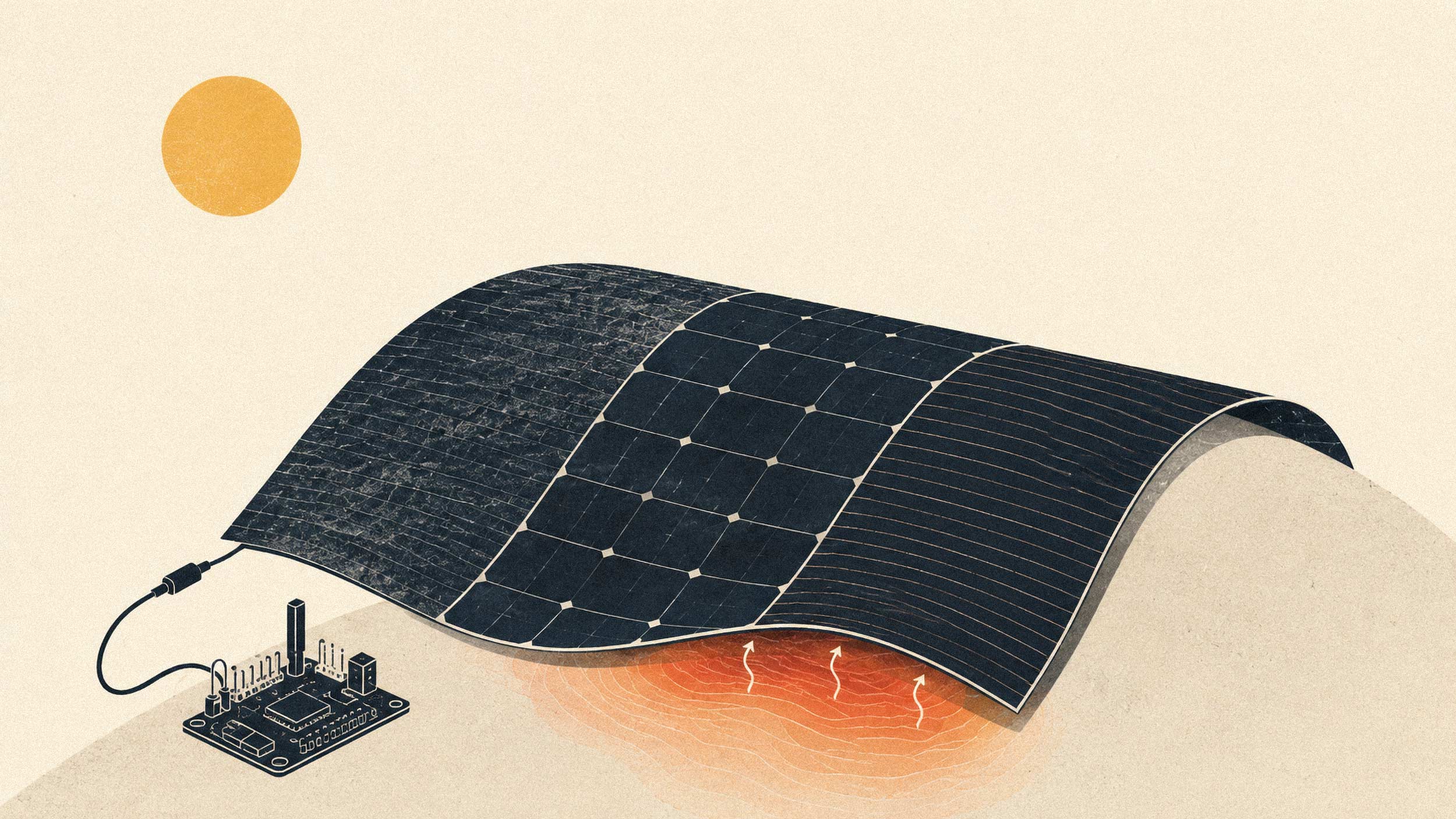
Flexible solar panels have carved out a distinct niche for DIY electronics projects. Where rigid glass-and-aluminum panels remain the gold standard for rooftop installations, flexible panels open up possibilities that traditional modules simply cannot reach: curved surfaces, weight-sensitive applications, and portable setups where you need power without infrastructure.
For makers building solar-powered Arduinos, remote Raspberry Pi sensors, or weekend projects that need to survive outdoors, understanding the tradeoffs is essential. The technology works. But the devil is in the details.
Cell Types: The Three Families
Flexible solar panels fall into three main categories, each with distinct characteristics that matter for different use cases.
Amorphous Silicon (a-Si)
The original thin-film technology. Amorphous panels use silicon deposited in ultra-thin layers onto a flexible substrate. They bend more readily than any crystalline option and perform better in low-light conditions. The tradeoff: efficiency typically lands around 6 to 10 percent, roughly half of what monocrystalline panels achieve. For small electronics projects where space is not constrained and you need maximum flexibility, they remain a viable choice.
Flexible Monocrystalline
The efficiency leader in the flexible category. These panels use the same single-crystal silicon found in premium rigid panels, but mounted on a bendable substrate. Efficiency ranges from 18 to 22.5 percent in current production models. The Renogy 100W Flexible Panel can bend up to 248 degrees while maintaining a 17.3 percent efficiency rating. Higher output per square inch means smaller panels for the same power.
CIGS (Copper Indium Gallium Selenide)
The middle ground. CIGS panels achieve 15 to 19 percent efficiency while offering superior flexibility and better shade tolerance than monocrystalline options. The Yuma 100L uses CIGS cells and can bend a full 360 degrees. They cost more than standard thin-film but deliver better durability in demanding environments.
Coating Matters More Than You Think
The protective front layer determines how long your panel survives outdoors. Two materials dominate the market: PET and ETFE.
PET-coated panels cost less upfront. They also degrade faster. UV exposure causes yellowing within one to three years, and the surface scratches easily. Budget panels with PET coatings typically last two to five years before significant performance degradation.
ETFE coating is the premium option. It transmits up to 95 percent of incoming light, resists UV degradation, and has self-cleaning properties that let rain wash away dirt. Premium ETFE panels maintain performance for 10 to 15 years in testing. The material itself can last 30 years in architectural installations. If your project needs to survive outdoors for any length of time, ETFE is worth the premium.
When to Use What
Small Arduino projects and remote sensors: A 5 to 10 watt panel paired with a power management board like the DFRobot Solar Power Manager 5V handles most low-power microcontroller applications. Amorphous panels work fine here. The Voltaic P105 (6V, 5W) offers ETFE coating in a compact form factor suitable for maker projects.
Raspberry Pi systems: Pi boards consume significantly more power than Arduinos and cannot sleep to conserve energy. Even the most efficient Pi A+ board draws around 24 watt-hours per day running continuously. You need at least a 9W panel in bright sun to maintain it, and realistically you want more headroom. Flexible monocrystalline panels in the 10 to 20 watt range work well here. Consider cycling the Pi on and off rather than running it continuously if you want the solar system to remain compact.
Van conversions and RV roofs: This is where flexible panels shine. Curved surfaces that cannot accommodate rigid panels, weight limits on roof structures, and the need for a low profile at highway speeds all favor flexible installations. The Renogy 175W Flexible Panel is the go-to choice for serious mobile solar setups.
Marine applications: Salt spray kills cheap panels quickly. If you are mounting panels on a boat, invest in ETFE-coated, marine-rated modules. The Eco-Worthy 120W flexible panel handles the 30-degree curve of most boat decks and weighs just 3.9 pounds.
Installation Traps
The most common failure mode for flexible panels is heat buildup from direct mounting. Unlike rigid panels that sit on frames with an air gap beneath, flexible panels mounted flat against a surface can reach surface temperatures of 100 degrees Celsius. Without airflow, thermal stress causes micro-cracking and delamination.
If you are adhesive-mounting to a roof or enclosure, leave small gaps in the perimeter bead for cooling. Use silicone-based adhesives rather than continuous beds of sealant. Some installers use longitudinal rib beads with deliberate breaks to maintain drainage and airflow.
For DIY electronics enclosures, consider mounting the panel at a slight angle or with standoffs rather than flat against the case.
Realistic Expectations
Flexible panels trade longevity for portability. Rigid glass panels last 25 to 30 years. Most flexible panels last 5 to 15 years depending on materials and installation. Efficiency runs 2 to 4 percentage points lower than equivalent rigid options.
For permanent installations where weight is not a constraint, rigid panels remain the better investment. For everything else, flexible panels solve problems that conventional modules cannot touch.