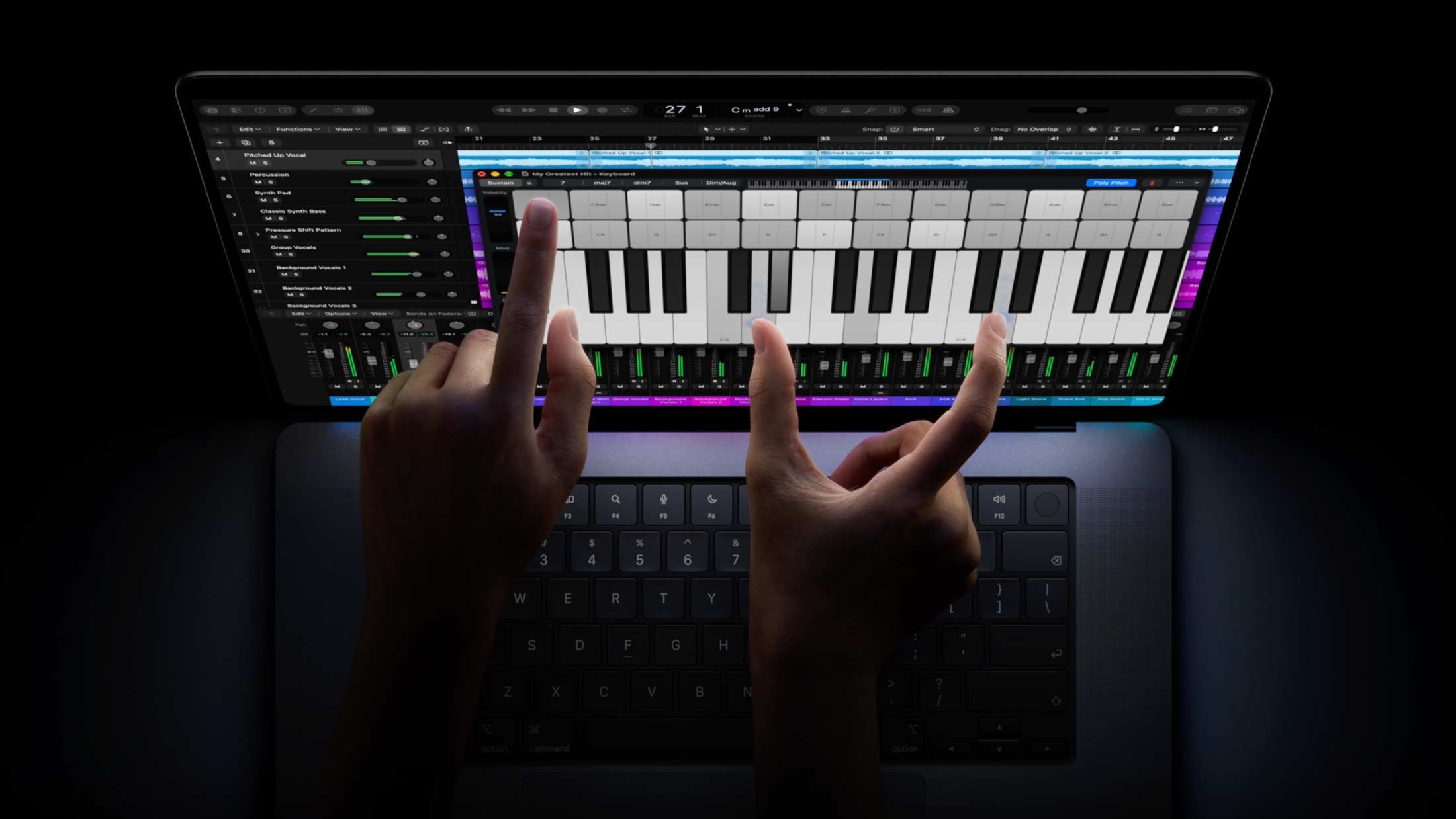
In 2010, Steve Jobs stood on stage and declared that touchscreens on laptops were "ergonomically terrible." On Wednesday, his company shipped one anyway.
Apple CEO John Ternus unveiled the MacBook Pro with PROLED XDR Display at a media event in Los Angeles, introducing both touch input and tandem OLED technology to the Mac for the first time. Pre-orders opened Wednesday, with shipping set for November 6.
"Yes, for the very first time, we are bringing touch to the Mac," Ternus said in his remarks. "And the Mac has never been better, and it's never been stronger."
The Display, Then the Touch
The PROLED XDR panel is the real engineering story here. Apple is using tandem OLED, the same architecture from its iPad Pro line, to hit 2,000 nits of peak brightness for both HDR and SDR content. Contrast reaches 10,000,000:1. Color coverage spans both P3 and Adobe RGB, which matters for anyone who ships work to print.
Touch is layered on top without adding weight. The 14-inch model comes in at 3.0 pounds, half a pound lighter than its predecessor. The 16-inch weighs 4.0 pounds, down from 4.7. Apple achieved this while moving to OLED and adding touch digitizers.
In an interview with Wired, Ternus framed touch as supplementary: "The Mac is first and foremost an indirect input device, built around the trackpad and keyboard. But I think there's times when it's comfortable and handy to have touch."
Pricing and What's Inside
The 14-inch model with M5 Pro starts at $2,899. The 16-inch version opens at $3,399. Those wanting the M5 Max chip will pay $4,499 for the 14-inch or $4,799 for the 16-inch. These are notable price increases over the non-touch MacBook Pro line, which received a separate M6-based refresh earlier this week at $1,999.
Both sizes ship with three Thunderbolt 5 ports, Wi-Fi 7, Bluetooth 6, HDMI, an SDXC slot, and MagSafe. Battery life tops out at 24 hours on the 16-inch with M5 Pro. The Dynamic Island, borrowed from iPhone, replaces the display notch and now houses Spotlight, Live Activities, and Siri.
The glowing Apple logo is back. Apple removed it from MacBooks in 2015 to make room for thinner displays. Its return is purely aesthetic.
Jobs Was Worried About Arms
The reversal carries some irony. Jobs dismissed the idea after internal testing, saying users would fatigue quickly from reaching up to touch a vertical screen. Tim Cook echoed the sentiment in 2012, comparing touchscreen Macs to converging a toaster and a refrigerator. Craig Federighi repeated the line as recently as 2018.
Ternus, who argued before becoming CEO that the iPad already served as Apple's touchscreen computer, now says the technology caught up. "We needed to get to a point where adding touch didn't make the product lesser in any way," he told Wired. "It didn't make it heavier. It didn't make it thicker."
Whether Jobs was right about the ergonomics remains to be tested. The machines ship November 6.