Apple raised prices Thursday on MacBooks, iPads, HomePods, and the Vision Pro, acknowledging what the company called an "unprecedented" surge in memory and storage costs. The increases mark the first time Apple has openly passed component inflation on to consumers across such a wide range of products.
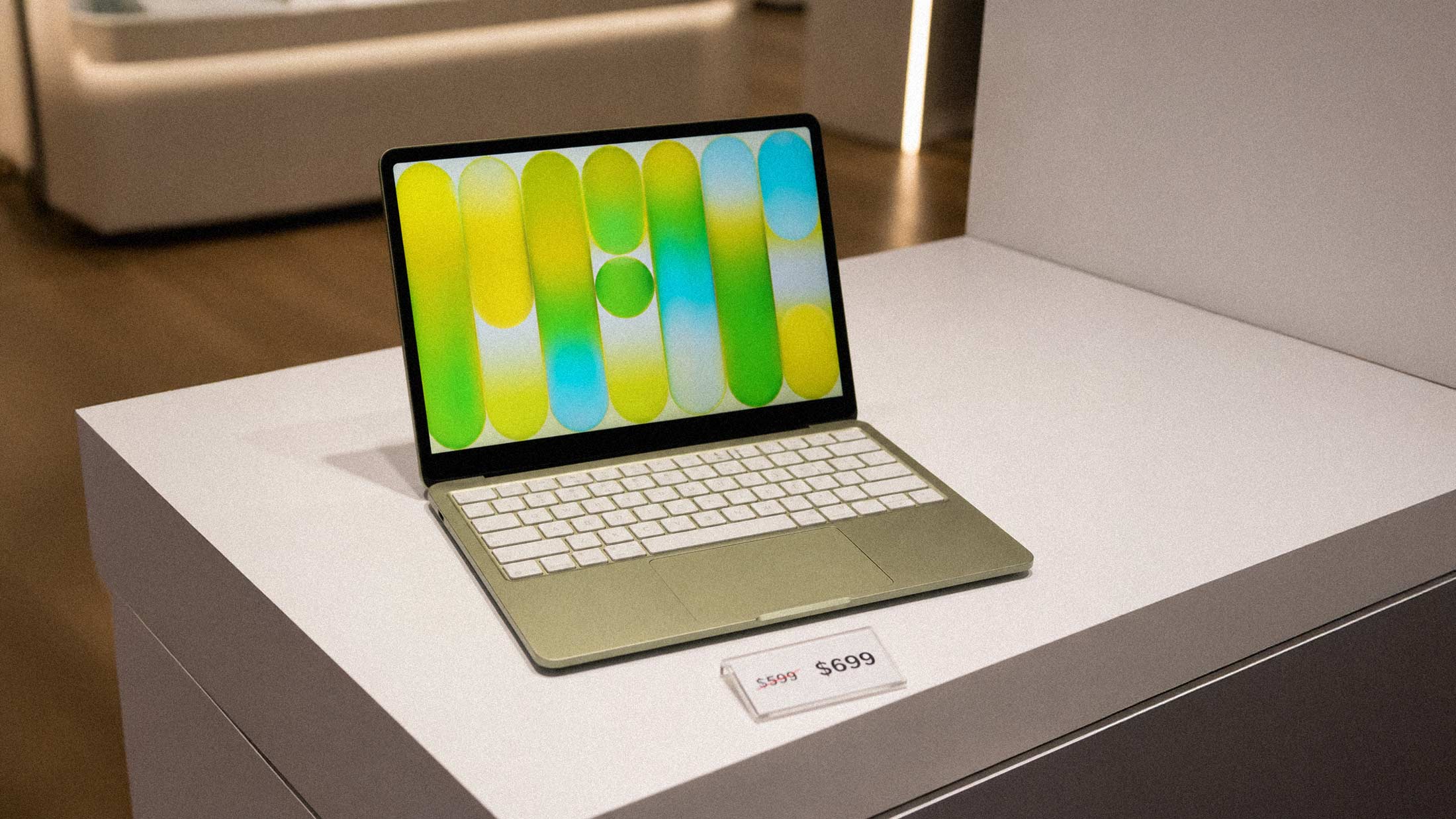
The MacBook Neo, Apple's budget laptop launched in March to compete with Chromebooks and entry-level Windows machines, now starts at $699, up from $599. The MacBook Air with 512GB of storage jumped from $1,099 to $1,299. The entry-level 14-inch MacBook Pro rose to $1,999 from $1,699, and the iPad Air climbed to $749 from $599. Notably, the iPhone remains untouched.
"We have never seen a component price increase this much, this quickly," Apple said in a statement posted alongside the new pricing. The company added that it has "reached a point where we need to begin raising prices on a number of products."
A Structural Reallocation, Not a Cycle
The memory crisis forcing Apple's hand differs fundamentally from typical chip shortages. IDC has characterized this as "not a cyclical shortage driven by a mismatch in supply and demand, but a potentially permanent, strategic reallocation of the world's silicon wafer capacity." DRAM prices rose as much as 98% in the first quarter of 2026 and are set to climb another 58% to 63% this quarter, according to TrendForce.
The economics are straightforward: Samsung Electronics, SK Hynix, and Micron Technology control more than 95% of global DRAM production. All three have pivoted manufacturing capacity toward high-bandwidth memory for AI data centers, where margins are dramatically better than consumer electronics. HBM chips used in AI accelerators generate three to five times more revenue per wafer than conventional DDR5.
Micron's latest earnings underscore just how lucrative this pivot has become. The company reported a gross margin of 84.9% for its fiscal third quarter, up from 39% a year earlier. That figure now exceeds Nvidia and Meta, making Micron the most profitable major tech company by that metric. When memory manufacturers can charge AI customers prices that produce margins like that, there is little incentive to serve consumers who historically generated far lower returns.
The Crypto Parallel
Those who remember the GPU shortages of 2017 and 2018 will recognize the pattern. Cryptocurrency mining created a sudden, overwhelming demand for graphics cards. Prices doubled and tripled. Gamers who simply wanted to build a PC found themselves competing with mining operations happy to pay any amount. The shortage persisted until the crypto crash in 2022 and Ethereum's shift to proof-of-stake flooded the market with used GPUs.
The current memory shortage shares the same fundamental dynamic: a new use case has emerged that values the component far more than traditional buyers do. AI data centers are to memory what crypto mining was to GPUs. But the differences matter more than the similarities.
When crypto crashed, miners dumped consumer-grade graphics cards back onto the secondary market. The current AI infrastructure buildout involves enterprise-grade memory that will never find its way into a laptop or smartphone. There is no release valve waiting on the other side of an AI slowdown.
Broader Industry Fallout
Apple, despite having supply chain relationships that are the envy of the industry, held out longer than most. The company secured long-term DRAM agreements that insulated it through early 2026. That runway has ended. Other manufacturers face steeper challenges.
IDC now forecasts the global smartphone market will decline 13.9% in 2026, the steepest annual contraction in the industry's history. Android shipments are expected to fall 20% year-over-year. The sub-$100 smartphone segment, which accounted for more than 170 million devices in 2025, is becoming economically unviable. The PC market faces an 11.3% decline.
Dell, HP, Lenovo, Acer, and Asus have warned of 15% to 20% PC price increases. Memory now accounts for roughly 35% of a PC's bill of materials, according to HP, up from around 15% to 18% previously. Some OEMs are responding with what IDC calls "spec shrinkflation," shipping devices with less RAM and storage than consumers expect at a given price point.
No Quick Fix
Samsung is accelerating construction of its P5 fab in Pyeongtaek, with mass production targeted for the second half of 2028. Micron is expanding facilities in Singapore and Taiwan for 2027, with a U.S. site in New York planned for 2030. Memory efficiency technologies like Google's TurboQuant may ease pressure on AI workloads, but none of this helps consumers buying laptops this year.
A Kearney analysis expects the shortage to persist until at least 2030. Memory prices may stabilize by mid-2027, but IDC does not expect them to return to previous levels within the forecast horizon.
Apple's price increases Thursday represent less a strategic decision than an acknowledgment of physics. The company absorbed as much as it could for as long as it could. The AI buildout continues. Memory manufacturers are making record profits. And consumers, once again, are left competing for components against buyers with far deeper pockets.