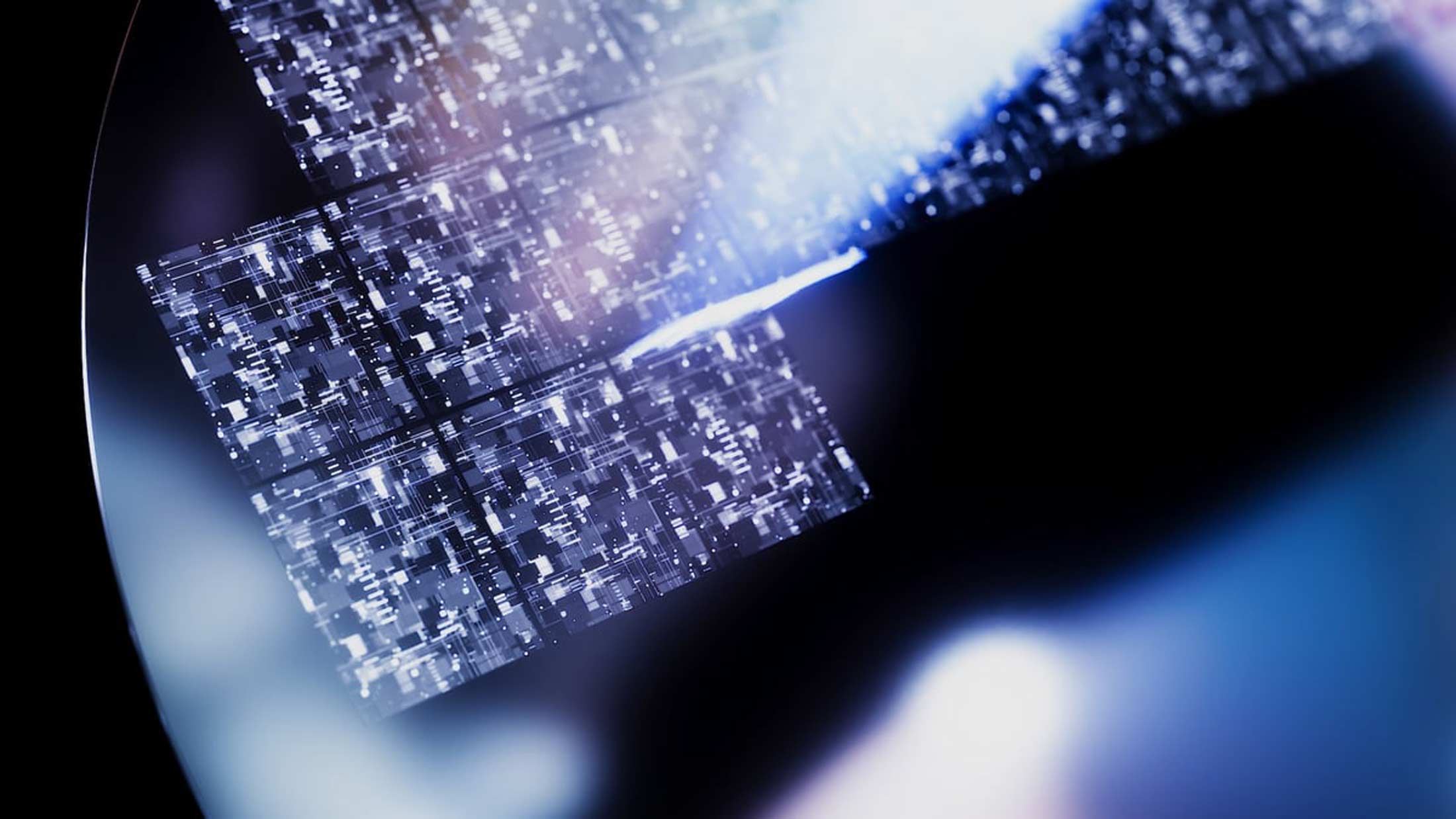
ASML just told the semiconductor industry what many suspected but few wanted to hear: the AI chip shortage isn't ending anytime soon. The Dutch lithography giant raised its 2026 revenue forecast significantly, citing AI-driven demand that continues to outpace even aggressive production targets.
The company's extreme ultraviolet (EUV) machines remain the only path to manufacturing the most advanced chips on the planet. ASML holds a monopoly on this technology, and its order book reflects a scramble among foundries to secure capacity.
What the Numbers Actually Mean
ASML's revised outlook suggests that TSMC, Samsung, and Intel are all accelerating their buildout plans. These foundries produce chips for Nvidia, AMD, and Broadcom. The companies designing AI accelerators are pushing their manufacturing partners to deliver more capacity faster.
For Nvidia, this is mixed news. The company's dominance in AI training hardware depends on TSMC's ability to produce enough H100 and B100 chips. More ASML machines entering fabs should eventually ease constraints, but the timeline matters. TSMC's AI boom is already stretching infrastructure thin.
AMD and Broadcom stand to gain if the capacity expansion arrives quickly enough to meet 2025 inference demand. Custom silicon for hyperscalers represents a growing share of the market, and Google, Amazon, and Microsoft are all building proprietary chips.
The Energy Problem Compounds Everything
More chips mean more power consumption. Data centers are already straining electrical grids, and utilities are struggling to add generation capacity fast enough. Big Tech's nuclear power bets reflect genuine desperation to secure clean baseload.
ASML's forecast implicitly assumes the industry solves its power problem. That's not guaranteed.
Geopolitics Remains the Wild Card
The US continues tightening export controls on advanced chipmaking equipment to China. ASML cannot sell its most advanced EUV systems to Chinese customers, limiting Beijing's ability to manufacture cutting-edge processors domestically. This policy fragments the global supply chain and concentrates advanced production in Taiwan, South Korea, and increasingly the United States.
Intel's domestic packaging push is one attempt to reduce reliance on Asian manufacturing. Whether it succeeds depends partly on how many ASML machines end up in American fabs.
The lithography bottleneck isn't going away. ASML's raised forecast is confirmation that demand for AI compute will exceed supply through at least 2026. Companies with locked-in foundry capacity will win. Everyone else waits.