Quantum computing has spent years promising that error correction would eventually make the technology practical. On May 21, Pasqal delivered evidence that the timeline might be shorter than skeptics assumed.
The French neutral-atom quantum startup announced that its logical qubits now outperform raw physical qubits when solving differential equations on real hardware. The company claims this is an industry first for the neutral-atom approach, putting a European startup in the same conversation as Google and IBM on the error-correction frontier.
What Pasqal Actually Showed
The research, published on arXiv, tested a quantum kernel algorithm across 1,000 differential equations, a class of problems that underpin applications from energy systems modeling to financial forecasting. Running on Pasqal's processor with 99.4% gate fidelity, logical qubits outperformed their physical counterparts by more than 50% on average. On certain nonlinear problems, the improvement stretched to a factor of 10.
The striking part: the logical implementation required more complex circuits and still delivered better results. That inverts the usual trade-off, where error-correction overhead drags down performance until you reach some distant threshold. Pasqal claims it has already crossed that threshold for this class of problems.
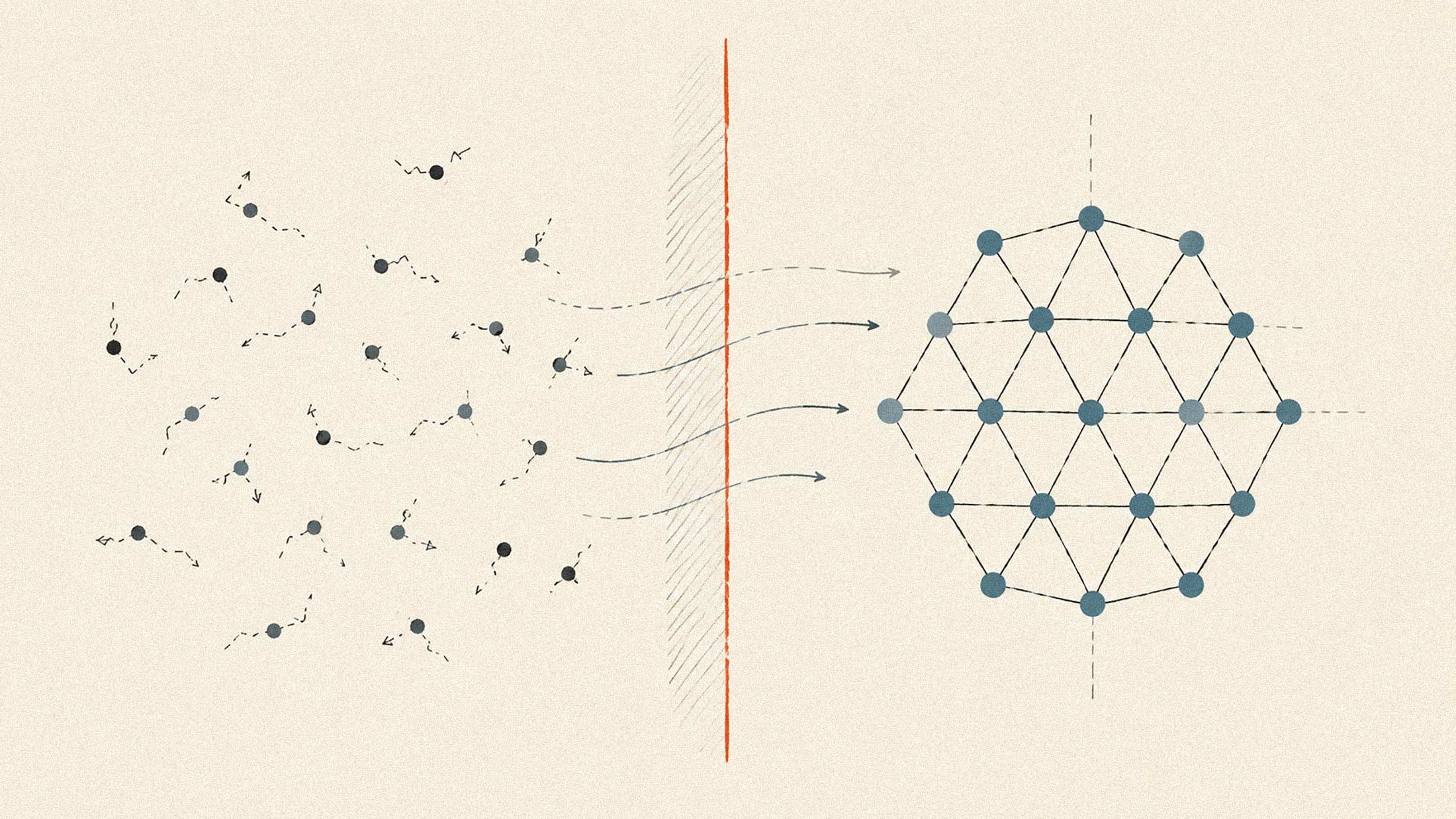
This matters because logical qubits are quantum computing's answer to noise. Physical qubits degrade quickly, introducing errors that compound. By encoding information across multiple physical qubits, logical qubits can detect and correct these errors, extending the useful lifetime of computations. The catch has always been that the overhead eats into performance. Until it doesn't.
Context From the Big Labs
Pasqal isn't the first to hit error-correction milestones. In December 2024, Google's Willow chip achieved what researchers call "below threshold" performance, demonstrating exponential error reduction as qubit counts increased. Microsoft and Atom Computing have shown 24 entangled logical qubits. IBM is targeting 200 logical qubits by 2029 with its Starling roadmap.
What distinguishes Pasqal's result is platform and provenance. Neutral-atom systems, which use laser-trapped atoms as qubits, have historically lagged superconducting approaches on error correction. Pasqal has now closed that gap, at least for specific applications. And it did so as a startup, not a hyperscaler with functionally unlimited R&D; budgets.
The France Factor
The timing of the announcement carries political weight. One day after Pasqal's disclosure, President Emmanuel Macron announced €1 billion in new funding for France's quantum strategy, part of the country's broader France 2030 initiative. Speaking at a CEA supercomputing center south of Paris, Macron warned that Europe risks falling behind the United States and China unless it accelerates investment.
France has already committed approximately €2.3 billion to quantum research since 2021. This latest infusion pushes the total higher and funds programs like PROQCIMA, which targets military-grade quantum prototypes by 2032. Nvidia also announced an investment in French quantum startup Alice & Bob the same day, adding private capital to the government push.
Pasqal itself is preparing to go public via a SPAC merger with Bleichroeder Acquisition Corp. II, valuing the company at $2 billion pre-money. The deal includes $200 million in convertible financing and is expected to close in the second half of 2026. Founded in 2019, Pasqal was co-founded by physicist Alain Aspect, who won the 2022 Nobel Prize in Physics for his foundational work on quantum entanglement.
What This Means for the Industry
For years, quantum computing has lived in a strange liminal space: clearly real, clearly funded, but not clearly useful outside contrived benchmarks. The industry attracted billions while generating minimal revenue and endured cycles of hype followed by skeptical reappraisals. Some observers warned of a "quantum winter" if technical progress failed to match investor expectations.
Pasqal's demonstration offers a counterpoint. Differential equations are not exotic benchmarks; they are workhorse problems across engineering, physics, and finance. Showing that error-corrected qubits can beat uncorrected ones on such problems, on real hardware, with circuits that are more complex rather than simpler, is the kind of result that shifts the conversation.
It does not mean quantum computers are about to replace classical machines for everyday tasks. The gap between "logical qubits outperform physical qubits on 1,000 test equations" and "quantum systems handle production workloads" remains substantial. But the gap is shrinking, and companies outside the U.S. tech giants are now demonstrating they can close it.
The $2 billion in U.S. government equity stakes announced the day before Macron's speech underscores how seriously major powers are taking this race. The IBM quantum foundry initiative points in the same direction. Governments are not just funding research; they are building industrial capacity.
For Pasqal, the immediate test is commercialization. The company reports roughly 100% revenue growth in 2025 and approximately $80 million in booked or awarded contracts. It serves clients including Thales, IBM, and shipping giant CMA CGM. Whether those relationships translate into meaningful revenue post-IPO will determine if this milestone was a proof point or a peak.
The broader test is whether neutral-atom systems can keep pace as the field accelerates. Pasqal's roadmap targets 20 logical qubits by 2027 and 100 by 2029. Google, IBM, and Microsoft have their own targets. The companies that hit their marks will define the next decade of computing. Pasqal just demonstrated it belongs in that conversation.