Four years ago, three founders with backgrounds in computational biology, deep learning, and the German defense ministry launched a startup from Munich with the premise that AI would become the decisive factor in modern warfare. Helsing is now nearing an $18 billion valuation, according to the Financial Times, set to raise new funding at that mark following a €600 million Series D that pushed its valuation to €12 billion in June 2025.
The Product Stack
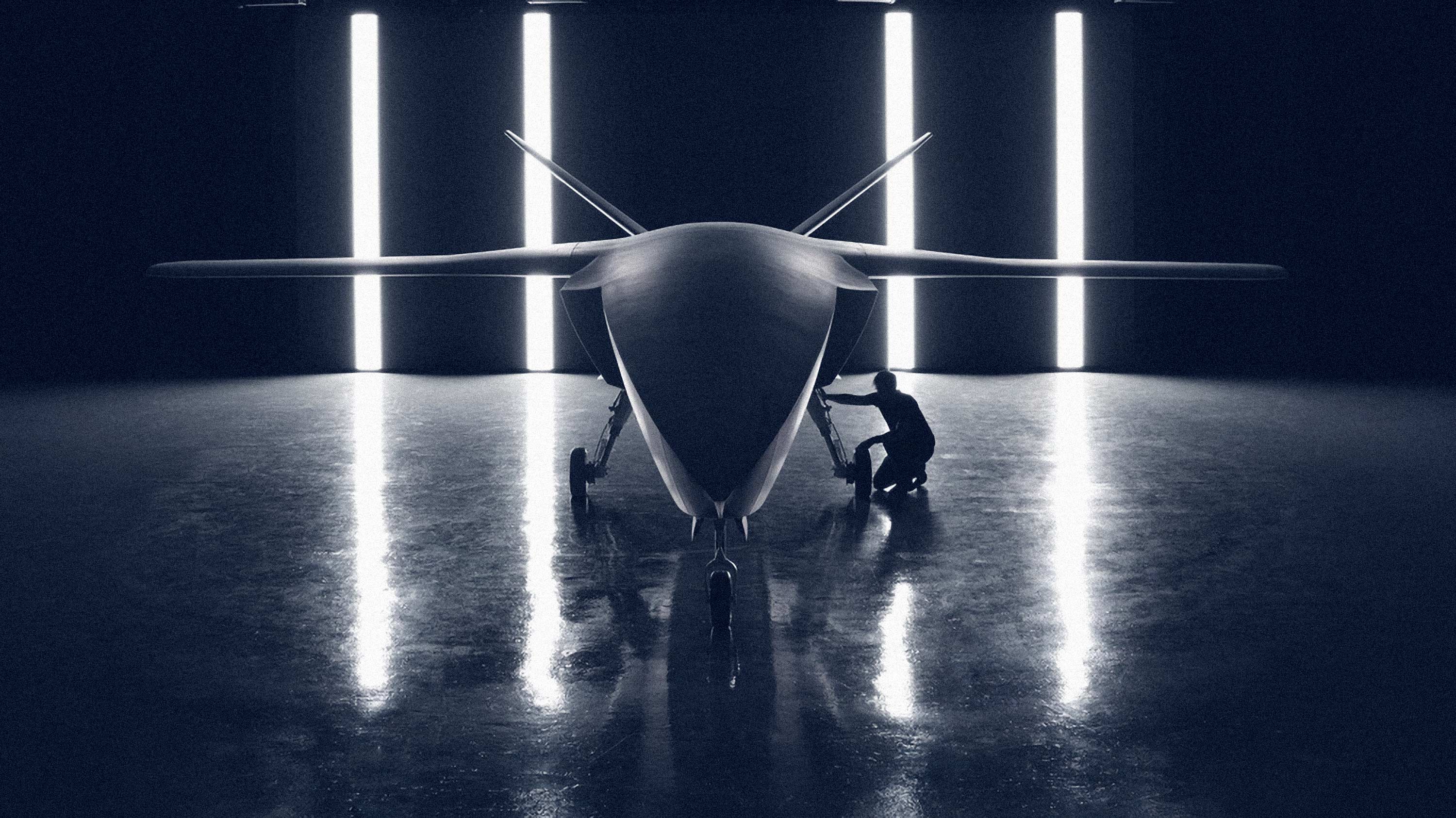
Founded in 2021 by Torsten Reil, Gundbert Scherf, and Niklas Köhler, the company develops military strike drones, underwater surveillance systems, and artificial intelligence software designed to enhance weapons systems and improve battlefield decision-making. What started as a pure software play has evolved into vertically integrated hardware and production facilities the company calls Resilience Factories.
The product lineup now spans five core offerings:
| Product | Type | Key Specifications | Status |
|---|---|---|---|
| HX-2 | Strike Drone | Quadcopter X-wing design, top speed 250 km/h, range 100 km, up to 5 kg payload | Delivering several hundred per month to Ukraine |
| Altra | Battlefield Software | Combines ISR drone reconnaissance, spotters, and ground station data to provide targeting for artillery, rocket launchers, and strike drones | Deployed in Ukraine, integrated with European artillery systems |
| SG-1 Fathom | Underwater Glider | Just under 2 meters long, 28cm diameter, 60 kg weight, glides at 1-2 knots; depth to 1,000 meters, three-month patrol endurance | In production at Plymouth Resilience Factory |
| Lura | Maritime AI Platform | Large acoustic model detects signatures 10x quieter than other AI, 40x faster than human operators | Unveiled May 2025, deployed on SG-1 |
| Centaur | AI Fighter Pilot | Tested in Project Beyond dogfight scenario with Gripen E against human pilot in beyond-visual-range combat | In development with Saab |
| CA-1 Europa | Autonomous UCAV | Payload up to 500 kg, estimated operational range 1,400–1,800 km | Under development at Grob Aircraft subsidiary |
Valuation Context: How Helsing Compares
The reported $18 billion valuation places Helsing in interesting company. As of May 2026, Palantir has a market cap of $320.73 billion, making it the world's 44th most valuable company. Lockheed Martin's market cap stands at $141.44 billion. Among private competitors, Anduril was reported in March 2026 to raise a $4 billion round at a $60 billion valuation.
The difference reflects distinct business models. Rather than employing traditional cost-plus contracts, Helsing front-loads R&D; costs and offers fixed-price products, targeting margins of 40-50% versus the typical 5-10% in traditional defense contracting. This approach mirrors Anduril and Shield AI, which have collectively demonstrated that venture-backed defense firms can compete with legacy primes by moving faster on software-defined systems.
A key advantage in European markets is Helsing's status as a European company, addressing concerns about data sovereignty and strategic autonomy. This positioning has helped secure national-level backing, with the German government fast-tracking adoption of their technology.
Manufacturing at Scale
Unlike software-only defense companies, Helsing has built physical production capacity. The first Resilience Factory is operational in Southern Germany with an initial monthly production capacity of more than 1,000 HX-2 drones. An 18,000 square foot UK facility near Plymouth produces maritime products and serves as the company's Maritime Centre of Excellence. Helsing plans to build Resilience Factories across the European continent, with the ability to scale manufacturing rates to tens of thousands of units in case of conflict.
The acquisition strategy supports this vertical integration. Helsing acquired German light aircraft manufacturer Grob Aircraft in June 2025, and followed with Australian autonomous underwater vehicle developer Blue Ocean the following October.
Consumer Tech Spillover
The technologies Helsing and its competitors are building for defense have direct applications beyond the battlefield. Edge computing in autonomous vehicles makes decisions happen instantly, onboard, without relying on connectivity. In autonomous defense systems, real-time detection, navigation, and targeting depend on embedded AI that lives inside the platform itself. These same capabilities are foundational for commercial autonomous vehicles, industrial robotics, and warehouse automation.
Agentic edge AI devices already include smart home robots, autonomous vehicles, advanced wearables, smart security systems, Industrial IoT instruments, and defense and aerospace tools. The hardware being ruggedized for military use, including low-power processors capable of running sophisticated models without cloud connectivity, will inevitably appear in consumer products as sensor fusion and on-device inference become standard expectations.
Helsing's software-defined approach to drone manufacturing also points toward a future where consumer robotics can be mass-produced at dramatically lower costs. The company's use of 3D printing and simplified electronics, solving complexity in software rather than hardware, offers a template for how the next generation of home robots and personal drones might be built.
Total funding raised now stands at approximately $1.58 billion across four major rounds. Whether Helsing can convert that capital into sustained contract wins against both American competitors and legacy European defense firms remains the central question. The $18 billion valuation suggests investors believe the answer is yes.