Until now, if you wanted a seven-axis robot arm with ±0.1 mm repeatability and a 3 kg payload for imitation-learning research, you were probably looking at a Franka Research 3. That meant budgeting somewhere between $25,000 and $35,000 before end effectors and integration.
MakerMods, a Shenzhen-based outfit that describes itself as building "hardware for physical AI," is now selling a robot arm with strikingly similar top-line specs for $2,499.
Metal Arm is available now Get yours at https://t.co/poa3dtPhOZ 6 DoF. 3kg Payload. Full CNC construction. Ships in 1 week. DMs open. https://t.co/BsDVyvZ1Dh
— Ryan Chan (@Ryan_Resolution) October 14, 2026
The Specs
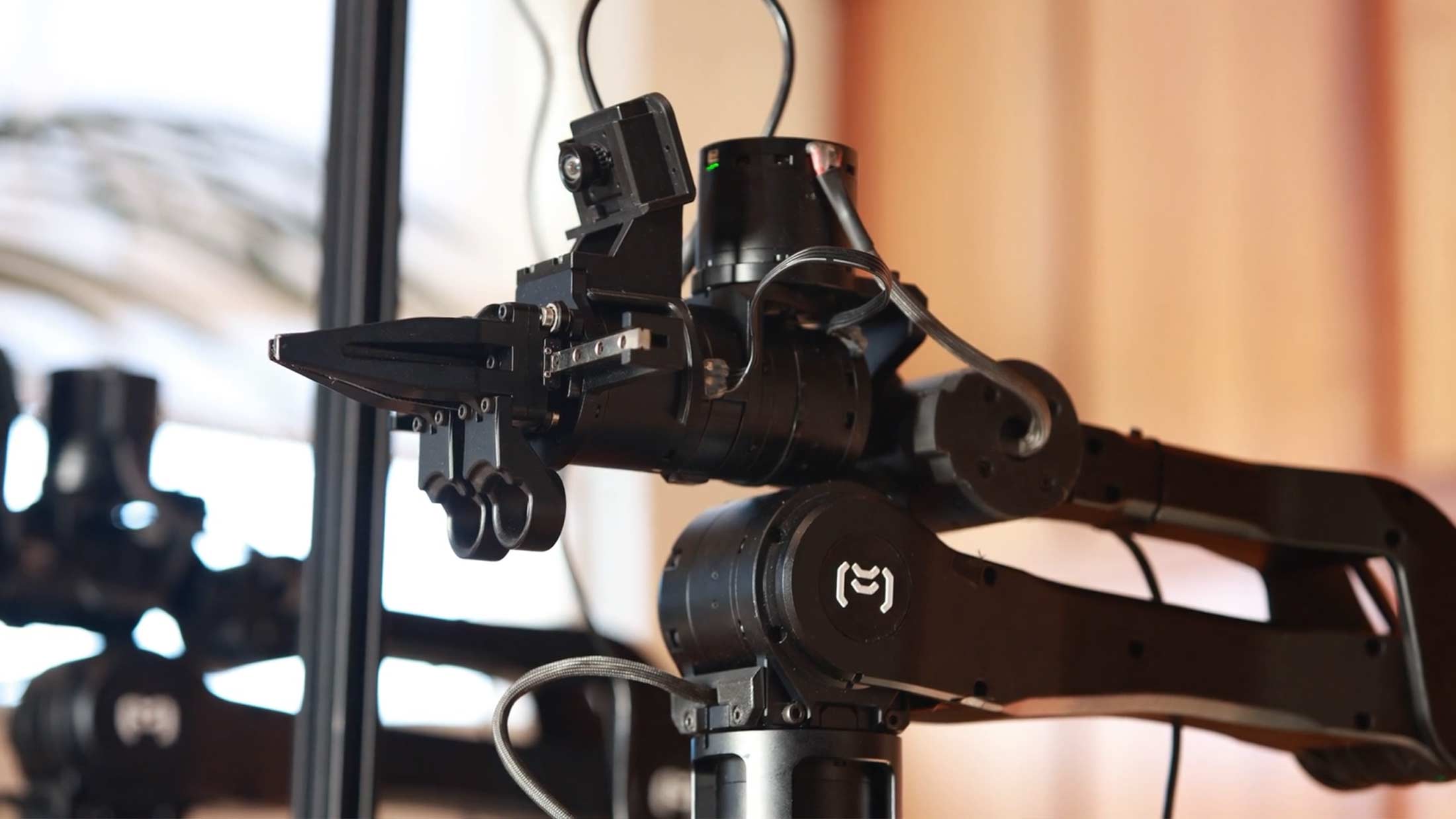
The Metal Arm is a seven-degree-of-freedom manipulator machined from aluminum alloy. According to MakerMods, it has a reach of 612.5 mm, weighs 4.2 kg, and achieves position repeatability of ±0.1 mm. The company rates the payload at 3 kg.
Each unit ships fully assembled with a 2-in-1 end-effector that doubles as a gripper and teleoperation guide, a metal stabilizer plate, a 24V power supply, a CAN-to-USB adapter, and a toolkit. Shipping runs $249 worldwide from Shenzhen.
MakerMods also offers bundle pricing: $4,999 for a bimanual pair, $9,999 for a four-arm leader-follower kit intended for teleoperation data collection.
Software Stack
The Metal Arm comes with ROS1 and ROS2 support and integrates with MoveIt. More notably for the embodied-AI crowd, MakerMods claims out-of-the-box compatibility with LeRobot, Hugging Face's open-source framework for robot learning. LeRobot has become the de facto standard for sharing robotic datasets and policies, and native support matters if you want to drop into existing training pipelines without writing custom drivers.
The SDK is MIT-licensed. MakerMods maintains a GitHub organization with repositories for the Metal Arm harness and a web UI called MakerMods Lab for recording demonstrations, training policies, and deploying them back to hardware.
What the Price Implies
A Franka Research 3 running at ±0.1 mm repeatability with torque sensing in every joint is not the same product as an arm that merely claims the same positional accuracy on paper. Franka's 1 kHz real-time control interface and per-joint force feedback justify at least some of the price premium.
But for many research workflows, especially the kind of imitation-learning pipelines that are now dominant in embodied AI, low-level torque control is not the bottleneck. Data volume is. A lab that can deploy ten Metal Arms for less than the cost of two Frankas can collect five times as much demonstration data in parallel.
That math is not lost on the handful of companies now building VLA (vision-language-action) models. The cost of training physical AI is increasingly gated by how many hours of robot teleoperation footage you can afford to record, not by the precision of any single arm.
Open Questions
MakerMods has not published independent repeatability test results, and the company is too new to have a track record in academic deployments. Whether the Metal Arm holds ±0.1 mm under real lab conditions, and for how long, remains unverified at publication.
The company's product page lists September 2026 as the shipping window. Units are paid in full at checkout.