Microsoft announced Project Solara at its Build 2026 conference today, an entirely new platform designed for devices that run AI agents rather than traditional applications. The most surprising element: Project Solara runs on Android, not Windows.
The announcement comes from Steven Bathiche, a Microsoft CVP and Technical Fellow who leads the company's Applied Sciences Group. Bathiche, whose team helped develop Copilot+ PCs and Windows AI features like Voice Focus and Live Translation, is framing Project Solara as the next logical step in computing interfaces. The thesis is straightforward: if agents are replacing apps as the primary way people interact with computers, then devices should be built around agents from the ground up.
Two Concept Devices, One Platform Bet
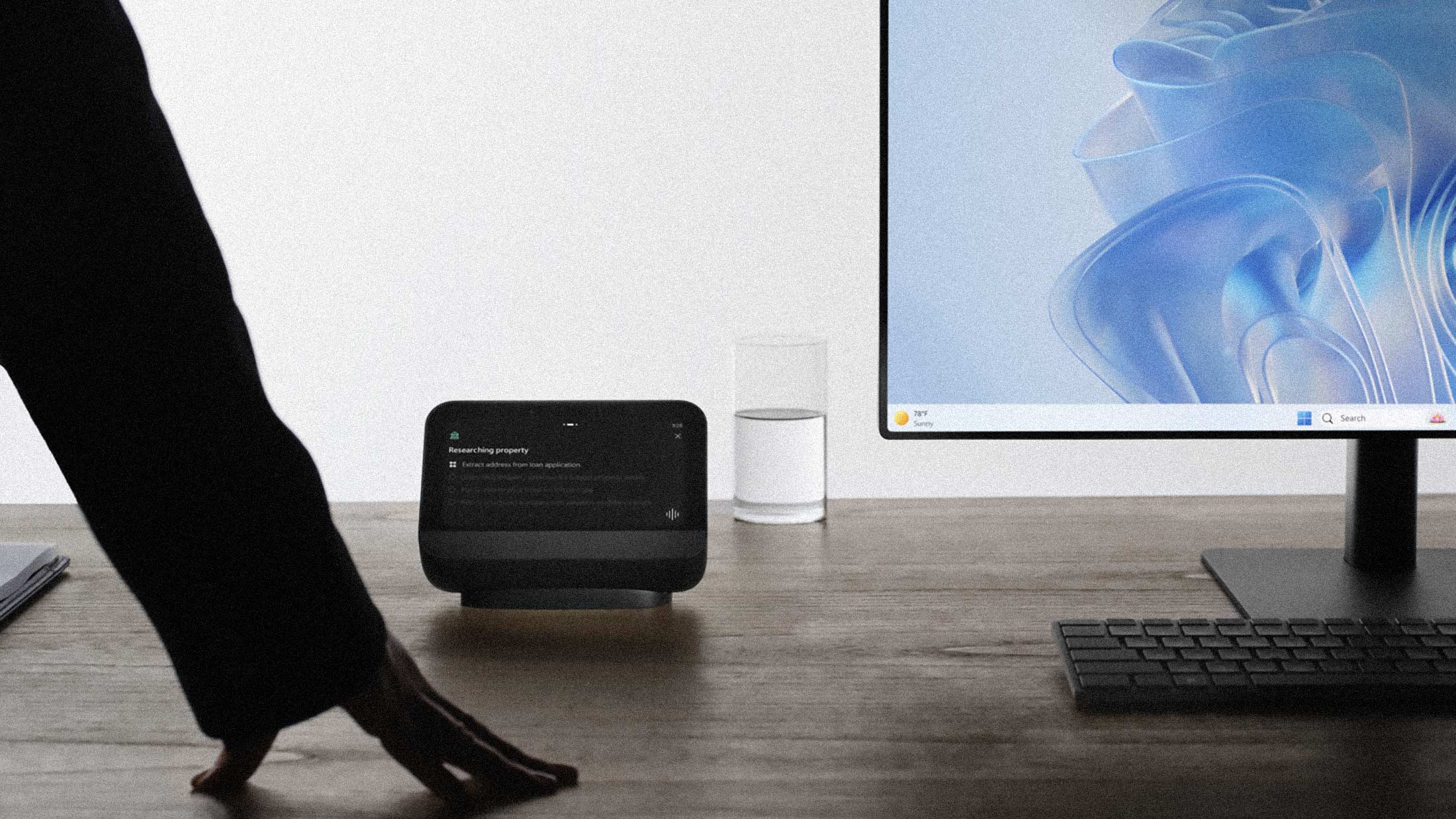
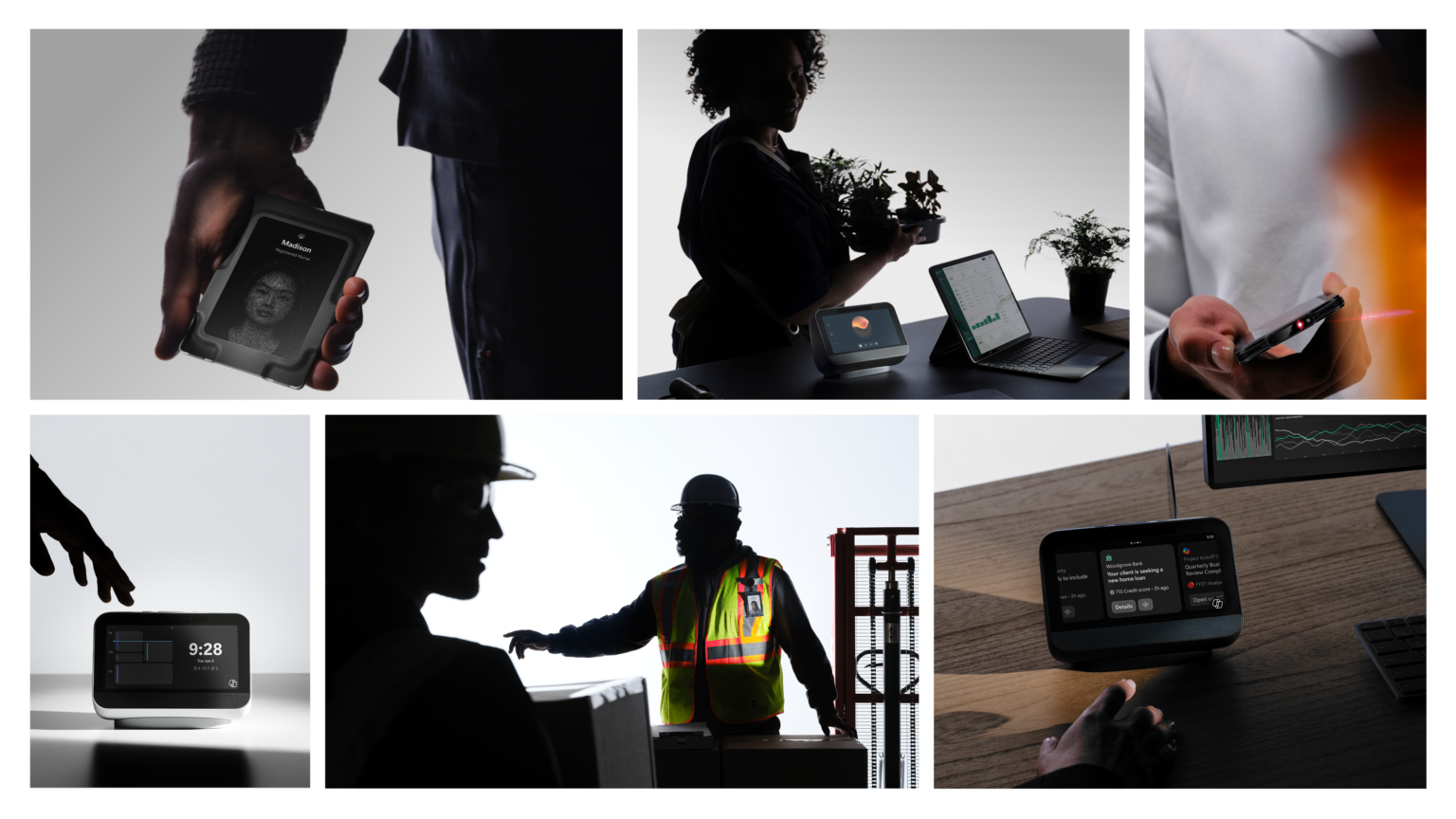
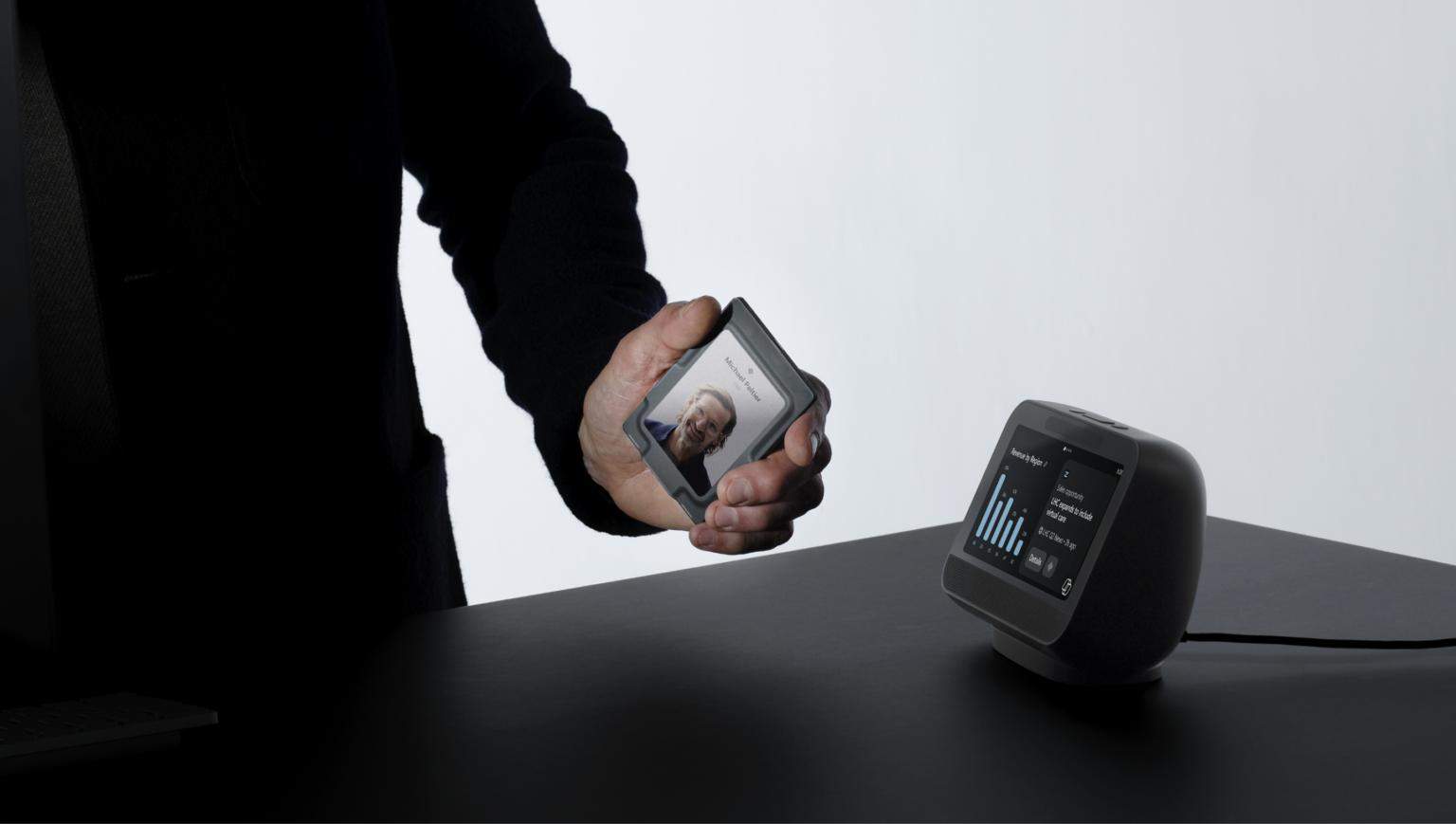
Microsoft demonstrated two reference devices at Build. The first is a desk companion that sits beside a PC, responds to voice commands, and uses facial recognition to authenticate users and surface relevant information from Microsoft 365. Connect a monitor, and it becomes a gateway to a full Windows machine running in the cloud through Windows 365.
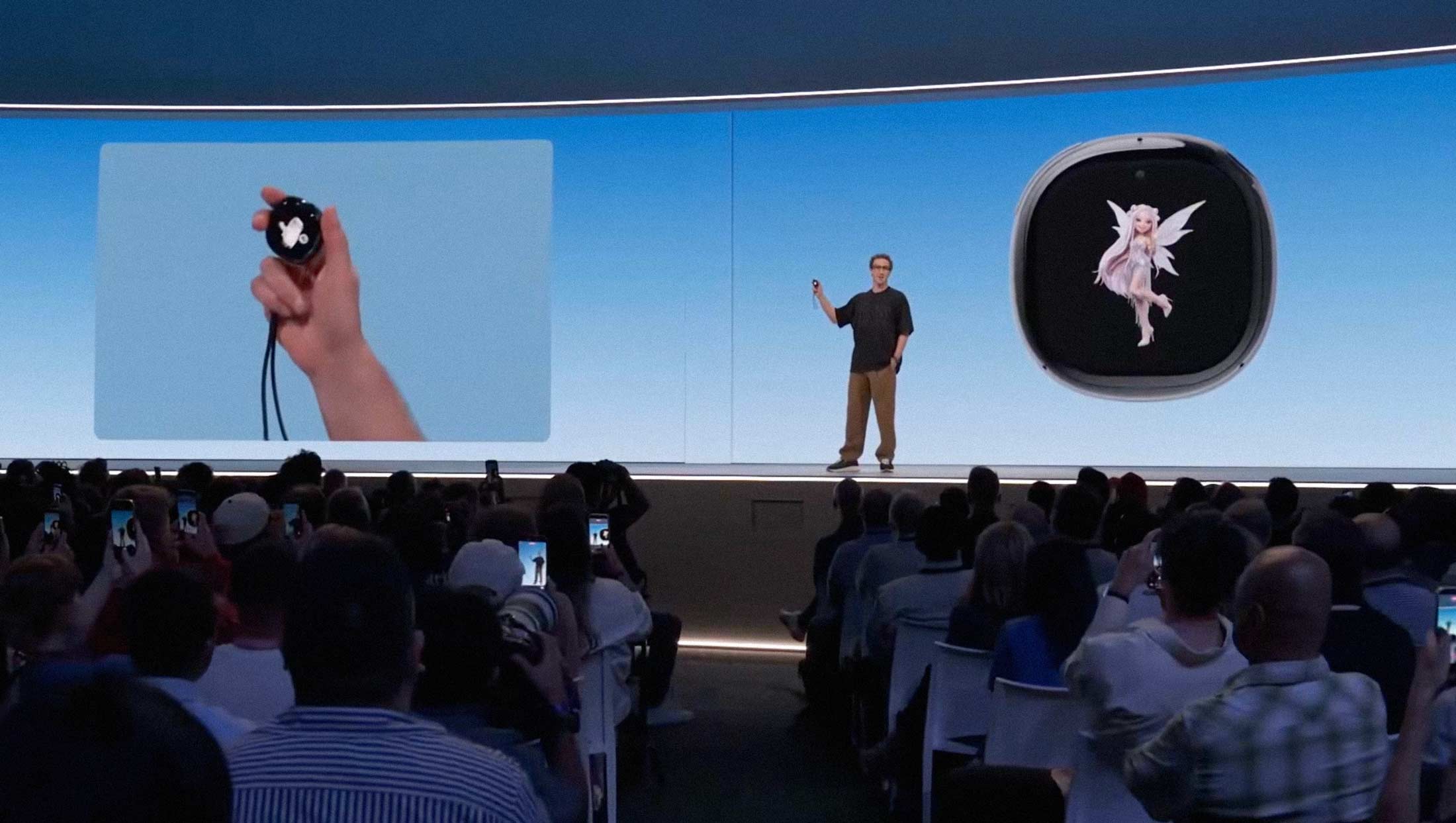
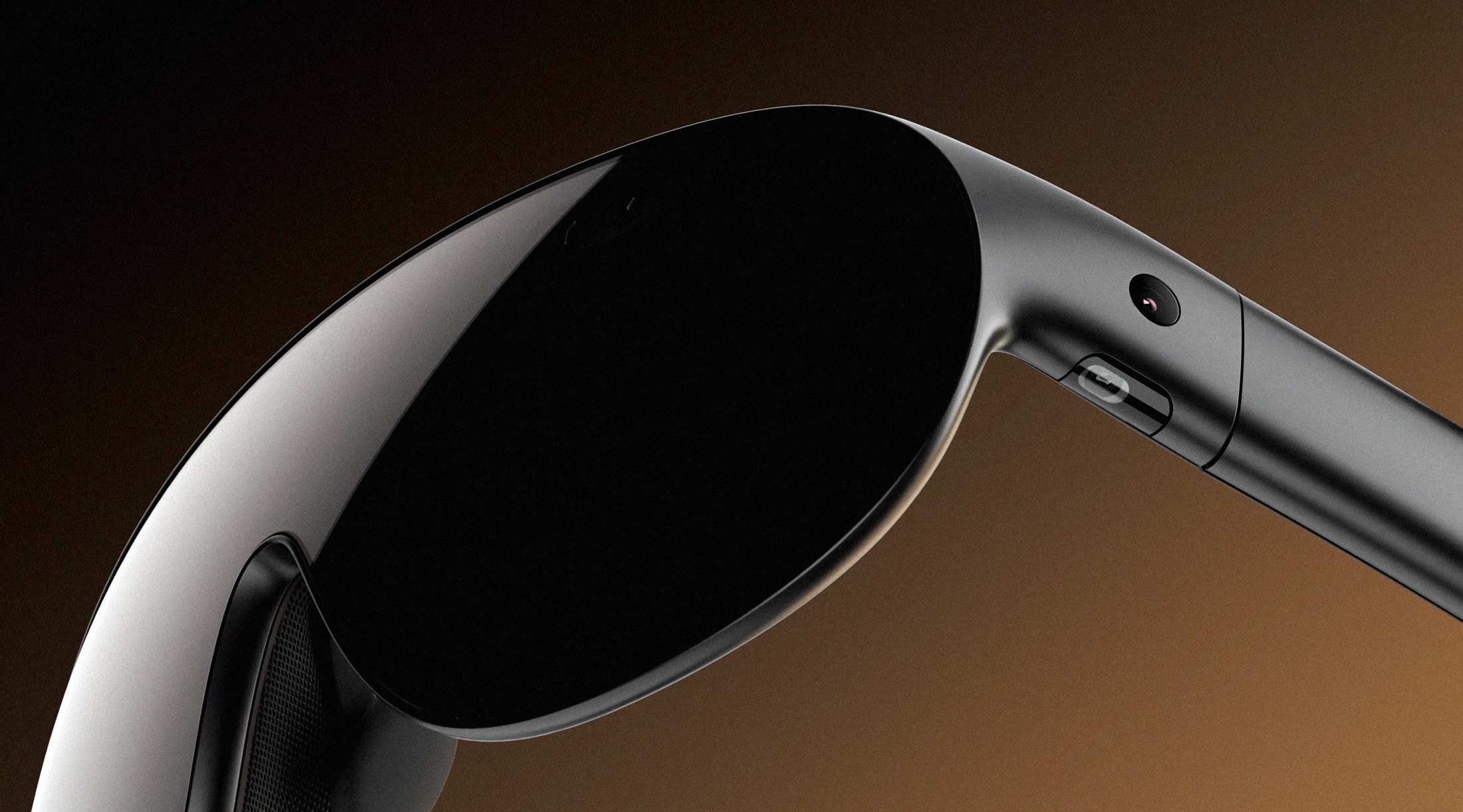
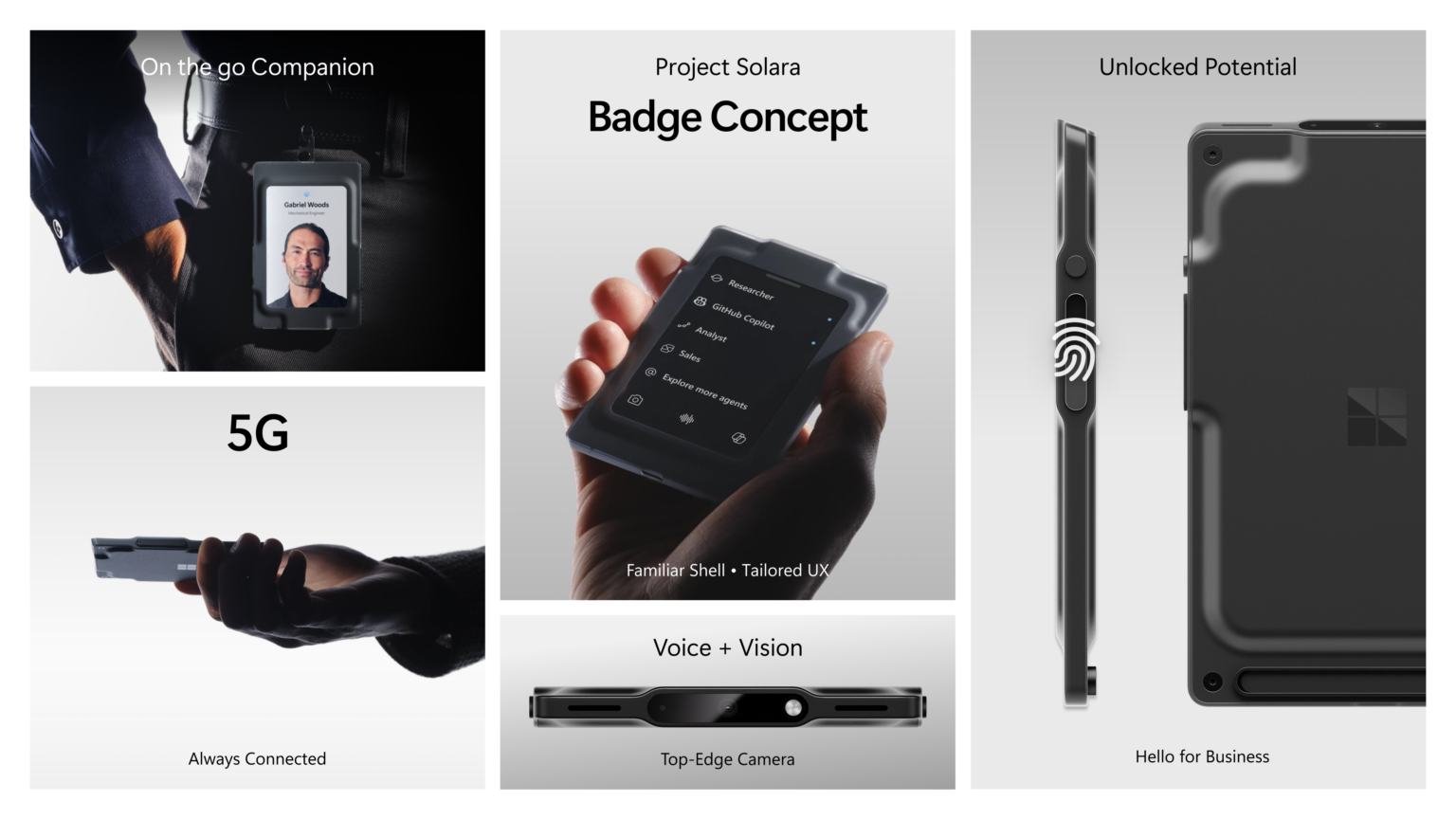
The second concept is more interesting. Microsoft has reimagined the corporate access badge as an always-connected AI device. The badge includes a touchscreen display, a fingerprint sensor for Windows Hello for Business authentication, a far-field microphone array with speaker for voice interaction, and a side-facing camera that lets agents see what the wearer sees. One tap records and transcribes a hallway conversation. The camera can capture context that agents use to take action on the user's behalf.
Both devices are reference designs, not products Microsoft intends to ship. The company's plan is for hardware partners to build their own implementations targeting specific industries and use cases. Several large enterprises are already lined up for pilots in the coming months, including AccuWeather, Best Buy, CVS Health, Levi's, and Target. Hundreds of Microsoft employees are reportedly using the concept devices internally.
Why Android?
The decision to build on Android rather than Windows was deliberate. Project Solara runs on the Microsoft Device Ecosystem Platform, an enterprise-grade operating system built on the Android Open Source Project that Microsoft has been developing for devices like Teams meeting-room hardware. MDEP delivers the management and security features IT departments expect, including Microsoft Defender, Intune device management, and Entra ID authentication, while running on smaller, lower-power devices than Windows typically supports.
Microsoft has already partnered with MediaTek and Qualcomm for silicon. The badge concept runs on Qualcomm wearable silicon while the desk companion uses a MediaTek IoT chip, and Microsoft plans to expand the reference designs across portable, ultra-portable, wearable, and desktop form factors.
The Just-in-Time UI Problem
One of Project Solara's more ambitious claims is what Microsoft calls "just-in-time UI." Traditionally, every new device form factor requires developers to redesign their applications for different screen sizes, resolutions, and input methods. This is one reason new device categories are expensive to create and why they struggle without strong app ecosystems.
Microsoft's answer is that agents should generate their own interfaces dynamically. On a small badge screen, an agent might render a minimal card with a single action. On a desk device, the same agent produces a richer visual layout. The platform currently uses semi-structured approaches like adaptive cards and known content types to accomplish this, but the vision is fully adaptive UI generation.
Project Solara is also explicitly designed for a multi-agent world. Rather than locking users into Microsoft Copilot, the platform allows organizations to use Microsoft agents where they add value while sourcing or building their own agents for specific workflows. Microsoft says it will eventually offer something like an agent dispatcher and task manager to coordinate between agents on a user's behalf.
The Enterprise Play
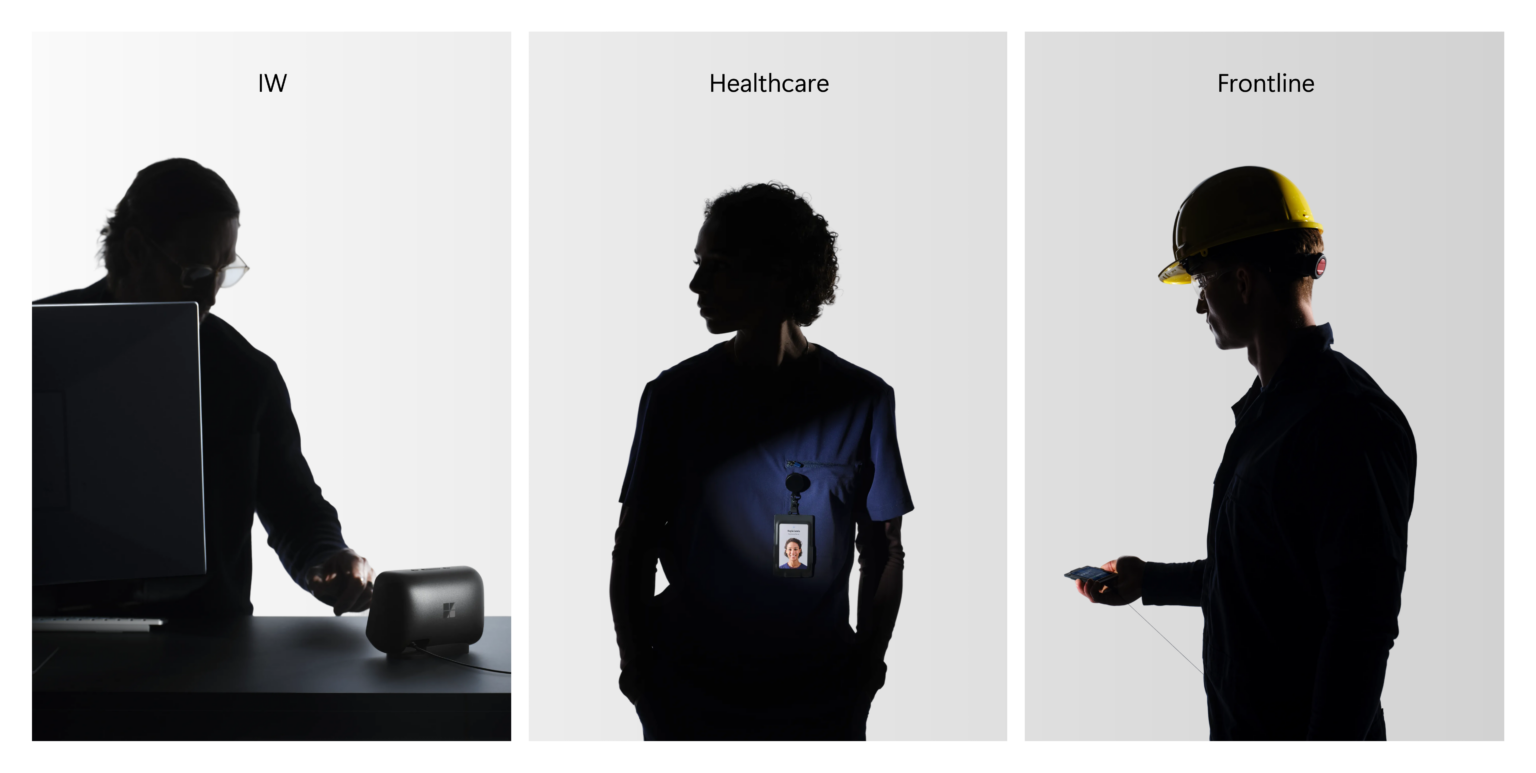
The initial focus is clearly enterprise. Healthcare workers, retail associates, warehouse staff, and field technicians all need AI assistance in contexts where pulling out a laptop is impractical. A nurse wearing a Solara badge that captures patient interactions, surfaces relevant records, and tracks follow-up tasks represents a fundamentally different value proposition than the same nurse typing into a laptop between patients. GitHub Copilot and Dragon Copilot, Microsoft's healthcare AI, are both reportedly exploring agent-first experiences on the platform.
Microsoft is racing OpenAI, Google, and Amazon to define what AI hardware looks like beyond phones and PCs. OpenAI is building devices in partnership with Jony Ive. Google and Meta are developing their own AI gadgets. Amazon has an established position with the Echo ecosystem.
Whether enterprises will adopt yet another device category, with all the procurement, management, and change management that entails, remains an open question. The business model is unclear. Microsoft has not said whether it will license Project Solara to hardware makers the way it does Windows, or whether the platform will be tied closely to Azure AI services and Microsoft 365 subscriptions. No availability dates have been announced.
What is clear is that Microsoft sees the shift from apps to agents as fundamental enough to warrant building an entirely new platform around it. Bathiche, writing in Microsoft's official announcement, put it directly: "Not devices built around apps, but devices built around agents." The company unveiled a working OS and built prototype hardware. That level of investment suggests this is not a concept that will fade quietly.