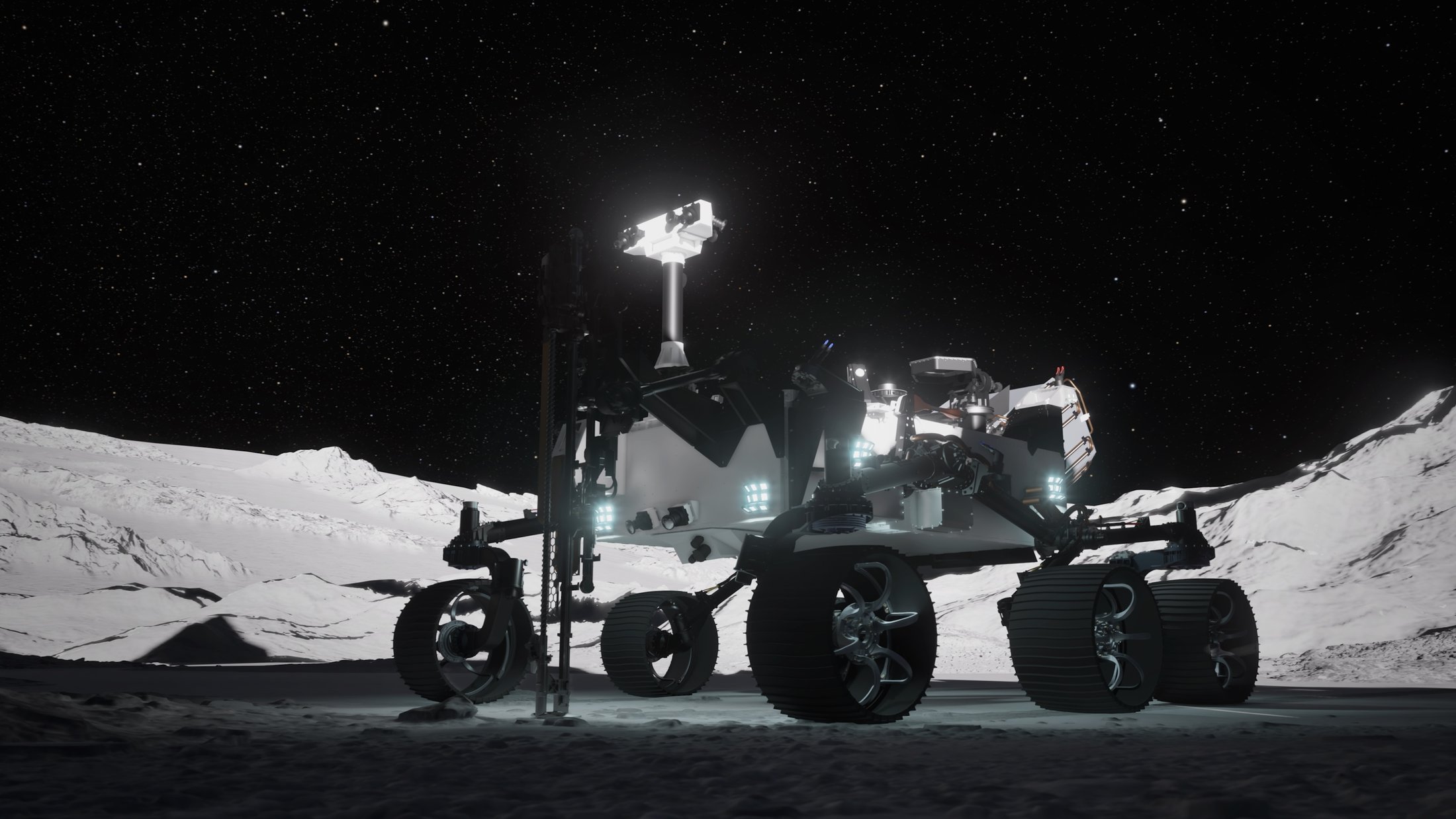
NASA announced Saturday that eight companies are now eligible to compete for robotic deliveries to the Moon under a new 10-year contract worth up to $10 billion. The announcement came at the MAX POWER aerospace expo at Kennedy Space Center, where Administrator Jared Isaacman laid out an infrastructure-first approach to the agency's lunar ambitions.
"We are building the Moon Base mission by mission," Isaacman said.
The Contract Framework
CLPS 2, the successor to NASA's Commercial Lunar Payload Services program, is a multiple-award, indefinite-delivery/indefinite-quantity master contract. The $10 billion is a ceiling, not an award. No single company receives that amount. Instead, Blue Origin, Firefly Aerospace, Intuitive Machines, ispace-U.S., Lockheed Martin Space, Northrop Grumman Space Systems, SpaceX, and Voyager Technologies will compete for task orders as NASA places them over the next decade.
NASA also raised the ceiling of the original CLPS contract from $2.6 billion to $4.2 billion to cover initial Moon Base work. That contract runs through November 2033.
PROMISE: A Nuclear Rover for the South Pole
The headline hardware is PROMISE, the Polar Rover for Observation, Mapping, and In-Situ Exploration. NASA's Jet Propulsion Laboratory is building the six-wheeled rover using spare components and engineering test models from its Curiosity and Perseverance Mars rovers. A multi-mission radioisotope thermoelectric generator will power it, letting PROMISE survive lunar nights and probe permanently shadowed craters that solar-powered machines cannot reach.
Blue Origin won a $94 million base contract to deliver PROMISE aboard its Blue Moon Mark 1 lander, with a $140 million performance-based option. Launch is targeted for late 2028, with an 18-month mission.
"We are sending our most valuable resource, our astronauts, to the lunar surface," said NASA Associate Administrator for Science Nicky Fox. "That is why I am so excited about NASA's PROMISE rover."
Transportation and Infrastructure
Separately, NASA awarded six task orders worth approximately $1.3 billion combined to Arrow Science and Technology, Blue Origin, and Impulse Space under the agency's VADR launch services contract. Those missions will verify navigation, cargo transfer, and orbital transfer vehicle capabilities between Earth and the Moon. Launches will fly on Blue Origin's New Glenn, Relativity Space's Terran R, and SpaceX's Falcon 9.
SpaceX received a separate award: the Cislunar Communications Deployment Demonstration, which will use Starship to launch communications satellites into cislunar space in 2028. The goal is to inform future networks linking astronauts, mission control, and surface hardware.
Power on the Surface
To keep lunar assets running, NASA is purchasing components for a Mini-Communications and Solar Tower, known as miniCAST. Honeybee Robotics, a Blue Origin company, will supply energy storage. Redwire will handle power generation. Yank Technologies will develop wireless power transfer hardware designed to avoid regolith contamination on electrical contacts.
A separate solicitation for fully integrated power systems is expected in early 2027.
The Drones
NASA's MoonFall mission, announced in March, will send four propulsive drones to the lunar South Pole. JPL is building them; Firefly Aerospace won a $75 million subcontract to deliver them aboard its Elytra spacecraft. Each drone will carry 10 cameras and operate during a single lunar day, up to 14 Earth days, surveying terrain and potential landing zones before astronauts arrive.
Moon Base Program manager Carlos García-Galán said the program had made "incredible strides" in the eight months since NASA's Ignition event. The original CLPS contract remains in place through November 2028, with deliveries under that agreement continuing through November 2033.