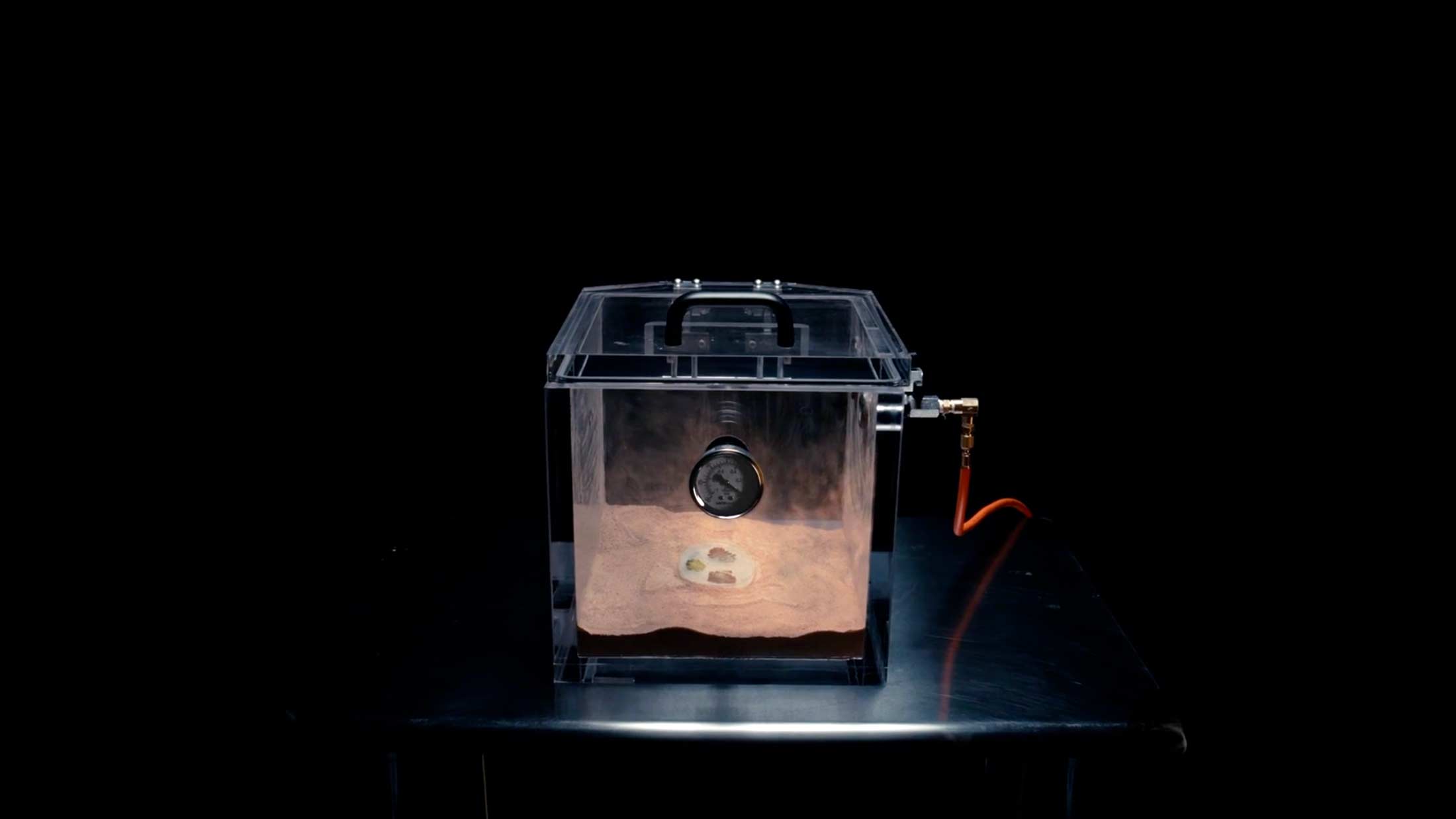
Rainmaker, the El Segundo cloud seeding company that has spent the past year trying to prove that humans can measurably create rain, just posted what may be its most significant result to date: 19 million gallons of water generated over Alaska's Kenai Peninsula in a three-hour window on August 22-23.
The company published a validation report detailing the operation, which it claims represents the first provable precipitation enhancement in Alaska by any private company. Founder and CEO Augustus Doricko announced the results on X, framing the demonstration as a preview of larger efforts to come: "Immediately, this demonstration shows how Rainmaker will add new water to the Colorado River and Great Salt Lake in the coming months."
What Actually Happened
According to Rainmaker's technical report, seven coordinated seeding missions were executed during a low-pressure system moving through the Gulf of Alaska. The company's Elijah quadcopter drones released silver iodide into supercooled clouds at temperatures suitable for glaciogenic seeding, roughly between -5°C and -15°C. Seven distinct seeding signatures were identified on NEXRAD radar, correlating directly to drone flight paths.
The resulting precipitation totaled an estimated 45 to 65 acre-feet of water, with a mean value of 57.6 acre-feet. That translates to roughly 19 million gallons. The analysis was turned around within days of the operation, a pace Doricko emphasized as intentional.
"At Rainmaker, we won't tout LOIs, simulations, or lab tests," he wrote. "What matters is physically measuring that you've affected the atmosphere; proving that we've produced water."
Why Validation Matters
Cloud seeding has existed since the 1940s, but proving it works has always been the industry's central problem. Without a control group, operators couldn't demonstrate whether rain would have fallen anyway. The Government Accountability Office has historically labeled the benefits "unproven."
Rainmaker's approach uses dual-polarization radar and precise drone flight patterns to isolate human-caused precipitation from natural background. The company announced earlier this year that it had identified 82 unambiguous seeding signatures over Oregon and Utah, representing 143 million gallons of freshwater since it began winter operations. The Alaska test extends that track record into summer conditions and new terrain.
The Stakes Are Enormous
This technology is arriving at a moment of genuine water emergency across the American West. The Great Salt Lake has lost 73 percent of its water and 60 percent of its surface area since 1850. The Colorado River, which supplies 40 million people across seven states, is running at its lowest recorded levels in 2026. Lake Powell sits at just 25 percent capacity. Reservoir operating rules expire at year's end with no interstate agreement in sight.
Utah alone is investing nearly $16 million in cloud seeding this year. Idaho has committed $5 million. Rainmaker has positioned itself at the center of Utah's precipitation enhancement strategy, running operations over the Bear River Basin aimed at boosting snowpack flows to the Great Salt Lake.
What Comes Next
Doricko has laid out ambitious goals. Beyond near-term work on the Colorado River and Great Salt Lake, he has pointed toward glacier restoration. "In the future, Rainmaker will protect and restore glaciers with man-made snowfall," he wrote. Research suggests that targeted cloud seeding over glacier fields could theoretically help stabilize ice sheets by increasing wintertime snow accumulation, though no operational programs have attempted this at scale.
For agriculture, the implications are more immediate. Cloud seeding during drought years could supplement irrigation supplies without depleting aquifers or diverting surface water. Ski resorts have already begun contracting with next-generation weather technology providers to extend seasons. Wildfire risk reduction, via increased soil moisture, is another potential application that state agencies are watching closely.
The technology still faces regulatory headwinds. Rainmaker's petition to carry cloud seeding flares on its drones, filed with the FAA in July 2025, remains in limbo. The Air Line Pilots Association has raised safety objections. Florida treats cloud seeding as a felony. Tennessee has banned the practice entirely.
But the West's water crisis doesn't wait for regulatory certainty. If Rainmaker can continue producing validated results at scale, the policy environment may have to adapt to the technology rather than the other way around.
The company plans to release validation reports at a regular cadence going forward. "Expect a regular cadence of these from us as we build the best atmospheric science lab in the world," Doricko wrote. Whether that ambition can deliver water abundance to a drying region remains to be seen, but the data from Alaska suggests the company is not bluffing about its ability to make it rain.