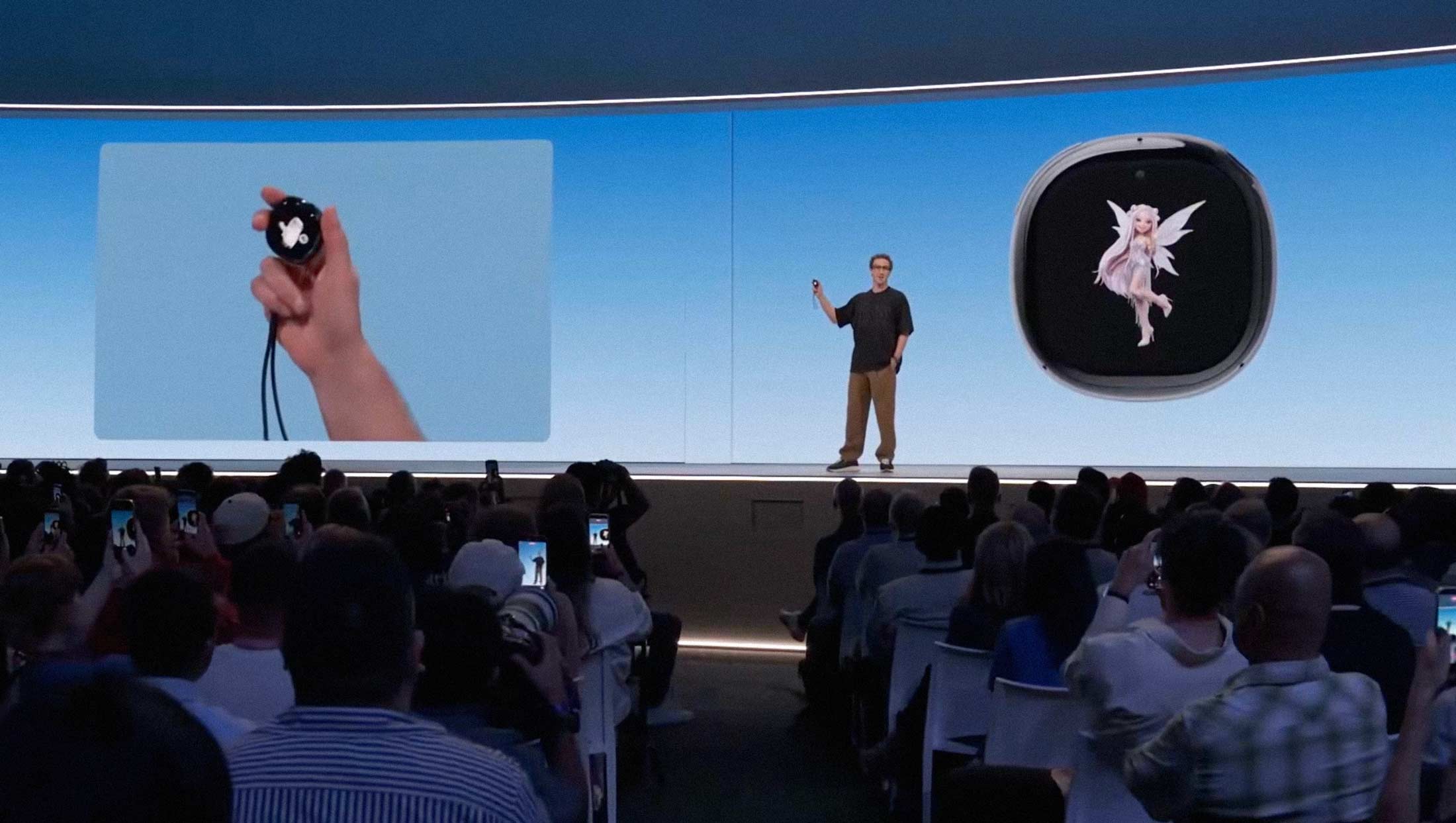
Mark Zuckerberg closed Meta Connect 2026 with a familiar cadence. After two hours of glasses and headsets, he pulled out a small gadget and said the words every Apple keynote has conditioned us to expect: one more thing.
The device is called Muse Charm. It is roughly the size of an Apple Watch, designed to clip onto a keychain or slip into a pocket. Inside is a fingerprint sensor, a small screen displaying an animated avatar, speakers, and microphones. It exists for a single purpose: to carry your Muse personal AI agent with you when you are not wearing glasses or staring at a phone.
Metas one more thing moment - they unveiled hardware for Meta Muse (beating OpenAI to an AI hardware device unveil)
— Chris (@ChrisGPT) September 24, 2026
Always on w/fingerprint sensor “by far the fastest way to talk to your muse” shipping in time for the holidays
I think OpenAI can one up this but we will see 👀 pic.twitter.com/Z7hQnM7uYz
What Meta Actually Showed
Zuckerberg demonstrated the basic interaction model on stage. Tap the fingerprint sensor, speak to Muse, and the avatar responds. The company describes it as "a delightful and fun device built for you to talk and interact with your Muse." That is marketing language, but it captures the pitch: an always-available AI companion that does not require you to unlock anything or open an app.
The Charm does not include a camera. That marks a departure from both Meta's glasses line and from earlier AI hardware attempts that tried to be multimodal. It also means the device cannot see your surroundings, limiting its utility for tasks where visual context matters.
Meta says it plans to ship Muse Charm by the holidays in December. Zuckerberg acknowledged on stage that the design is finished but the final materials remain undecided, and only a handful of prototypes exist. No price has been announced.
A Category With Bodies on the Floor
The obvious comparisons are not flattering. Standalone AI gadgets have failed repeatedly over the past two years. Humane's Ai Pin launched in April 2024 at $699 plus a mandatory monthly data plan. Fewer than 10,000 units shipped before HP acquired the company for $116 million, and the servers went dark in February 2025. The Rabbit R1 sold roughly 130,000 units after its CES 2024 debut, but by September of that year, only about 5,000 people were using it on any given day.
Both devices asked users to carry a second object, learn a new interaction model, and accept slower responses than their phones already provided. Both flopped.
Meta's bet is that Muse Charm avoids those mistakes by running the same agent that already works on phones, tablets, Macs, and soon glasses. The Charm is a surface, not a platform. If the software is already good enough on your phone, the question becomes whether a dedicated puck adds anything.
The Context That Matters
Muse itself is two weeks old. Meta launched the agent on September 8 with a free tier offering up to 100 million tokens per week, plus paid plans at $20 and $100 monthly for heavier use. The agent runs on what Meta calls Muse Secure VM, a sandboxed environment that can access calendars, payment methods, and connected apps on a user's behalf.
Early adoption has been strong. Downloads reportedly outpaced ChatGPT's launch pace. The stock market noticed: investors are selling shares of banks, insurers, and travel agencies on the theory that AI agents like Muse could erode customer stickiness. Whether that fear is premature or prescient depends on whether agents actually complete useful tasks reliably.
At Connect, Meta also announced that Muse is coming to its AI glasses in the coming months. The Charm, then, is not the primary delivery vehicle for Muse. It is a side bet for people who do not want cameras on their face.
The Risk
Carrying a keychain puck to chat with an AI agent is a strange pitch. Talking out loud to your keys in public is not something most people want to do. The device has no camera, so it cannot see what you are looking at. It is a voice-only companion in a world that has mostly rejected voice-only companions.
Meta has form here. Plenty of hardware side projects from this company have shipped to little fanfare and disappeared within a year. The agent economy is real and growing, but it remains unclear whether that growth requires new hardware or just better software.
December will tell us whether Muse Charm ships as a real product or just as a Connect-stage tease that never gets a price tag.