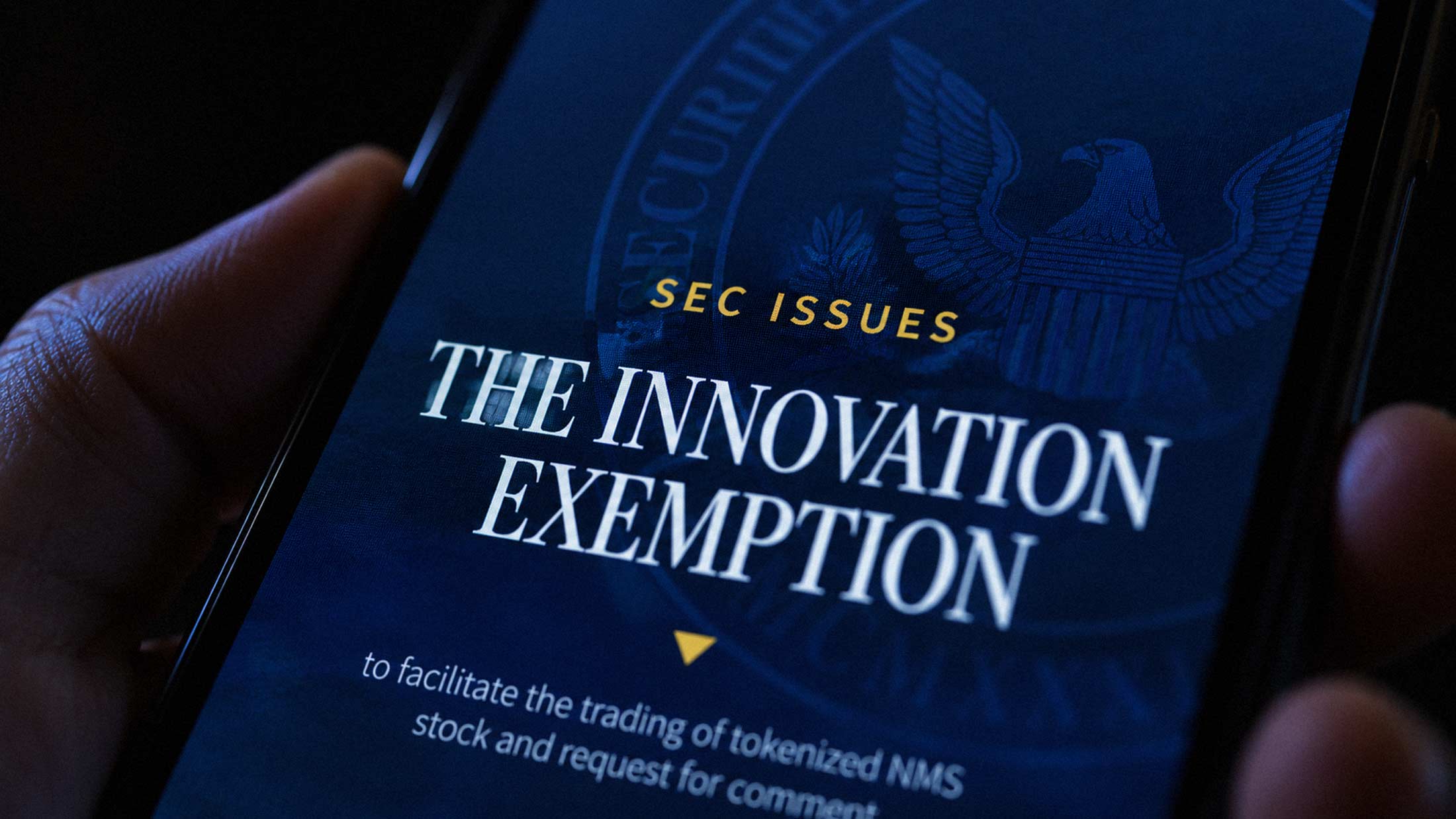
The Securities and Exchange Commission announced Thursday it will allow blockchain-based trading venues to list and trade tokenized versions of publicly traded U.S. stocks without registering as national securities exchanges. The exemption grants so-called "tokenized securities venues" a five-year conditional exemption from the Exchange Act's definition of an exchange, letting them use automated market makers and liquidity pools to facilitate trades.
Certain liquidity providers operating on these venues will also be exempt from dealer registration requirements.
The timing is unmistakable. Two days after the Senate failed to advance the Clarity Act, the comprehensive crypto market-structure bill, the SEC delivered the relief the industry had been waiting for through other means. The Clarity Act failed to survive a 49-50 procedural vote on Tuesday, falling well short of the 60 votes required to advance.
SEC Chair Paul Atkins had telegraphed the move the day before. "I have been unequivocal: with or without legislation, we will act decisively within the SEC's statutory authority to deliver certainty for American investors and for the entrepreneurs shaping our technological future," Atkins wrote on X, adding "stay tuned."
What the Exemption Actually Covers
The relief applies only to "tokenized NMS stock," meaning shares of exchange-listed companies that are tokenized either by the issuer or by an unaffiliated third party, as long as the token carries the same rights as a traditional share. Atkins said these tokens "must provide holders with the same rights and privileges as the traditional securities, including rights to receive dividends and exercise voting rights."
The exemption does not include synthetics, financial instruments that replicate the price of an asset without directly owning it. That distinction matters. Offshore platforms like Robinhood's European arm have offered tokenized U.S. equities to non-U.S. users for over a year, but many of those products are structured as derivatives rather than direct ownership claims.
A tokenized securities venue must be a U.S. entity, permission every participant, and use smart contracts on public, permissionless blockchains. Before trading a tokenized stock, venues must notify the issuer at least 30 days in advance. If the issuer objects, the venue cannot trade that stock, but silence is treated as tacit permission.
Why Congress Failed and the SEC Moved
The Clarity Act had passed the House in July 2025 with a bipartisan 294-134 vote. But in the Senate, the vote became a referendum on ethics provisions. Democrats expressed frustration that Republican negotiators didn't meet their demands regarding profits gained from crypto ventures by President Donald Trump and his family.
Three Republicans broke ranks to vote against the bill: Senators Susan Collins, Josh Hawley, and Jerry Moran. That left the bill without even a simple majority, let alone the 60 votes needed to proceed.
In the absence of market structure law, the industry will focus attention on the federal regulators that are already at work on crypto rules. The SEC had been preparing this exemption for over a year, according to an SEC spokesperson who said the five-year exemption was spurred by market interest.
The tokenization push fits a broader pattern under Atkins. The innovation exemption follows earlier rollbacks of crypto-specific accounting guidance and the approval of additional spot crypto ETF products.
What Comes Next
There are important limits. The exemption takes effect immediately and lasts up to five years, but only covers actual tokenized stocks carrying the same rights as their traditional counterparts.
The SEC is also pursuing other crypto initiatives. Atkins outlined a three-pillar framework at the Solana Policy Institute Summit in September: a self-custody proposal allowing investment advisers to hold crypto assets directly, the Regulation Crypto Assets proposal introduced in August, and an update to transfer-agent rules.
The industry wanted legislation. What it got was administrative action. Agency actions lack legislative permanence, but they represent the most realistic near-term regulatory route. For platforms like Coinbase, Securitize, and Ondo Finance that had built product roadmaps around this exemption, Thursday's announcement means they can finally move forward.
Whether the exemption survives a future administration is another question. The Clarity Act's defeat likely stalls federal rules for crypto markets until after the November midterms. The crypto sector will have to live with regulatory uncertainty for at least that long.