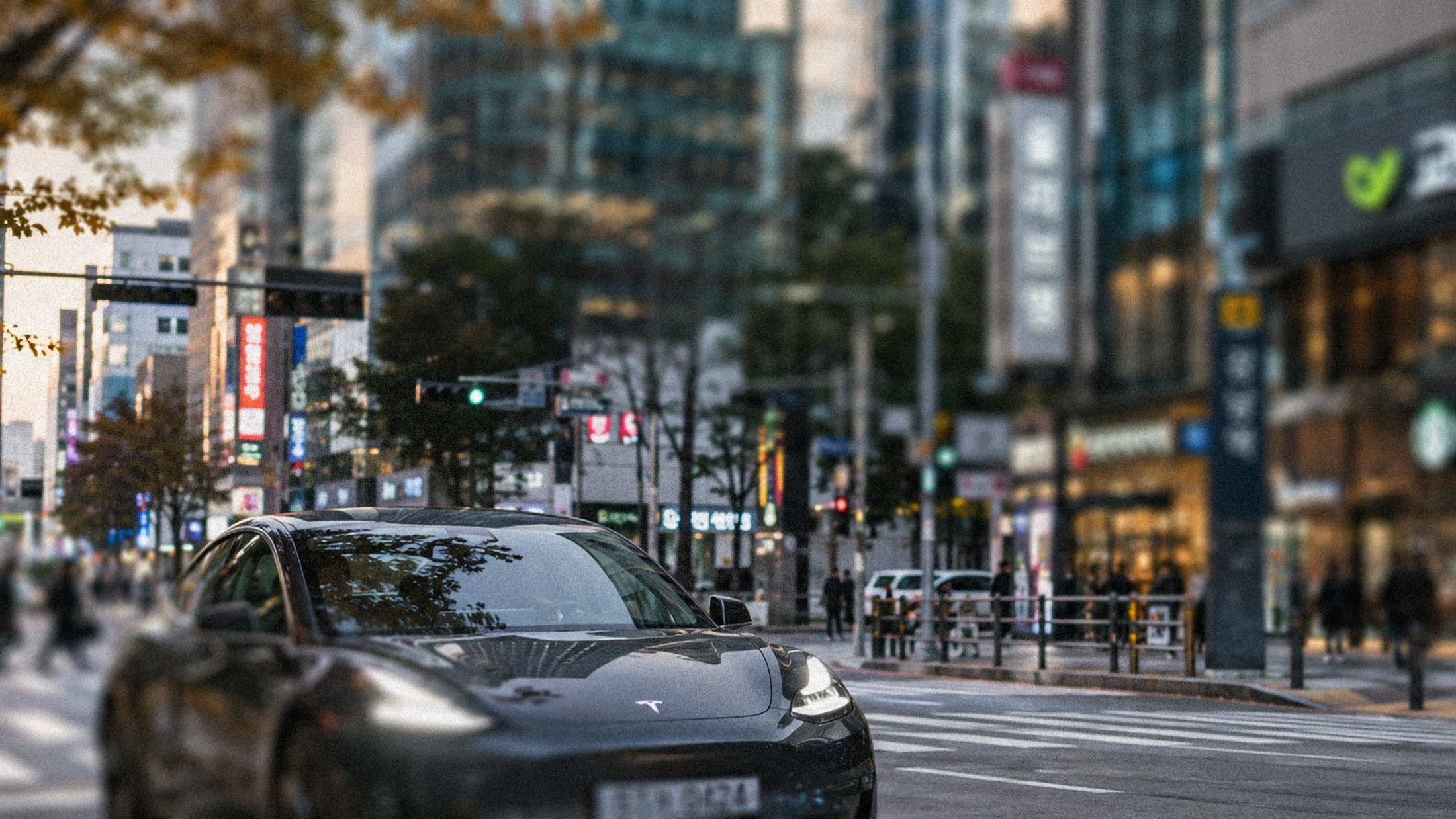
The Seoul Metropolitan Police Agency announced on October 27 that it had booked 80 Tesla owners for activating Full Self-Driving on vehicles not certified to run it. Officers also seized 21 of the devices used to bypass Tesla's regional software restrictions. The cases have been forwarded to prosecutors under South Korea's Motor Vehicle Management Act.
The law prohibits unauthorized modifications to vehicle software that could affect safety. Penalties reach two years in prison or a fine of up to 20 million won, roughly $15,000.
The Certification Gap
Tesla launched FSD (Supervised) in South Korea in late 2025, but only on U.S.-built vehicles: the Model S, Model X, and Cybertruck. Those cars skip Korean safety certification under the Korea-U.S. free trade agreement. The Model 3 and Model Y, which Tesla ships to Korea from its Shanghai factory, have not cleared the same regulatory hurdle.
Those two models make up the overwhelming majority of the fleet. According to Carisyou Data Lab figures cited by Korea JoongAng Daily, 47,458 of the 229,311 Teslas on Korean roads as of August were eligible for FSD. That is 20.7 percent. A separate government count from May put the figure even lower: 4,292 out of 180,684 registered Teslas, or 2.4 percent.
Korea JoongAng Daily reported that the suspects either purchased activation devices from Europe and China or built their own. One IT worker assembled hardware using instructions from GitHub. Another fitted a European-made module into his Tesla. Some suspects also traded tips online on how to prevent their vehicles from logging the activation.
What the Devices Do
The modules plug into the Controller Area Network, the internal bus linking a Tesla's electronic control units. By intercepting signals on that network, the hardware can trick the car into believing it is operating in a region where FSD is permitted. Tesla builds the same computer into every car; the restriction is enforced in software, not hardware.
"Safety risks were confirmed, including the possibility that FSD may fail to properly recognize driving conditions or operate differently from the driver's intentions," a police official told Korea JoongAng Daily.
The investigation began in April after a referral from the Ministry of Land, Infrastructure and Transport, which flagged suspicious activations. Police are consulting the ministry and the Korea Transportation Safety Authority on technical questions. No crashes have been tied to the unauthorized activations, according to a separate report from Kyunghyang Shinmun.
Tesla's Own Crackdown
Tesla has been fighting the devices in parallel. In April, the company began remotely detecting unauthorized CAN bus hardware and stripping FSD access from affected vehicles. Owners in China who used the exploit received in-vehicle notifications stating they had been permanently banned from FSD, even if they had purchased it. Tesla also warned that using the devices could void warranty coverage and that owners would bear full liability for any crash.
The company remotely woke cars, identified the hardware through vehicle logs, and reverted them to basic Autopilot. One notification shared by owners read: "Your vehicle has detected an unauthorized third-party device." Some estimates put the scale of Tesla's April enforcement in China at more than 100,000 vehicles.
The gray market for CAN bus FSD devices has spread through Europe, Turkey, and Asia over the past year. The modules typically cost between $700 and $2,000. Electrek reported that many of the Korean owners had already paid Tesla for the FSD package, sometimes over $6,000, but could not use it because their vehicles did not qualify under the trade agreement.
The regulatory situation is not static. South Korean authorities are expected to adopt a UNECE framework for driver-assistance systems that could, by some accounts, allow certification for Shanghai-built Teslas as early as 2027. Until then, Model 3 and Model Y owners face a choice: wait, buy a secondhand U.S.-built Tesla at inflated prices, or accept the legal risk of a jailbreak.
Prosecutors have not announced a timetable for charging decisions.