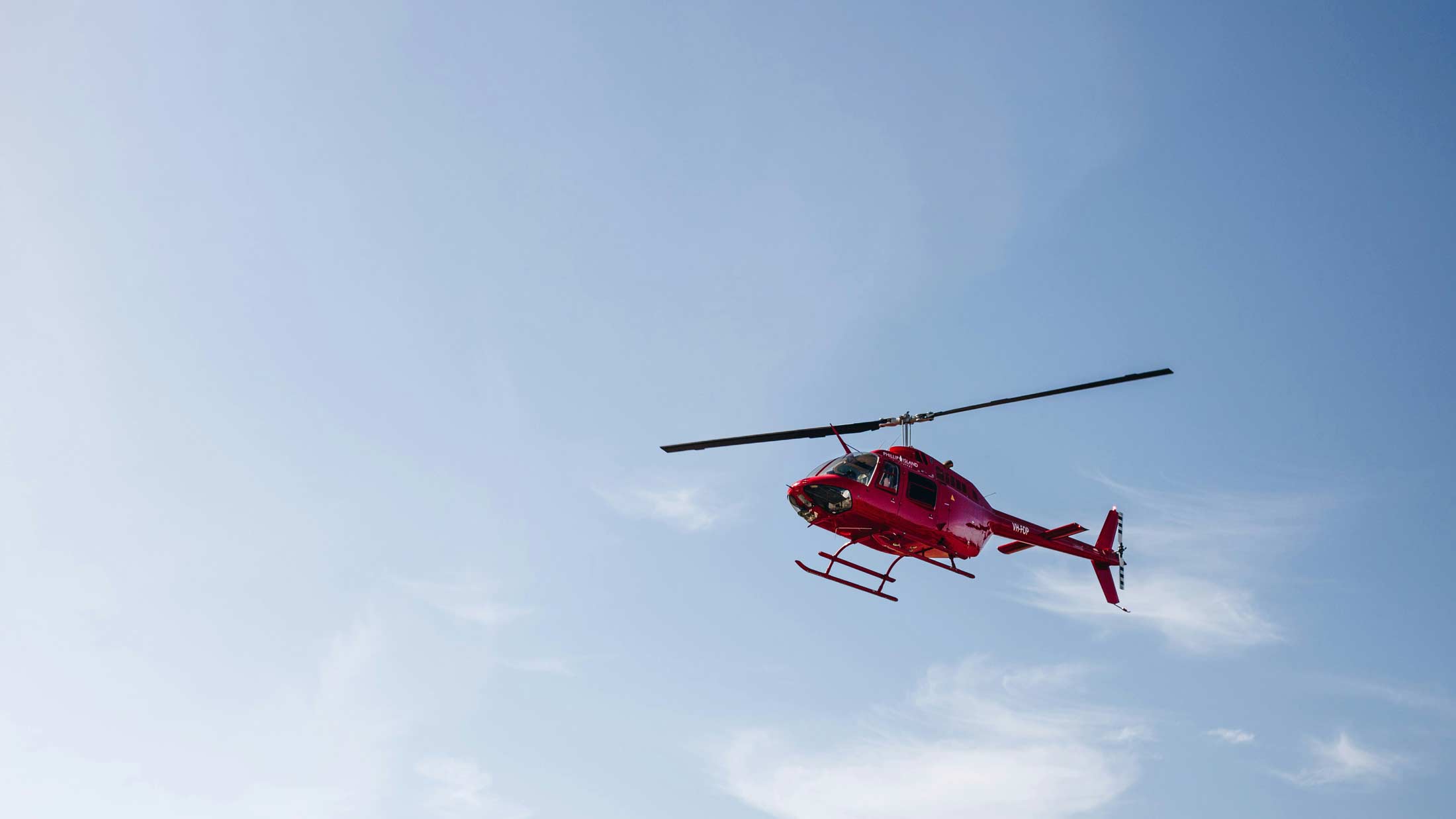
On January 29, 2025, a U.S. Army Black Hawk helicopter and a regional jet collided over the Potomac River, killing 67 people. Five years earlier, a Sikorsky S-76B carrying Kobe Bryant, his daughter, and seven others slammed into a California hillside after the pilot became disoriented in clouds. In April 2025, a Bell 206 broke apart over the Hudson River, killing all six aboard.
Now, a new tragedy in Los Angeles, California which claimed the lives of 3 people as a News Helicopter crashed during live reporting is reminding everyone just how unsafe and deadly helicopters as a platform truly are. The helicopter, for all its usefulness, operates on an architecture that is inherently difficult to make safe.
The Problem With One Rotor
A traditional helicopter is, in mechanical terms, a high-wire act. One main rotor provides all lift. One tail rotor counteracts torque and provides yaw control. One engine, in most civilian aircraft, drives both. If any of these components fails, the pilot has seconds to react. In some combinations of altitude and airspeed, recovery is not possible at all.
Autorotation, the emergency procedure that allows an unpowered helicopter to glide to a landing, is taught to every helicopter pilot. But it demands near-instant reaction. According to helicopter certification requirements, pilots have roughly three seconds to lower collective pitch and enter autorotation after a sudden engine failure. Miss that window and the rotor decelerates beyond recovery.
According to Flight Safety Australia, a helicopter "has more single point failures with the potential for disaster than possibly any other machine." Hinges, pins, pushrods, gears, fasteners. The departure of a main or tail rotor blade in flight is catastrophic. So is failure of the tail rotor gearbox, the swashplate, or any number of other components that have no backup.
Pilot error accounts for the majority of helicopter accidents. FAA data from 2017–2021 attributes 56% of U.S. helicopter crashes to pilot error. Loss of control in flight is the leading category for fatal accidents. These statistics reflect a machine that places extraordinary cognitive demands on its operators while offering little margin for error.
Multi-Rotor Architecture Changes the Math
Electric vertical takeoff and landing aircraft, or eVTOLs, are built on a different principle. Instead of concentrating lift in a single rotor, they distribute it across six, eight, or twelve independent motors, each with its own battery supply. If one motor fails, the others compensate. If two fail, the aircraft can still land safely.
This is not theoretical. Wisk's Gen 6 eVTOL, for example, features 12 independent electric motors powered by 12 high-voltage battery systems. Honda's eVTOL design uses eight rotors for vertical flight and two for propulsion. Aerospace America quotes Mark Moore, a former NASA engineer and current CEO of Whisper Aero, explaining that distributed propulsion automatically provides redundancy that helicopters lack. On a six- or eight-rotor eVTOL, losing a propulsor to a motor failure or birdstrike leaves enough lift margin for a safe landing.
The Joby S4, currently the furthest along in FAA certification, uses a five-seat, six-rotor design with tilting rotors. It is being certified under the FAA's powered-lift category, and the company cleared Stage 4 of the five-stage type certification process in late March 2026. Archer Aviation, Beta Technologies, and Wisk Aero are pursuing parallel certification efforts.
The Counterargument
Defenders of the helicopter will point out that fatal accident rates have declined. The U.S. Helicopter Safety Team reported that the 2024 U.S. fatal accident rate was 0.44 per 100,000 flight hours, the lowest in 25 years. Only 13 fatal accidents occurred that year, resulting in 30 fatalities.
These are improvements. They are not good enough. Every one of those 30 deaths occurred in a machine whose fundamental architecture has not changed since the 1940s. The gains have come from better training, better avionics, and better maintenance practices. They have not come from fixing the helicopter's core vulnerability: too many critical components with no redundancy.
Time to Transition
The question is no longer whether multi-rotor electric aircraft can replace helicopters. It is when. The FAA has been processing four concurrent eVTOL certification applications. Joby aims to carry its first passengers in 2026. Commercial service will initially focus on urban air mobility routes, but the technology will inevitably expand to medevac, search and rescue, and VIP transport, the same way quantum computing is gradually expanding its applications.
Helicopters will not vanish overnight. Some missions, particularly those requiring long range or heavy lift, will still need them. But for passenger transport, the case for multi-rotor aircraft is now overwhelming. They are quieter. They are simpler to maintain. And they do not kill you when one motor quits.
The helicopter was a remarkable invention. It is also a technological dead end. Distributed electric propulsion offers a way forward.