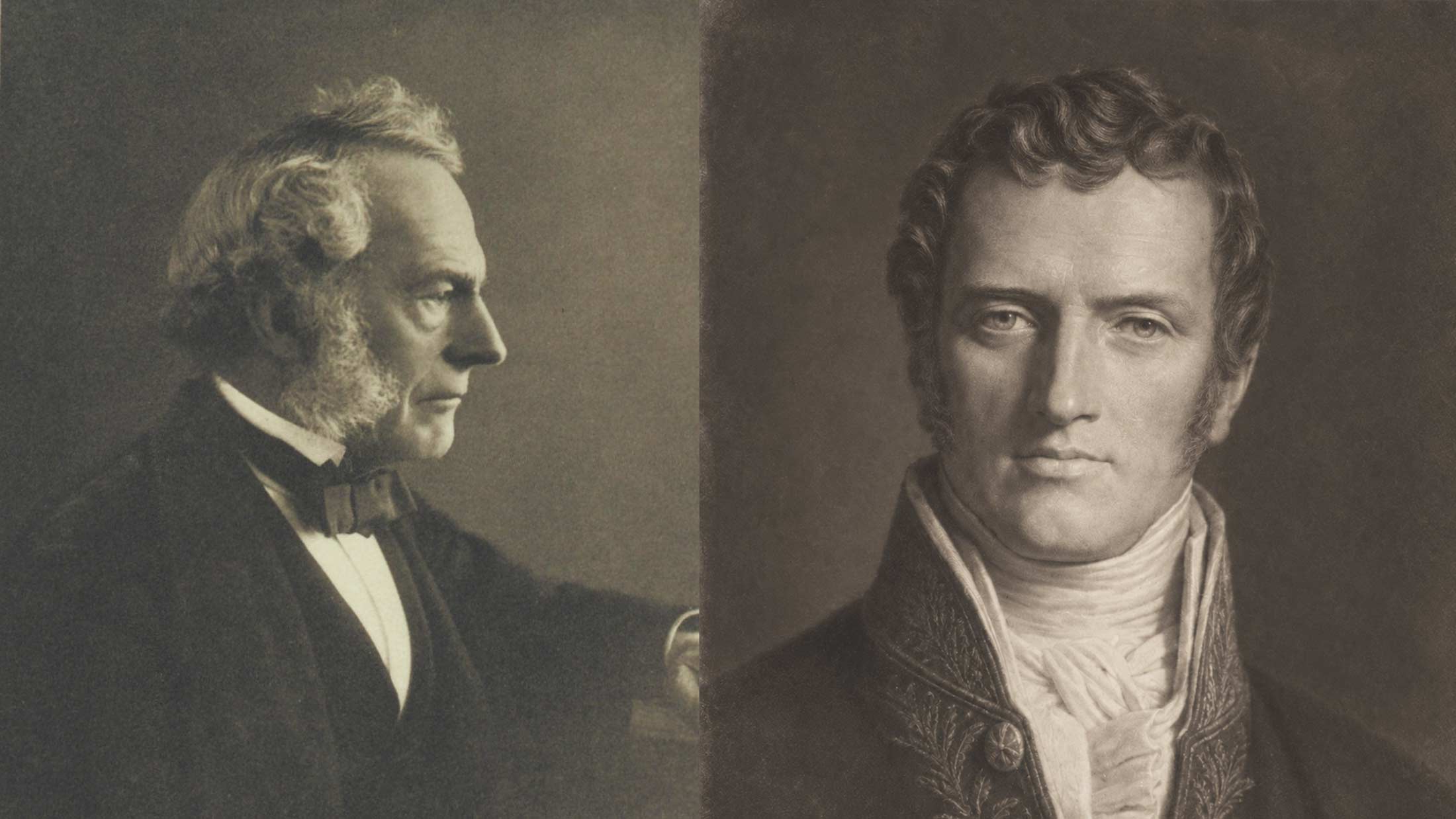
On September 8, 2026, NYU mathematician Tristan Buckmaster published a statement alongside three papers claiming a breakthrough in fluid dynamics: finite-time blow-up for the 3D incompressible Euler equations under smooth forcing. The work, a collaboration with Anthropic researcher Levent Alpöge, was verified in the Lean proof assistant and builds directly on a multi-year research program by Diego Córdoba and Luis Martínez-Zoroa.
But the statement contained more than mathematics. Buckmaster accused OpenAI of attempting to pressure him into publication arrangements that would have stripped Alpöge from authorship, allegedly citing his employment at Anthropic as an obstacle. The allegation has turned a significant mathematical result into an ugly dispute between two of the largest AI companies in the world.
What Was Actually Proved
Buckmaster and Alpöge claim to have demonstrated that several key fluid equations can develop singularities in finite time when subjected to a smooth external force. The equations covered include 3D incompressible Euler, the Boussinesq system, and incompressible porous media. Fields Medalist Terence Tao called the work "a remarkable achievement" and noted that he sees no fundamental obstacle to extending the methods all the way to Navier-Stokes.
This is significant but still stops short of the Clay Millennium Prize. That prize asks about the unforced Navier-Stokes equations. The forced version with smooth forcing is a stepping stone, not the full summit. Tao's assessment is cautiously optimistic: he floated the possibility that the forcing term could eventually be removed entirely, which would bring the result much closer to the million-dollar question. But, as he noted, substantial technical difficulties remain.
The Dispute
According to Buckmaster's public statement, rumors of his and Alpöge's work reached OpenAI on September 3. He proactively contacted a mathematician affiliated with the company to clarify that this was a personal, independent collaboration with no institutional backing from either Anthropic or NYU. Three days later, on September 6, Buckmaster says he spoke twice with OpenAI technical staff member Sébastien Bubeck, who allegedly told him an internal OpenAI model had produced a roughly 100-page proof for forced Navier-Stokes.
Buckmaster says he was presented with two options: coordinate a joint announcement with OpenAI releasing its result the following day, or write up the Navier-Stokes result himself while crediting an internal OpenAI model. He alleges Bubeck twice pushed to exclude Alpöge from authorship due to his employment at Anthropic. When Buckmaster said he would go public, he claims Bubeck responded: "Why would you ruin your career?"
Bubeck has publicly rejected these allegations as "false and inflammatory" and said he approached the discussions according to academic norms. He has promised a fuller response. The situation has already drawn in researchers from both Anthropic and OpenAI, trading pointed remarks on social media. OpenAI researcher Noam Brown posted vaguely about a collaboration that hadn't finished as planned; Anthropic's Sholto Douglas mirrored the phrasing back at him with timestamps attached.
What This Means If The Results Hold
If the methods pioneered here can be extended to unforced Navier-Stokes, the implications would ripple through physics, engineering, and applied mathematics. The Navier-Stokes equations govern how fluids move. They are used daily to design aircraft, model blood flow, forecast weather, and simulate ocean currents. A proof that smooth solutions can break down would fundamentally reshape our understanding of turbulence and impose hard limits on what simulations can reliably predict.
For AI-assisted mathematics, the implications are equally significant. Buckmaster's statement candidly describes the AI-generated proofs as "the most horrendous I have ever read," formally verified in Lean but stylistically unfit for human consumption. This mirrors patterns seen in other AI-accelerated research: correctness outpacing legibility. If machine-generated proofs become the norm for hard problems, peer review will increasingly mean proof-assistant verification rather than human line-by-line checking.
The remaining Millennium Prize Problems include P vs NP, the Riemann hypothesis, and four others that have resisted decades of human effort. Whether AI tools can meaningfully contribute to these remains to be seen. What the Buckmaster-Alpöge result demonstrates is that the combination of human mathematical insight, LLM-assisted exploration, and formal verification can produce results on century-old open questions faster than traditional methods. That capability is here. The question now is who gets credit, who sets the norms, and whether the incentives of competing AI labs will distort the scientific process along the way.