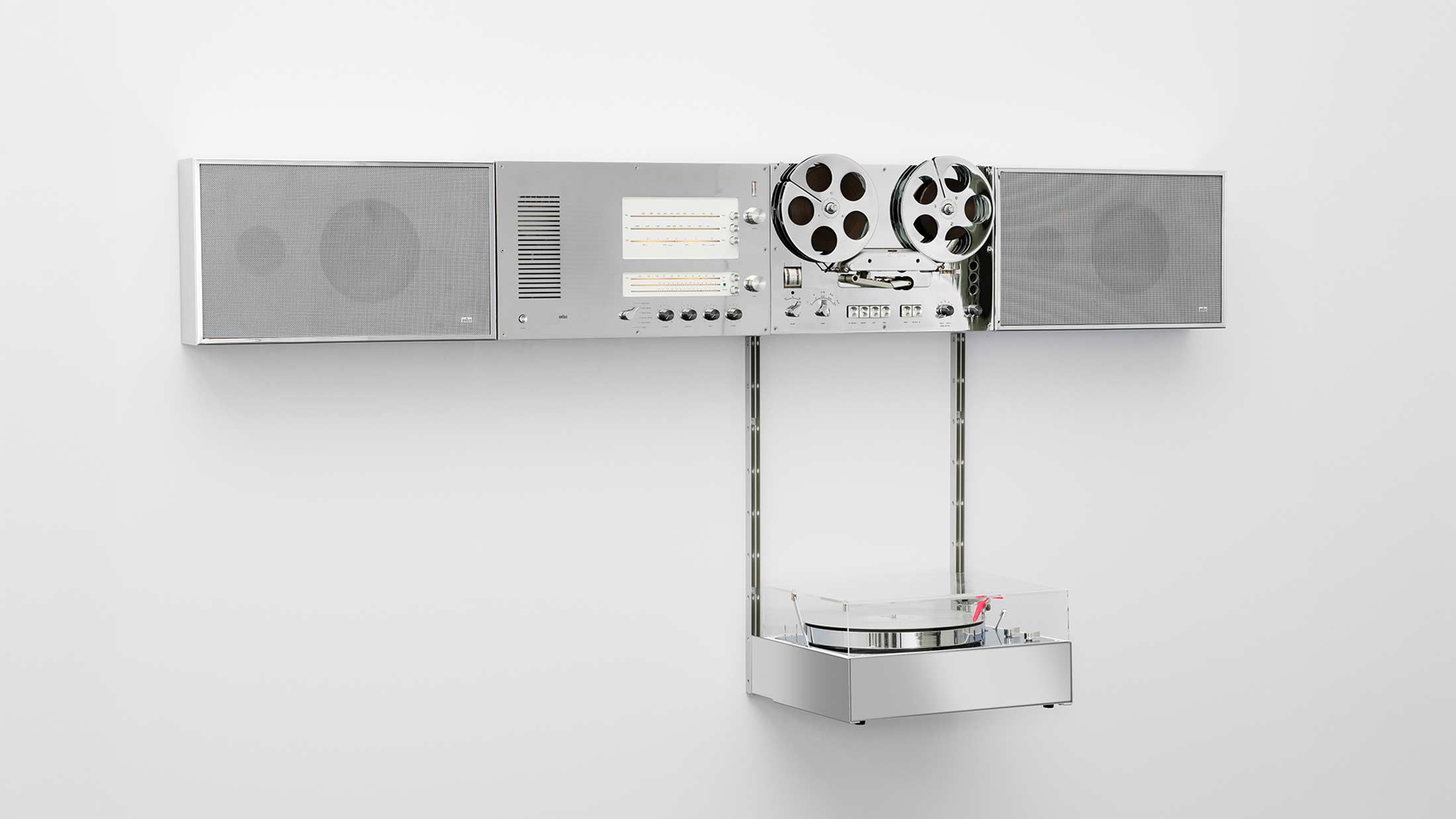
In 1965, Dieter Rams designed the Braun Wandanlage, a wall-mounted hi-fi system consisting of a control unit, tape recorder, turntable, and flat loudspeakers. The components hung from Vitsoe rails, each one a discrete, replaceable unit that made sense as a whole. Rams installed one in his own home in 1965. It still works.
Sixty years later, we are circling back to a version of that architecture for intelligence. Not audio. AI.
The Cloud's Privacy Problem
The trajectory of consumer AI has been relentlessly centralised. Voice assistants beam audio to distant data centres. Personal photos, messages, and schedules live on servers most people will never see. A growing cohort of users find this unacceptable. Edge AI offers an alternative: machine learning algorithms processed locally, keeping sensitive data on the device itself.
"By processing data locally, edge AI can analyze information and act in real time without the delays of sending data to the cloud," Micron notes in its explanation of the technology. The benefits are tangible: reduced latency, no dependency on connectivity, and data that never leaves the owner's premises.
By 2026, analysts predict over 70 percent of AI inferences will occur on-device. The silicon is catching up. Neural processing units from Apple, Qualcomm, and Google can now run models that would have required a server farm five years ago. What remains unresolved is the physical architecture: where does this local intelligence live inside a home?
The Case for Modularity
Apple plans to unveil a smart home hub code-named J490 as early as October 13, according to Bloomberg. The device will come in two form factors: a tabletop version with a speaker base, and a wall-mounted variant (J491) designed for permanent installation. Both feature a roughly seven-inch display, an A18 chip, and Siri AI as the primary interface. Pricing is expected around $349.
This is a familiar Apple play: a monolithic, sealed device you replace in three to five years. But there is another path, one that channels Rams more directly.
Imagine a wall-mounted rail system with discrete intelligence modules. One block houses compute: an NPU, memory, local storage. Another handles audio. A third provides the display interface. A fourth offers camera and sensor input. Each component slots onto the rail, connects magnetically or via a standardised backplane, and can be swapped without discarding the rest.
The critical departure from Apple's apparent direction: all memory stays local. Your voice logs, calendar data, images, and personal AI context never leave the wall. When you upgrade the compute module in four years, you keep your local storage module. Your AI remembers you because your data physically remains with you.
Why Apple Should Build This
Jony Ive, who shaped Apple's design language for decades, drew heavily from Rams. "His focus on simplicity and functionality deeply resonated with him," according to accounts of Ive's own comments. But there is a tension in that lineage. Rams designed objects meant to last; Apple designs objects meant to be replaced. The Wandanlage in Rams's home still plays records. The iPhone you bought three years ago is approaching software obsolescence.
A modular local intelligence system could resolve that contradiction. The expensive parts, the neural processing silicon and display, upgrade over time. The inexpensive parts, storage, rails, power, persist indefinitely. The whole system remains repairable, configurable, and private by design.
This would also create a new ecosystem play. Apple could sell intelligence modules, sensor modules, display modules, audio modules, each with its own margins and upgrade cycles. Third-party manufacturers could license the rail standard. The home becomes a platform in a way that a sealed smart display cannot.
Whether Apple pursues this is another matter. The company has historically preferred integrated products over modular ones. And the J490, if it ships as described, will likely sell in volume regardless of its lack of user-serviceable components.
But the opportunity exists. Local modular intelligence, wall-mounted components that upgrade without losing memory, a design language that echoes Rams while solving for modern privacy concerns. Someone will build this. The only question is whether it carries an Apple logo or competes with one.
The J490 announcement is expected in mid-October. Siri AI will be the centrepiece. What comes after, whether Apple sees the home as a monolithic product or a modular system, will shape the next decade of ambient computing.