Two of the most powerful tech platforms on earth made overlapping moves toward financial services this month. X Money, Elon Musk's payments and banking service, recently expanded to a wider set of users after months of closed and limited beta testing. Meanwhile, Google announced today that its AI-powered Google Finance platform is exiting beta with a new Android app, global portfolio tracking, and AI-driven briefings.
The timing may be coincidental. The strategy is not.
X Money: The Infrastructure Play
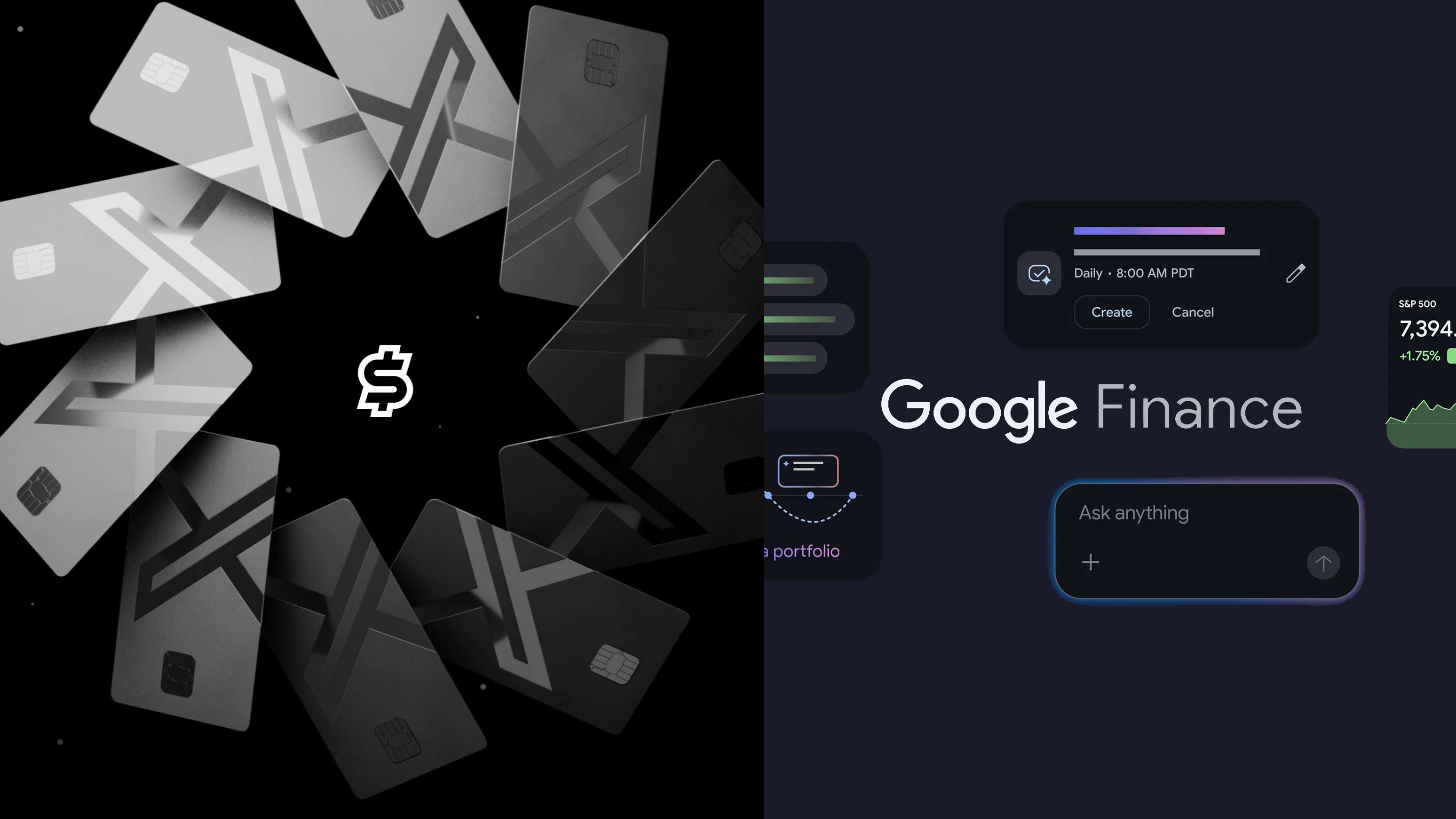
X Money launched into limited external beta in early March 2026 and has been gradually widening access since. On June 4, Musk announced a broader expansion to more users. The feature set is aggressive: peer-to-peer transfers, FDIC-insured deposits up to $250,000 through Cross River Bank, a personalized metal Visa debit card stamped with each user's handle, 3% cashback on purchases, and zero foreign transaction fees.
Then there's the 6% APY on cash balances. That rate is roughly 15 times the national average savings account yield. Whether it's sustainable or a loss-leader to drive adoption remains unclear, but the positioning is unmistakable: X Money is built to compete directly with PayPal, Venmo, and Cash App, not just replicate them.
The service is powered by partnerships with Visa and Cross River Bank. X has secured money transmitter licenses in 41 states plus Washington, D.C. Notably, the launch is fiat-only. No crypto at the outset, despite persistent speculation about Dogecoin integration.
Google Finance: The Research Layer
Google's announcement took a different angle. The company rolled out portfolio tracking globally, letting users consolidate all their investments into a single dashboard with performance data and asset allocation insights. Users can create portfolios by uploading CSVs, PDFs, or screenshots, or simply by describing their holdings to a chatbot.
The new Google Finance Android app launched today with watchlists, real-time data, live financial news feeds, and AI-powered "key moments" that explain why stocks are moving. An iOS version will arrive later this year. Features like live earnings calls and the portfolio tools will come to mobile in the coming months.
Perhaps more significant is the AI task system: users can describe a request in natural language, like "send me a daily pre-market briefing analyzing significant overnight moves across major cryptocurrencies," and Google Finance will execute it on a recurring schedule.
The Super App Convergence
Both moves point toward a shared conclusion: whoever owns the financial layer of daily life owns the relationship. Musk has been explicit about this vision since shortly after his October 2022 acquisition of Twitter. He has repeatedly cited WeChat as the model for what X could become in Western markets. During an xAI All Hands presentation in February 2026, he described X Money's purpose as being "the place where all the money is, the central source of all monetary transactions."
Google's approach is subtler but perhaps more durable. By becoming the default interface for investment research, performance tracking, and market intelligence, Google Finance positions itself upstream of transactions. You don't need to process the payment if you control the decision.
The super app model has famously struggled to take root in America. WeChat and Alipay succeeded in China partly because they arrived before incumbent financial infrastructure had fully calcified around smartphones. American consumers already have deeply entrenched habits with Venmo, Cash App, traditional banks, and brokerage apps like Robinhood and Fidelity.
But the economics have shifted. User acquisition costs are brutal. Advertising revenue faces structural headwinds from AI and shifting attention patterns. Financial services offer recurring engagement, data richness, and direct monetization that advertising alone cannot match.
X has roughly 600 million monthly active users. Google's reach is essentially universal. Neither company needs to acquire a user base. They already have one. The question is whether they can change what that base does once it arrives.
Regulatory scrutiny is inevitable. Senator Elizabeth Warren sent Musk a letter in April raising concerns about consumer protection, national security, and the risks of financial products launched after the gutting of the CFPB. X Money still lacks licenses in several states, including New York. Google, for its part, will face questions about data practices and the blurring line between search and financial advice.
Neither platform has won anything yet. But the thesis is now shared: owning attention is no longer enough. The next phase is owning the transaction.