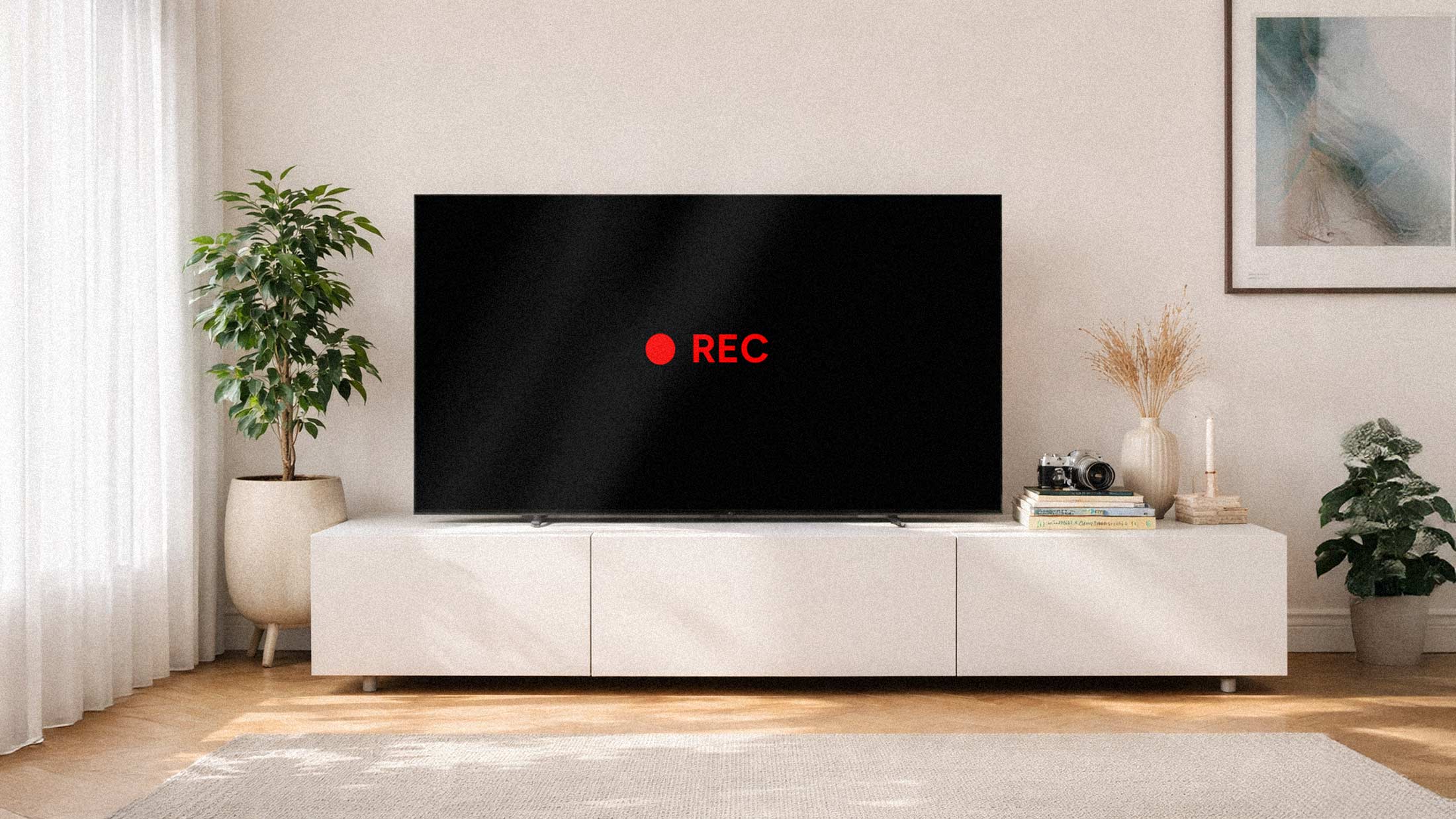
That television mounted on your wall is watching you back. A peer-reviewed study published by researchers at University College London, UC Davis, and Universidad Carlos III de Madrid has confirmed what privacy advocates have long suspected: smart TVs from major manufacturers are capturing visual fingerprints of everything displayed on screen and transmitting that data to corporate servers.
The technique is called Automatic Content Recognition, or ACR. It works by taking periodic snapshots of what's on your display, generating a unique fingerprint, and matching it against a database to identify what you're watching. The study found that LG televisions perform this capture every 15 seconds. Samsung does it every minute.
It Doesn't Matter What You're Watching
The surveillance extends far beyond streaming apps. Researchers confirmed that ACR systems identify content from HDMI inputs, meaning anything connected to your TV is fair game. Your PlayStation. Your laptop during a video call. A USB drive with home movies. The television treats all of it as content worth cataloging.
This creates a peculiar situation where a device you purchased becomes an intelligence-gathering apparatus for its manufacturer. The TV doesn't distinguish between Netflix and a private Zoom meeting. It just captures, fingerprints, and phones home.
Buried Consent and Default Surveillance
ACR is enabled by default during initial TV setup. The consent mechanism is typically a wall of text that users click through to start watching. Opting out requires navigating settings menus that manufacturers have little incentive to make intuitive.
The business model explains why. Television manufacturers have discovered that selling hardware at thin margins becomes more palatable when the device itself generates recurring revenue. Viewing data is valuable to advertisers who want to know what households watch, when they watch it, and how their attention shifts between platforms.
Vizio's ad revenue reached hundreds of millions annually before the company was fined by the FTC in 2017 for failing to disclose its tracking practices. LG's advertising arm has grown into a significant profit center. Samsung operates one of the largest connected TV advertising platforms in the world.
Legal Pressure Is Building
The regulatory environment is shifting. Class action lawsuits have already targeted several manufacturers over ACR practices. State attorneys general in multiple jurisdictions have launched investigations, with lawsuits expected to roll out through 2025 and 2026. The core argument is straightforward: capturing and monetizing detailed viewing habits without meaningful consent violates consumer protection statutes.
California's privacy laws and similar frameworks in other states provide legal hooks that didn't exist when the first smart TVs shipped. The growing scrutiny of digital identity and consent across the tech industry means television manufacturers face an environment where practices that were once ignored now attract regulatory attention.
What Users Can Actually Do
Disabling ACR is possible but varies by manufacturer. On LG TVs, the setting is typically found under privacy options labeled "Live Plus" or similar euphemisms. Samsung buries it under "Viewing Information Services." The terminology is designed to be forgettable.
Some users have taken to blocking TV internet access entirely at the router level, though this disables streaming apps and software updates. Others connect external streaming devices and use the TV purely as a display, though the study suggests ACR still captures HDMI content in many cases.
The research confirms something that seemed paranoid a decade ago: the screen in your living room has become infrastructure for data collection systems that treat your attention as a product. Manufacturers have calculated that most consumers will never check these settings, and so far, they've been right.