We may earn a commission if you buy through links on this page. It never affects our coverage. Prices are as reported at publication and may have changed. As an Amazon Associate we earn from qualifying purchases.
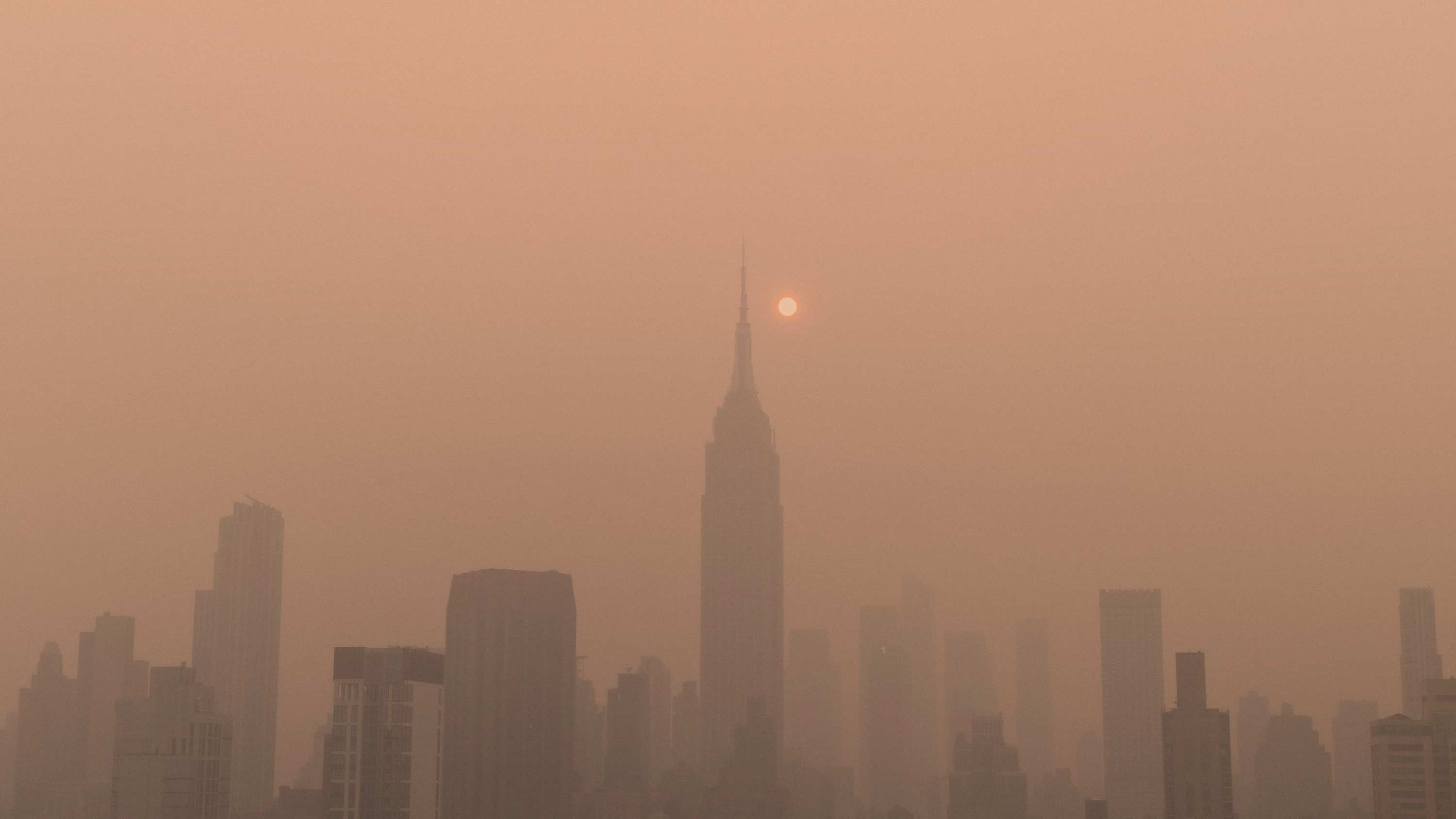
Smoke from hundreds of wildfires burning across Ontario is descending on the Northeast and Midwest, creating hazardous conditions for millions of Americans. Air quality alerts stretch from Minnesota to Massachusetts, and cities including New York, Boston, Toronto, and Philadelphia are reporting unhealthy air quality indices that have climbed past 150 in some locations.
The National Weather Service warns that wildfire smoke can trigger elevated levels of fine particulate matter, known as PM2.5, which aggravates asthma and heart conditions. According to research from Stanford University, children exposed to five days of wildfire smoke show a twofold increase in asthma rates, while adults over 65 face a potential 40% increase in stroke risk and elevated rates of heart attacks. A Harvard study published last year found that medium-term exposure to PM2.5 from wildfire smoke is associated with increased risks for ischemic heart disease, arrhythmia, hypertension, and COPD. The effects can linger for months after exposure.
Keeping windows closed helps, but research from UC Berkeley shows dangerous particulate matter penetrates homes anyway. HEPA air purifiers are the primary consumer-grade defense. According to the EPA, the best units can reduce particle concentrations by as much as 85%. Here are 10 systems worth considering, ranging from budget-friendly bedroom units to commercial-grade machines for offices and large spaces.
For Small Households and Bedrooms
1. Levoit Core 400S — A reliable mid-sized option covering rooms up to 403 square feet. It uses a three-stage filtration system with a True HEPA filter and activated carbon, runs quietly enough for bedrooms, and connects to the VeSync app for remote monitoring. The Smoke Remover filter variant contains 450 grams of activated carbon, the highest in Levoit's Core range. Expect to pay around $230 for the unit.
2. Winix 5510 — A budget-conscious choice with a CADR of 253 CFM covering rooms up to 392 square feet. It combines a True HEPA filter with pellet-based activated carbon and includes smart app connectivity. At roughly $200, it delivers solid performance without premium pricing.
3. Austin Air HealthMate Jr. — Built for intense smoke conditions in smaller rooms up to 185 square feet. The four-stage filtration includes a medical-grade True HEPA filter and activated carbon with zeolite for odor control. If you live in a high-recurrence fire zone and want maximum protection in a compact footprint, this is the unit to consider.
For Living Rooms and Open Floor Plans
4. Levoit Core 600S — Levoit's largest Core model covers up to 635 square feet with a CADR of 410 CFM. Consumer electronics pricing has shifted across categories, but this unit remains under $300, making it a compelling value for large spaces. Smart features include real-time PM2.5 monitoring and customizable auto-mode settings through the app.
5. Coway Airmega 400S — A dual-intake tower purifier with an AHAM-certified smoke CADR of 328 CFM covering rooms up to 1,560 square feet in 30 minutes. The HyperCaptive filtration system combines activated carbon and True HEPA across both intake sides, and the unit runs at 22 dB on low speed. It connects to the IoCare app for air quality monitoring and scheduling. Priced around $500 to $550.
6. Blueair Blue Pure 211+ — Consumer Reports notes this 16-pound unit delivers strong performance removing dust, pollen, and smoke at both high and low settings. Annual maintenance runs approximately $212 including filter replacement and electricity. Blueair units rank highly for reliability in owner satisfaction surveys.
For Severe Allergies and Compromised Respiratory Systems
7. IQAir HealthPro Plus XE — The premium option. Swiss-made HyperHEPA filtration captures particles down to 0.003 microns, 100 times smaller than standard HEPA filters can manage. The V5-Cell activated carbon stage handles VOCs and smoke odors. Covers up to 1,125 square feet. The XE version adds WiFi connectivity and real-time PM2.5 monitoring. Pricing starts at $1,199, which is steep, but it comes with up to a 10-year warranty and individual unit certification. For households with health-vulnerable members, this is the benchmark.
For Offices and Commercial Spaces
8. Coway Airmega ProX — Consumer Reports calls this 50-pound unit the best-performing air purifier in its testing, excelling at clearing dust, pollen, and smoke at all speeds. It includes a certified HEPA filter, activated carbon filter, and washable pre-filter. Annual maintenance costs run about $258. Designed for extra-large rooms where consumer-grade units fall short.
9. XPOWER AP-2000 — A portable commercial HEPA air scrubber producing 2,000 CFM of air movement. Built for hospitals, schools, gyms, conference halls, and warehouses. The unit includes a four-caster system for easy mobility through standard doorways and features nested stacking for transporting multiple units. This is industrial equipment for facilities managers, not consumers.
10. Blue Ox OX2500D-CC — Designed for heavy-duty commercial applications with straight-through airflow and a 36-pound carbon canister for smoke and VOC control. Blue Ox systems are engineered for spaces like cigar lounges, welding shops, and industrial operations where pollutant loads far exceed residential norms.
What to Look For
Wildfire smoke contains both particulate matter and gaseous pollutants like formaldehyde, benzene, and acrolein. HEPA filters capture particles but let gases pass through. Health monitoring technology has advanced, but protection starts with the basics: you need both HEPA and activated carbon filtration to address the full spectrum of wildfire smoke threats.
Match the unit to your room size. Manufacturers often quote maximum coverage areas based on two air changes per hour, which is insufficient during active smoke events. The EPA recommends six or more air changes per hour when air quality is hazardous. A purifier rated for 600 square feet might only handle 200 square feet effectively during a smoke emergency.
The Ontario wildfire smoke is expected to persist through at least Thursday before rain systems help disperse it. With several months of fire season remaining, this pattern will repeat.