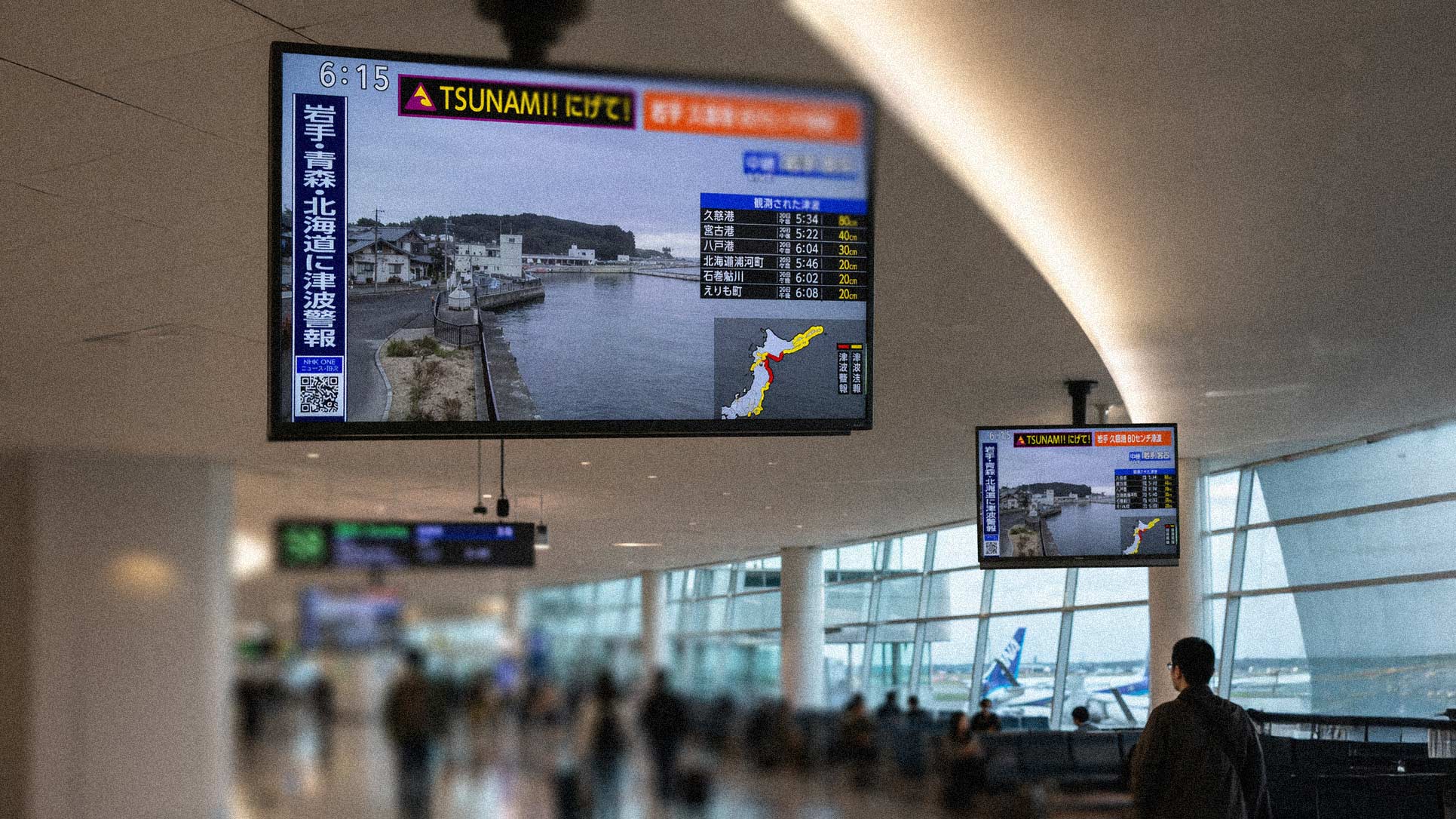
A 7.4 magnitude earthquake struck off the coast of northern Japan early Wednesday, triggering tsunami warnings across multiple prefectures and prompting urgent evacuation orders for residents in low-lying coastal areas. The U.S. Geological Survey confirmed the quake's magnitude, with the epicenter located in waters east of the Tohoku region.
Japanese authorities are warning residents to evacuate to higher ground immediately, with waves of up to 3 meters expected along several coastal stretches. Emergency sirens have been activated across affected communities, and officials are cautioning that significant aftershocks could follow in the coming hours.
Japan's Seismic Reality
Japan sits at the convergence of four major tectonic plates, making it one of the most seismically active countries on Earth. The archipelago experiences roughly 1,500 earthquakes annually that are strong enough to be felt, with dozens exceeding magnitude 5.0. The country has developed some of the world's most sophisticated early warning systems and building codes as a direct result.
The Tohoku region carries particular significance in Japan's earthquake history. The catastrophic 9.0 magnitude earthquake of March 2011 struck the same general area, generating a massive tsunami that killed nearly 20,000 people and triggered the Fukushima Daiichi nuclear disaster. That event reshaped global conversations about nuclear energy safety and energy infrastructure resilience.
Manufacturing and Supply Chain Exposure
Northern Japan hosts critical manufacturing infrastructure that feeds global technology supply chains. The Tohoku region contains semiconductor fabrication plants, automotive component factories, and precision electronics facilities that supply companies worldwide.
Previous seismic events in Japan have demonstrated how localized damage can ripple through global production schedules. The 2011 earthquake disrupted automotive manufacturing for months, creating parts shortages that affected production lines from Detroit to Munich. Semiconductor facilities, which require ultra-precise environmental conditions, are particularly vulnerable to both direct damage and the extended power outages that can follow major seismic events.
Initial reports indicate several factories in the region have halted operations as a precautionary measure. Companies including Sony, Renesas Electronics, and multiple automotive suppliers operate facilities in prefectures under tsunami warning. Assessment of any structural damage will likely take days once the immediate emergency passes.
The timing adds complexity for industries already navigating constrained chip supplies. Any extended disruption to Japanese semiconductor or component production would compound existing pressures on consumer electronics, automotive sensor systems, and industrial equipment manufacturing.
Preparedness in Practice
Japan's early warning infrastructure appears to have functioned as designed. The Japan Meteorological Agency issued alerts within minutes, giving coastal residents critical evacuation time. Train systems automatically halted, a standard protocol that has prevented casualties in past events.
Authorities continue to urge residents to avoid coastal zones and monitor official channels for updates. The situation remains active, with aftershock risks elevated for at least the next 24 hours.