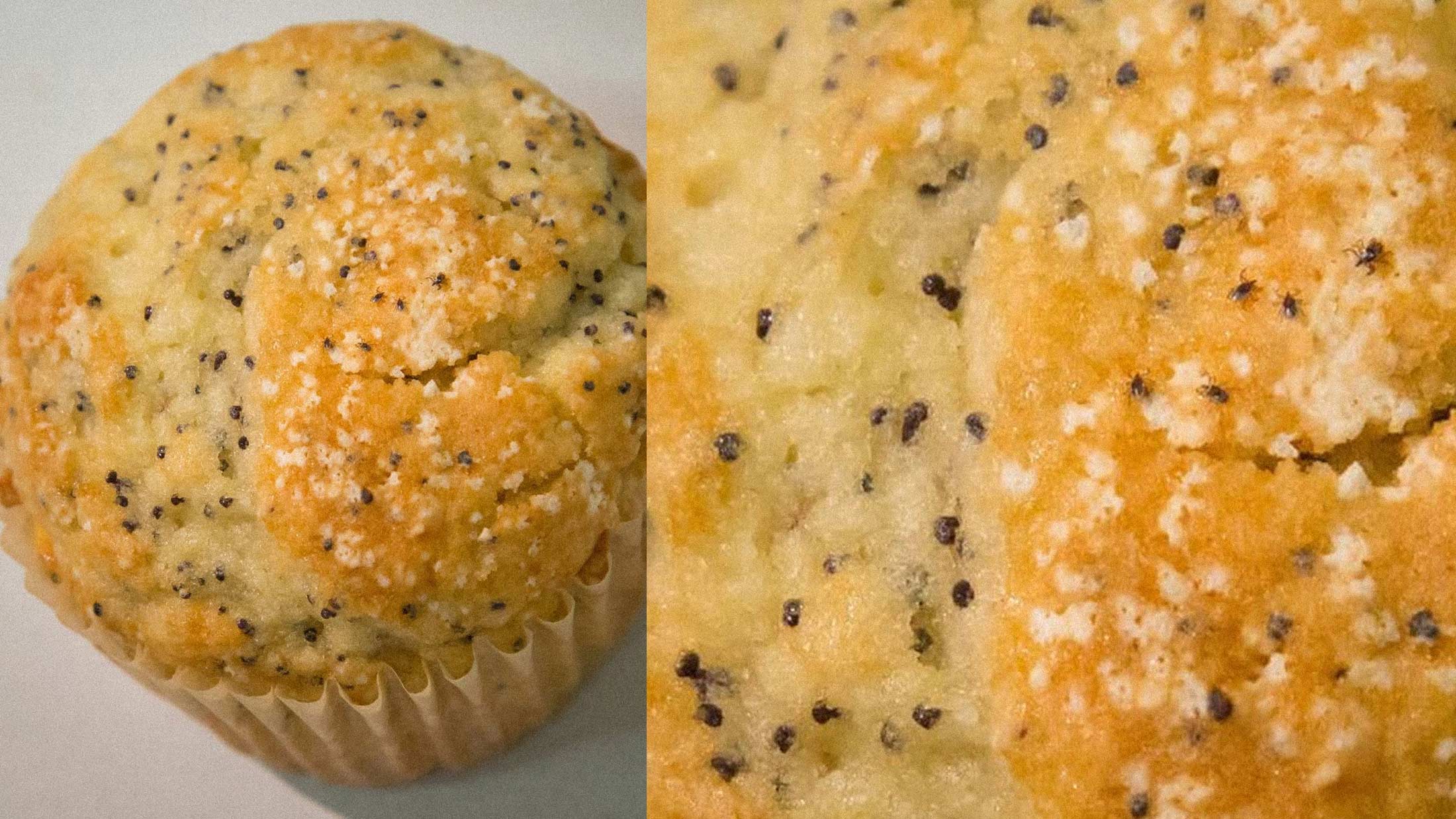
The USDA Forest Service thought it was posting a clever public health warning. The image was simple: a lemon poppy seed muffin with five ticks placed among the seeds, nearly indistinguishable from the thousands of dark specks covering the baked good. The caption read: "Ticks can be as small as a poppy seed. There are five ticks in this photo. Can you spot them?"
Ticks can be as small as a poppy seed. There are five ticks in this photo. Can you spot them? Learn more about protecting yourself from ticks when enjoying your national forests and grasslands: https://t.co/k1W5HuH4MX. pic.twitter.com/kj6goPpO1e
— USDA Forest Service (@forestservice) June 22, 2026
Most people could not. The ticks were clustered in a way that required zooming in and scrutinizing individual seeds for legs and segmented bodies. It was, by design, a difficult task meant to demonstrate how easily these disease-carrying arachnids escape detection on human skin.
Then someone fed the image to Google Gemini and asked: "Should I eat this?"
The response was immediate and specific. Gemini advised strongly against eating the muffin, noting that several of the dark specks, particularly in the lighter crumbly area on the right side, had visible legs and segmented bodies. The model identified them as insects mixing in with the seeds and recommended disposal.
Gemini's vision skills impressively passed this test
— fofr (@fofrAI) June 23, 2026
⚫️🐜⚫️ https://t.co/f2mkxCsWGT pic.twitter.com/lhlPb7Xcpg
Gemini had done what humans were struggling to do, and it had done it in seconds, with no prompting about ticks specifically, no context about the USDA's educational purpose. Just a casual question about whether the muffin was safe to eat.
The Capabilities Are Real
This is not a parlor trick. Gemini 3 was built from the ground up as a multimodal model, meaning it processes images with the same native fluency it handles text. According to Google, its latest models achieve state-of-the-art performance on benchmarks measuring visual reasoning, achieving 81% on MMMU-Pro and 87.6% on Video-MMMU. On the ARC-AGI-2 benchmark for abstract visual reasoning and pattern recognition, Gemini 3 Pro scored 31.1%, nearly double GPT-5.1's 17.6%.
The tick identification happened because modern vision models do not process images the way humans do. They analyze pixel-level detail across the entire image simultaneously, without the attentional constraints that cause humans to miss things hiding in plain sight. AI-powered vision systems can identify details "as small as microns," operating at speeds and resolutions that human perception cannot match.
Medical Applications Are Already Here
The implications extend well beyond muffin inspection. In medical imaging, AI systems routinely detect features that radiologists miss. Research published in Nature Digital Medicine notes that "AI systems can detect subtle features in diagnostic imaging scans that radiologists may miss, including higher-order features that lack obvious visual correlates." A Mayo Clinic analysis found that AI can bring "analysis of features invisible to the human eye" to dermatological examinations.
Studies comparing AI to dermatologists in melanoma detection have consistently shown AI-based techniques achieving superior or equivalent performance, with some algorithms reaching over 80% accuracy on receiver operating characteristic curves. The same principle that let Gemini spot tiny ticks among poppy seeds is already catching skin cancers that trained physicians overlook.
What This Means Going Forward
The tick muffin is a useful demonstration precisely because it's so mundane. Nobody trained Gemini specifically on tick identification. Nobody prompted it with context about the USDA's campaign. It simply looked at an image and noticed something wrong, something that most humans would eat without a second thought.
This kind of superhuman visual attention is arriving across domains simultaneously: quality control in manufacturing, fraud detection in retail, threat identification in security systems. The common thread is that AI vision does not get tired, does not get distracted, and processes visual information with a consistency humans cannot replicate.
The USDA's muffin photo was meant to humble people about the limits of human perception. It accomplished something more interesting: it became a benchmark that AI passed effortlessly while humans failed. That gap between machine vision and human vision is no longer theoretical. It is measurable and growing.