Anduril Industries announced Tuesday the formation of a consortium to develop space-based interceptors for the U.S. Space Force's Golden Dome initiative, marking one of the most ambitious defense partnerships between new-space startups and a nontraditional prime contractor.
The team includes Impulse Space, Inversion Space, K2 Space, Sandia National Laboratories, and Voyager Technologies, combining commercial space startups and an established research institution to build hardware the Pentagon hopes will destroy missiles from orbit.
In a post on X, Anduril SVP of Engineering Gokul Subramanian framed the effort as a response to an evolving threat environment. "Near-peer adversaries have invested in exotic, highly maneuverable vehicles, introducing considerable challenges to protecting the U.S. homeland," he wrote.
The Orbital Layer
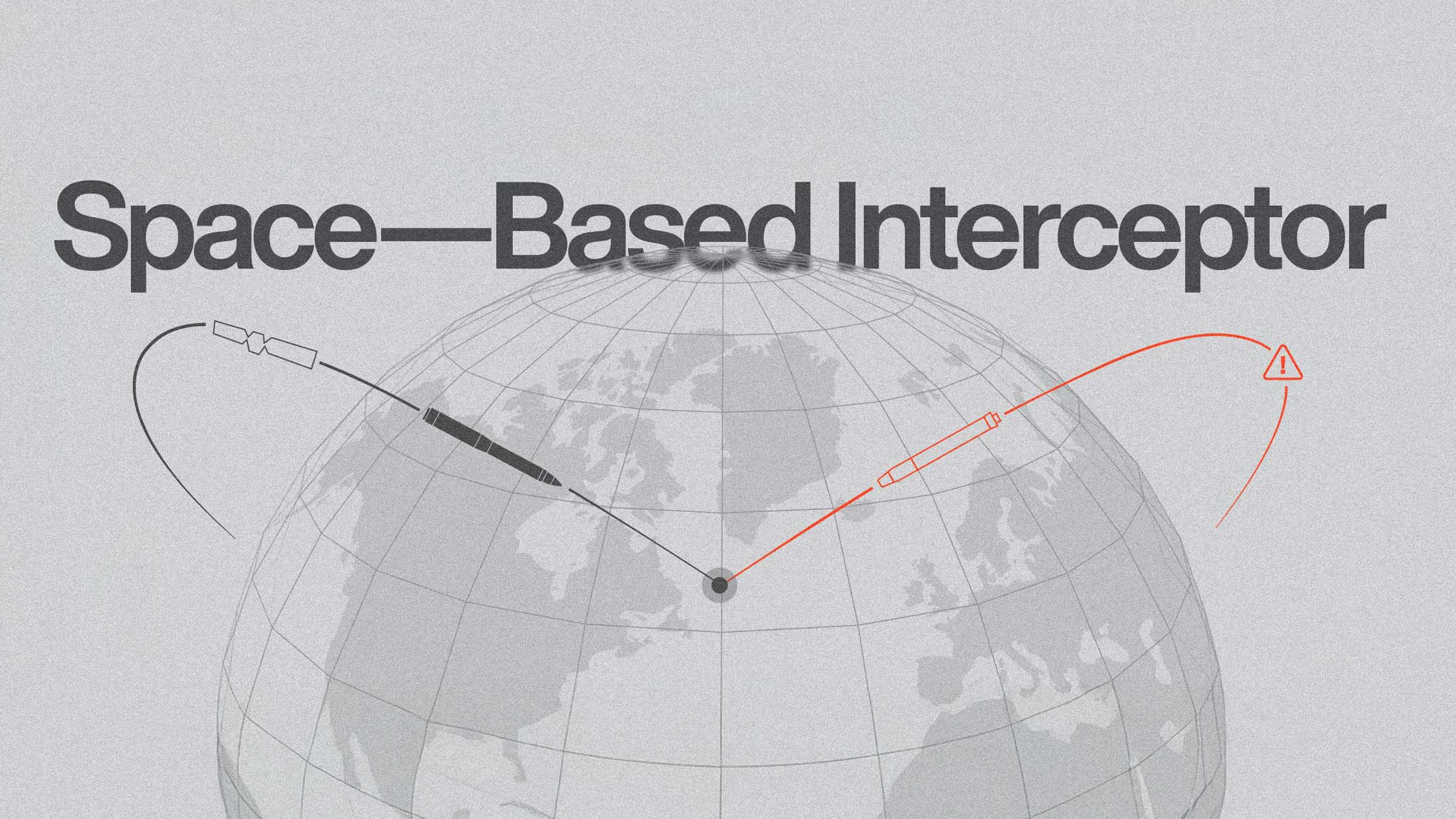
Unlike existing ground-based systems, the Space-Based Interceptor program deploys weapons in orbit, enabling the military to engage threats earlier in their flight path. The concept focuses on destroying missiles during their boost, midcourse, and glide phases, when they are more predictable and vulnerable.
The Space Force awarded 12 companies, including Anduril, contracts worth up to $3.2 billion to develop prototypes for space-based interceptors under President Trump's Golden Dome plan. The service has pledged to demonstrate an initial capability by 2028.
Anduril's consortium brings specific capabilities to the table. Impulse Space, founded by SpaceX's first employee Tom Mueller, develops in-space transportation technology for maneuvering payloads across orbits. Inversion Space is developing autonomous reentry capsules capable of precision landing and has its own Space Force contract. K2 Space raised $250 million in a Series C in December 2025 to build what the company calls the biggest, most powerful satellites on orbit. Voyager Technologies provides divert and attitude control systems for missile defense interceptors, propulsion hardware that steers kinetic kill vehicles to their targets.
Sandia National Labs, the lone non-startup in the group, contributes decades of weapons development experience.
The Affordability Problem
Golden Dome's ambitions are matched by its risks. Space Force General Michael Guetlein, the program's director, has identified the SBI component as the initiative's highest-risk element, citing scalability and affordability as the central challenges.
"If boost-phase intercept from space is not affordable and scalable, we will not produce it, because we have other options to get after it," Guetlein told lawmakers during a House Armed Services subcommittee hearing in April.
The broader Golden Dome program is expected to cost $185 billion, with a complete architecture targeted for the mid-2030s. Interceptors can cost millions of dollars each, while the missiles or drones they target are often far cheaper, creating a cost imbalance that adversaries can exploit. A system that cannot afford to intercept a large volume of incoming threats risks being overwhelmed.
This is where Anduril's bet on commercial space partners becomes interesting. Impulse Space, Inversion, and K2 have all built their businesses around driving down costs through modern manufacturing and reusable systems. Whether that ethos translates to weapons-grade reliability remains to be seen.
A Contested Domain
Although the concept of shooting missiles from space has been around since the 1980s, SBIs have only recently become feasible due to advancements in technology and low costs of space launch. The commercial space boom of the past decade, led by SpaceX's reusable rockets and the proliferation of smallsat builders, has made orbital constellations a realistic proposition for the first time.
That said, external analysts remain skeptical. To provide the kind of comprehensive missile defense coverage promised by President Trump, Golden Dome would need not just thousands of satellites, but tens or even hundreds of thousands, according to MIT physicists and others.
Subramanian oversees Anduril's Frontier Systems Division and Lattice platform, directing the company's large-scale sensing platforms across its space business, intelligence systems, and air defense programs. His post emphasized that the team is "already moving at pace to deliver."
The 2028 deadline is aggressive. In the near term, budget documents show that contractors will be working on enabling technologies, not the interceptors themselves. Whether Anduril's commercial partners can deliver affordability at the scale the Pentagon requires will determine whether space-based interceptors remain part of the final architecture or become another chapter in the long history of missile defense programs that promised more than they could build.