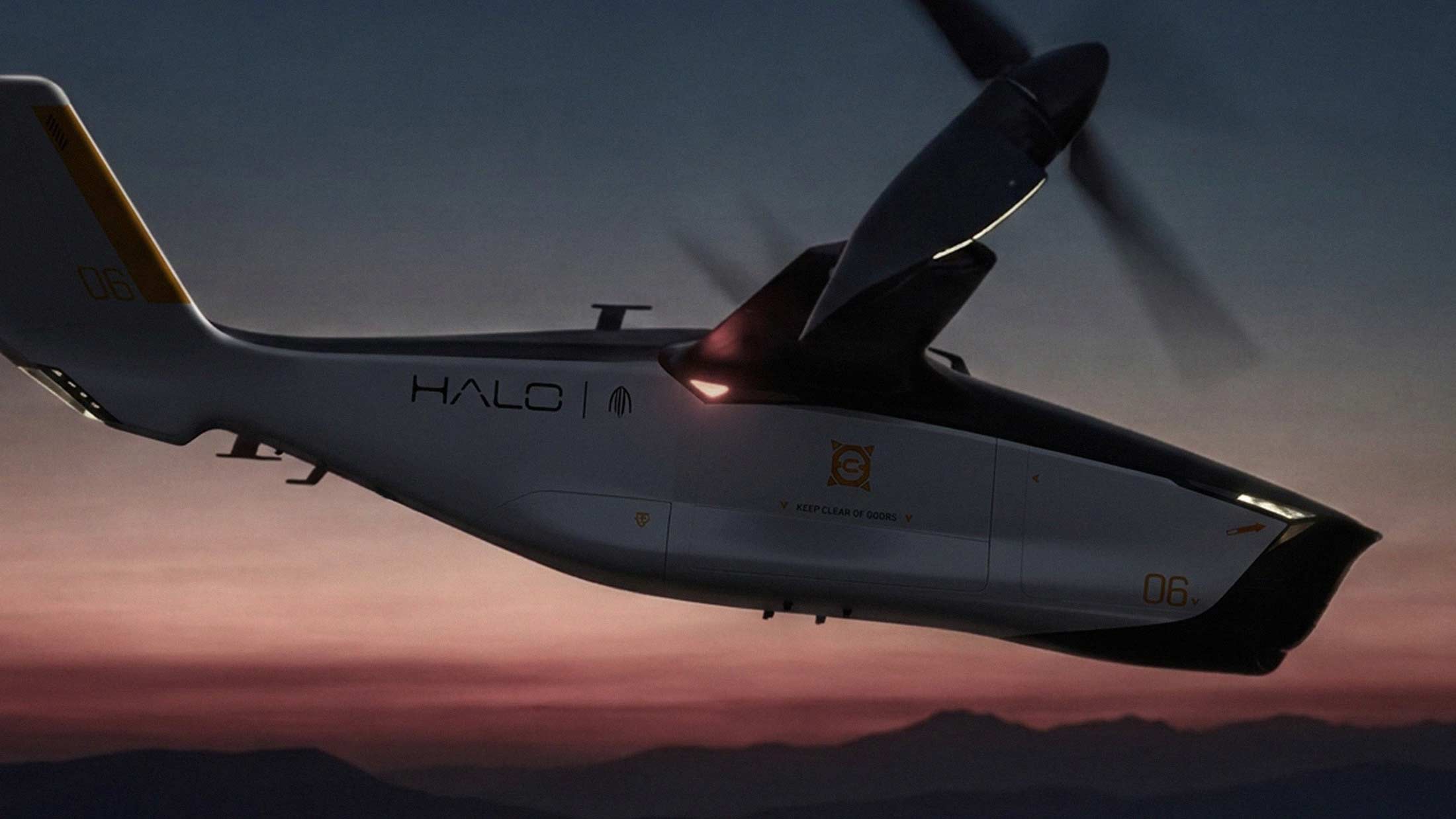
Archer Aviation and Anduril Industries today unveiled a jointly developed autonomous vertical lift platform at Farnborough International Airshow 2026, marking a significant moment for both commercial aviation and defense procurement. Halo, Archer's commercial variant, shares its fundamental architecture with Thunder, the defense variant Anduril showcased at the show. Archer plans to announce its first commercial partners for Halo later this week.
A Clean-Sheet Approach
The companies built this platform from scratch rather than retrofitting an existing design. According to Shane Arnott, SVP of Maneuver Dominance at Anduril, the partnership combined Archer's experience with electric propulsion and rotor systems with Anduril's autonomy software and defense engineering expertise. The result is a series hybrid-electric tiltrotor with dual rotors that vary their RPM to maintain efficiency across flight regimes.
Adam Goldstein, Archer's founder and CEO, called it "the most sophisticated vertical lift aircraft ever made" in a statement. Whether that claim holds up will depend on actual flight performance, but the technical specifications suggest the companies are taking a more ambitious approach than typical eVTOL startups.
The platform combines vertical takeoff and landing capability with efficient wingborne cruise. This means it can operate from locations without runways while achieving range and speed that traditional helicopters struggle to match. Anduril says Thunder is designed to cruise at over 200 knots with a range extending to thousands of nautical miles. The commercial Halo variant would likely sacrifice some of that range for payload and operating cost optimization, though Archer hasn't disclosed specific performance targets.
Thunder on the Battlefield
On the defense side, Thunder is designed as what Anduril calls a "loyal wingman" for attack helicopters like the Boeing AH-64 Apache. The thinking behind this is straightforward: attack helicopters have become increasingly vulnerable to drones, loitering munitions, and modern air defense systems. Ukraine has demonstrated this repeatedly.
Anduril President Chris Brose told reporters the design philosophy draws directly from lessons learned in the current conflict. Thunder is built to fly low and fast in formation with crewed aircraft, absorbing risk and extending the reach of human pilots. The drone's Lattice autonomy platform handles terrain avoidance and formation flying at nap-of-the-earth altitudes.
The modular payload bay can carry up to ten Hellfire missiles, 76 rockets, or 16 air-launched effects. A forward bay can mount counter-drone systems. Arnott noted the aircraft breaks down to fit in a standard 40-foot shipping container for transport. First flight is planned for 2027, with production potentially beginning by the 2029-2030 timeframe if military customers sign on.
The Commercial Case for Halo
For civilian applications, Halo represents a different proposition. Rather than armed reconnaissance, the commercial variant targets heavy payload delivery over long distances without the range constraints that have limited pure-electric eVTOL designs. The hybrid-electric powertrain that enables Thunder's extended range becomes an advantage for cargo logistics, medical transport, and potentially passenger services.
Archer already has its Midnight eVTOL aircraft in late-stage FAA certification for urban air taxi operations. Halo sits in a different category altogether. Where Midnight focuses on short urban hops with rapid turnaround, Halo addresses missions that require significant range and payload capacity. Think regional cargo routes, offshore logistics, or emergency response in areas without airport infrastructure.
The dual-use approach creates interesting economics. Arnott said Thunder's price point would be "a small fraction" of an Apache helicopter because Anduril can leverage Archer's existing manufacturing infrastructure and supply chain investments. The same logic should apply in reverse: Halo benefits from defense-grade autonomy software and propulsion systems developed with military budgets.
What Comes Next
Archer has been building toward this moment since announcing its Anduril partnership in late 2024, subsequently raising $1.3 billion and acquiring technology from Overair, Lilium, and Karem Aircraft. The integration of Karem's military-grade tiltrotor technology, validated by the U.S. Army, gives the platform credibility that most eVTOL startups lack.
Anduril has completed multiple test flights with full-scale surrogate aircraft. The software has been flying for two years on test platforms. What remains is proving the integrated system actually performs as advertised.
For Archer investors, the Halo announcement expands the company's addressable market beyond urban air mobility into logistics and defense. For military planners watching Ukraine's battlefields, Thunder offers a glimpse of how autonomous systems might change rotary-wing warfare. Both markets demand aircraft that can actually deliver on performance claims. The next two years will determine whether this platform does.