Biosphere, a biomanufacturing startup based in Oakland, California, has secured an Other Transaction Authority agreement worth up to $9 million from the U.S. Army to develop a portable system capable of producing food from nothing more than air, water, and electricity.
The agreement was awarded by the Office of the Undersecretary of War Manufacturing Science and Technology Program via the U.S. Army Combat Capabilities Development Command Soldier Center (DEVCOM SC). The 42-month contract funds the design, development, and demonstration of a field-deployable system that synthesizes ready-to-eat meals for warfighters operating in contested, remote, and logistically constrained environments.
The technology aims to reduce reliance on complex supply chains by enabling on-site production of 2,800 calories per person per day for up to 18 warfighters, with plans to scale the system to support 250 personnel.
How It Works
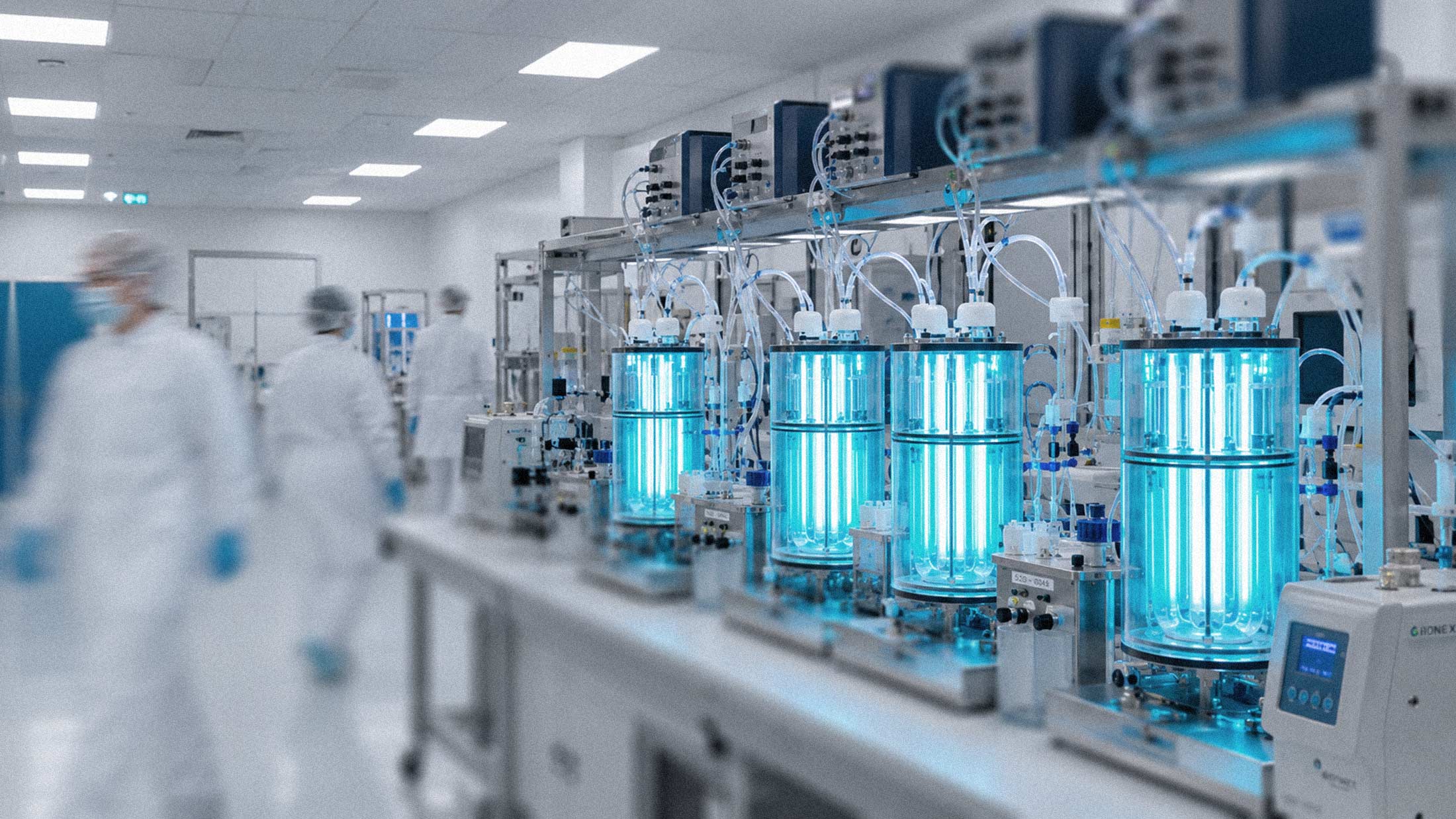
Biosphere's approach replaces the steam-based sterilization that has dominated biomanufacturing for decades with proprietary UV sterilization. By killing contaminants with UV light rather than steam, biomanufacturing firms can reduce capital and maintenance costs, speed up the sterilization process, and potentially cut costs by using cheaper materials such as HDPE rather than stainless steel.
The project will progress through multiple phases, beginning with process selection and design, advancing through pilot-scale demonstrations, and culminating in a full-scale prototype capable of continuous operation. Key innovations include UV sterilization protocols for contamination-free production, water and media recycling systems, and downstream processing to create lightweight, nutrient-dense, ready-to-eat foods.
The company isn't starting from scratch. Biosphere emerged from stealth in early 2025 with $8.8 million in seed financing led by Lowercarbon Capital and VXI Capital, with participation from Founders Fund, GS Futures, Caffeinated Capital, and B37 Ventures. The firm had also previously secured a $1.5 million contract with the Department of Defense to apply its technology toward the production of select bioproducts.
Beyond Battlefield Rations
While the Army contract focuses on nutrition, the platform's ambitions extend further. "While nutrition is the initial application, the platform can produce fuels, chemicals, and advanced materials, with potential to expand distributed manufacturing in remote and resource-constrained environments," said Arye Lipman, co-founder and COO of Biosphere.
The civilian applications are not difficult to imagine. After natural disasters or in the context of humanitarian crises, food security might be impacted for an uncertain time. Container-based food production units offer a promising alternative: compact, modular ecosystems capable of operating autonomously in regions where conventional farming is impractical or impossible.
And then there's space. A crewed mission to Mars may include an array of enabling biotechnologies that leverage inherent mass, power, and volume advantages over traditional abiotic approaches. Researchers have argued for an integrated biomanufacturing plant capable of producing food, pharmaceuticals, and biomaterials required for sustaining future astronauts. NASA's Advanced Food Technology program is actively investigating bioregenerative food systems for exactly this purpose.
DARPA's own Cornucopia program has explored similar territory, targeting two use-case scenarios: providing complete nutritional requirements for a small military combat unit deployed in an austere environment for 45 days, and a humanitarian assistance scenario feeding 100 civilians for 21 days.
The Harder Questions
Whether soldiers will actually eat biosynthesized protein is another matter. The Army is simultaneously pursuing "advanced technologies and processes involved in fermentation, precision fermentation, or other novel biomanufacturing methods." Another track is exploring product development to create meatless proteins that are lightweight, nutritious, shelf-stable, and critically, palatable.
The military's interest in autonomous systems extends well beyond nutrition, but food represents perhaps the most fundamental logistical challenge. Ammunition and fuel can be stockpiled; food cannot wait. Nicole Favreau Farhadi, technical lead at DEVCOM Soldier Center, framed the effort as part of the military's focus on advancing "resilient, forward-deployed capabilities that reduce logistical burden and enhance operational flexibility."
The energy requirements for such systems remain an open question. Producing protein from air and water requires electricity, and lots of it. In contested environments, reliable power may prove as scarce as the food supply itself.
Biosphere's contract runs through late 2029. The company says it expects to deliver a working prototype capable of continuous operation by the end of the program.