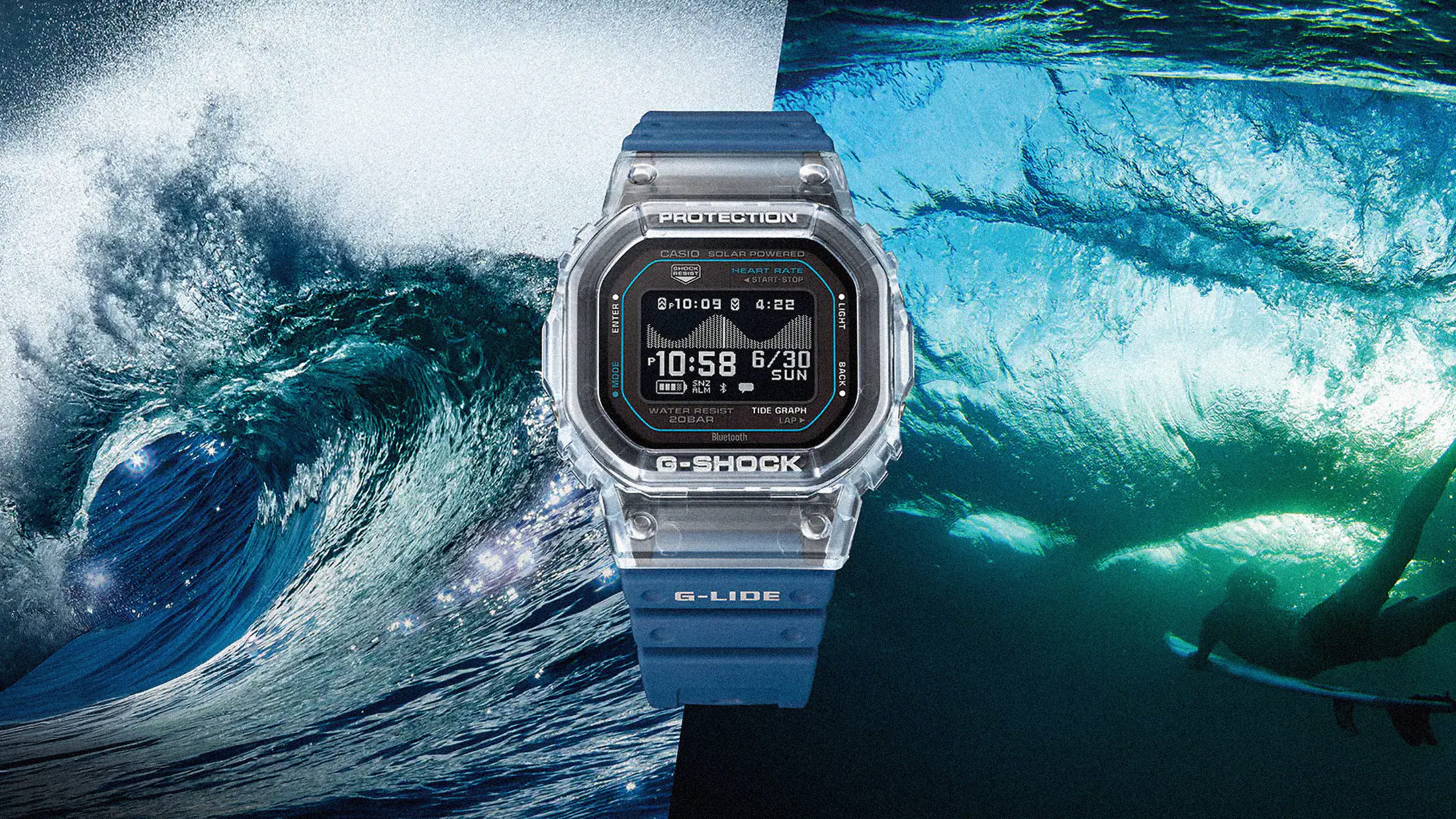
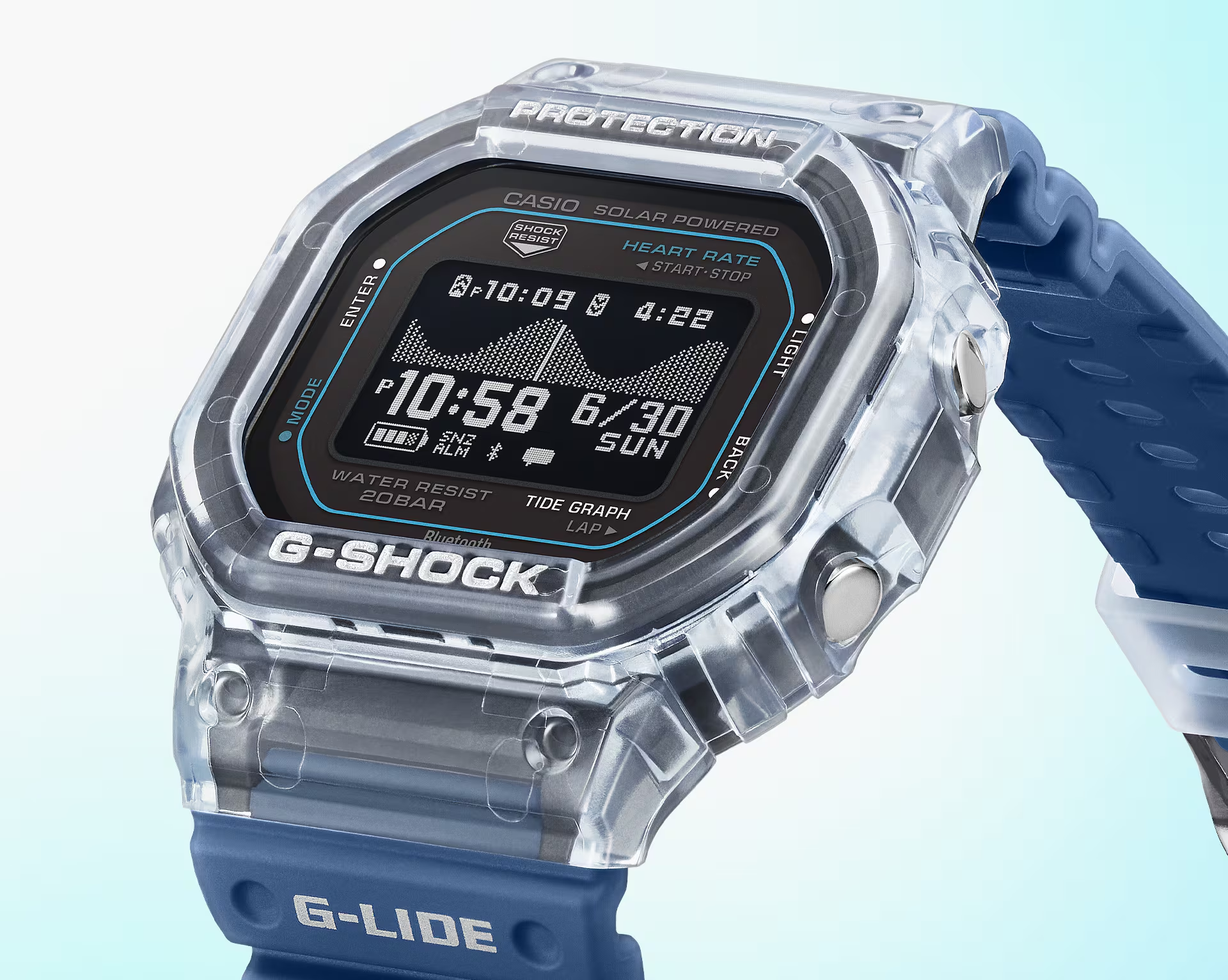
Casio has officially announced the GBX-H5600, the first G-LIDE watch to feature a heart rate monitor. The company revealed the new model on April 23, bringing biometric tracking capabilities to its extreme sports lineup for surfers and water sports enthusiasts who want more than tide data on their wrist.
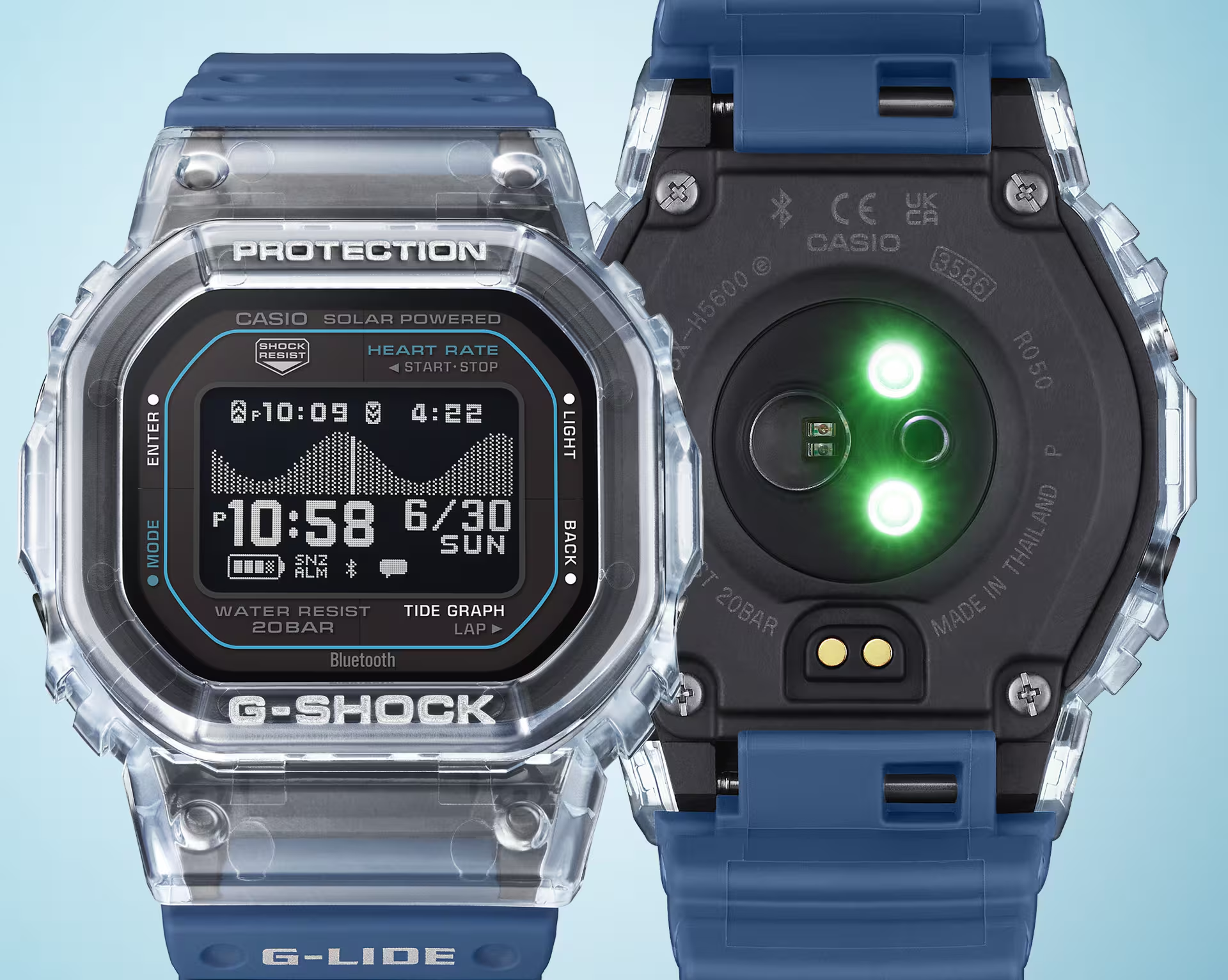
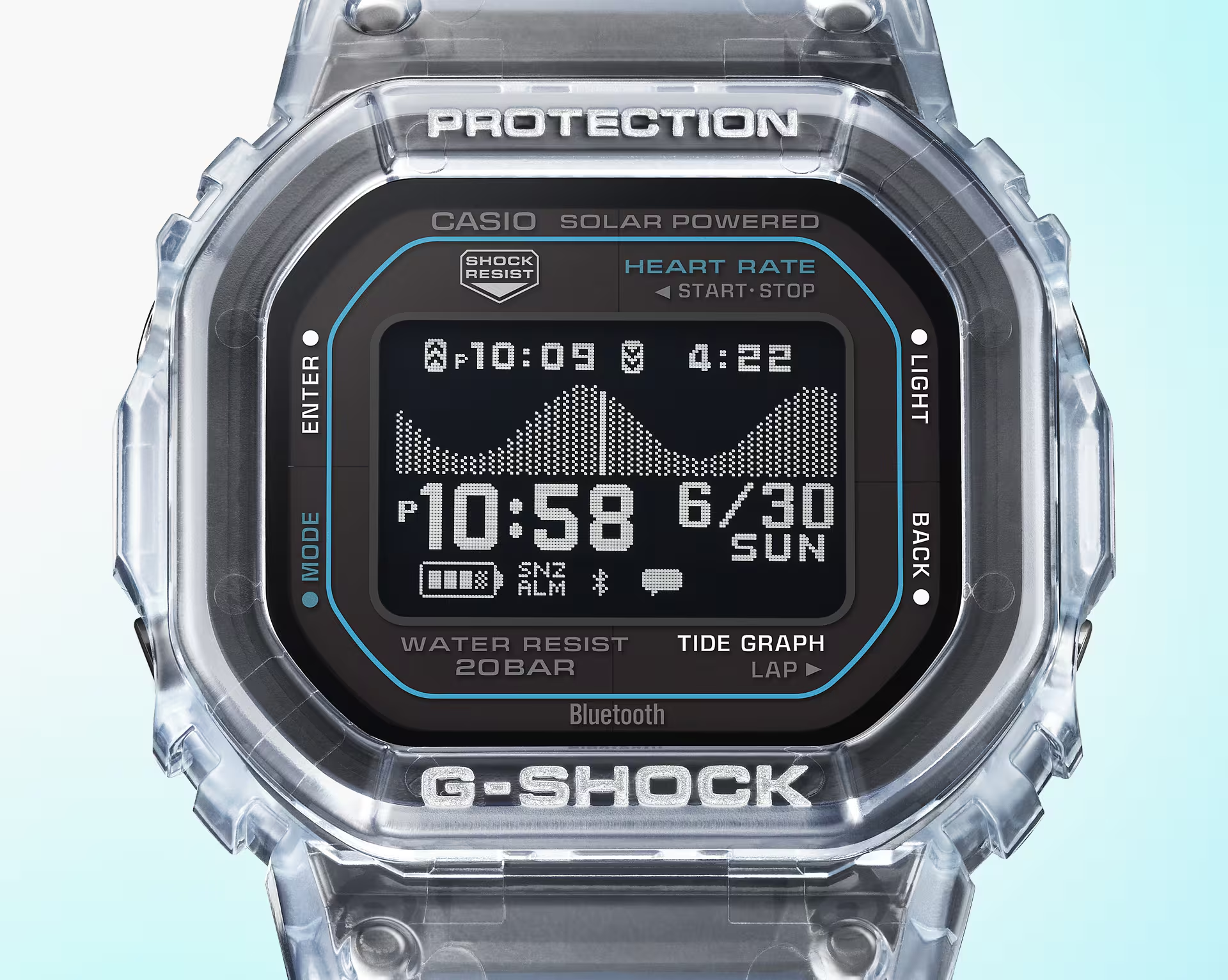
The GBX-H5600 merges two existing G-SHOCK philosophies. On one hand, it inherits the G-LIDE line's core features: tide graphs covering roughly 3,300 surf spots worldwide, moon phase data, and sunrise/sunset times. On the other, it borrows heavily from the fitness-oriented DW-H5600, packing an optical heart rate sensor, a 3-axis accelerometer for step counting, and blood oxygen level measurement.
What Casio Actually Built
Training insights come courtesy of Polar Electro, whose algorithms process the sensor data to deliver cardio load status, sleep analysis, and recovery metrics. The watch supports four dedicated workout modes: running, walking, gym sessions, and interval training. All of this syncs to the CASIO WATCHES smartphone app, which also handles automatic time correction and can push notifications for calls, emails, and calendar events.
The display is a high-resolution MIP LCD, a technology Casio has been rolling out across its premium square G-SHOCKs. MIP panels offer excellent visibility under direct sunlight and wide viewing angles. A full-auto LED backlight handles readability in the dark.
Power management is where the GBX-H5600 gets clever. It uses a hybrid approach: USB charging covers the smart features, while solar-assisted charging maintains basic timekeeping when the battery runs low. Casio claims approximately 35 hours of continuous heart rate tracking on a full charge, stretching to about one month in watch mode with heart rate off. With power-saving enabled and no solar input, that extends to around 11 months.
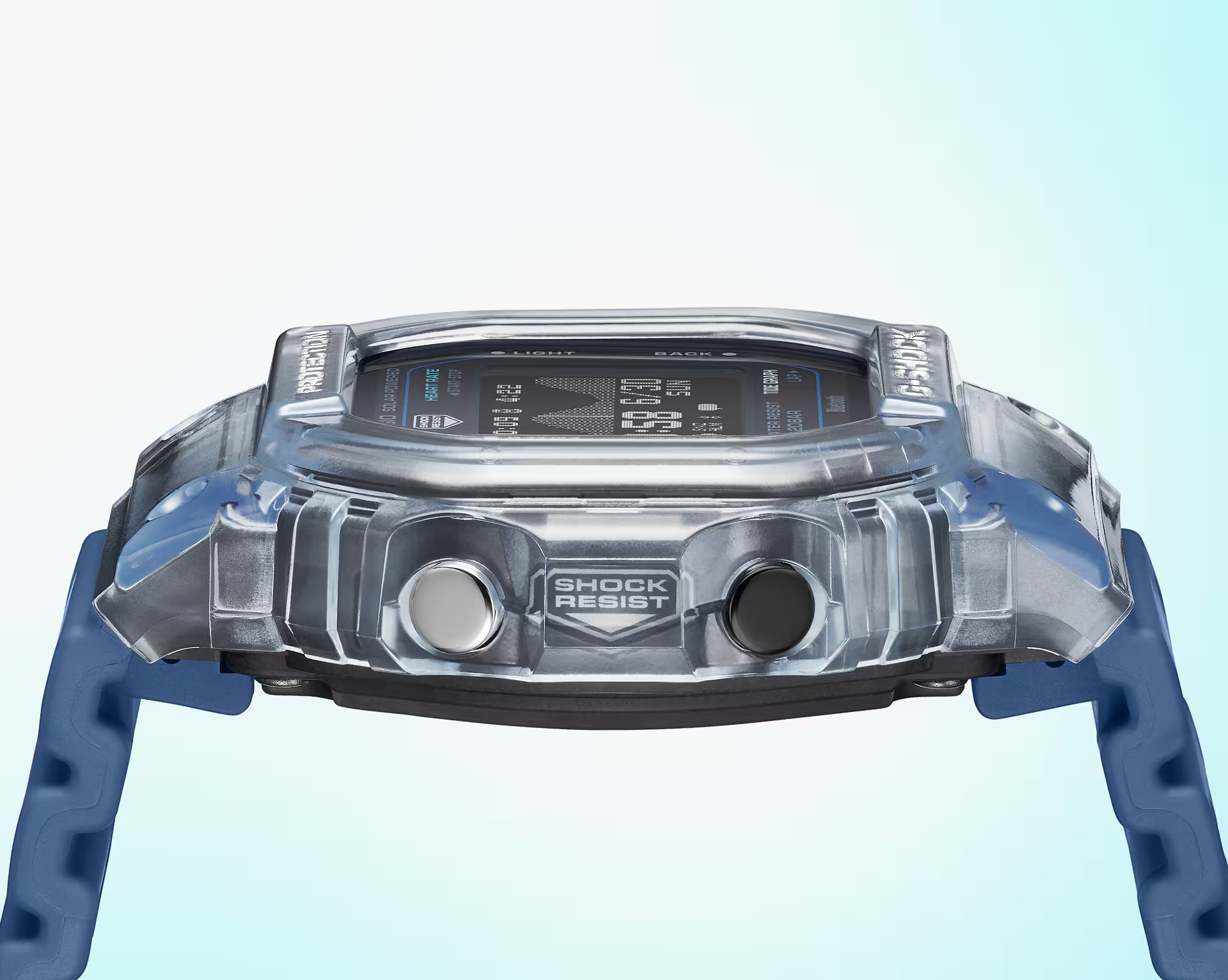
Weight reduction was clearly a priority. Casio used carbon fiber-reinforced resin for the case back, shaving about 12 grams compared to the DW-H5600. The translucent bezel gives the watch a distinctive beach-ready aesthetic while revealing some of the internal construction. Key components incorporate bio-based resin, part of Casio's broader push toward environmentally conscious materials.
Specifications
| Feature | GBX-H5600 |
|---|---|
| Water Resistance | 20 bar (200 meters) |
| Display | MIP LCD |
| Sensors | Optical heart rate, 3-axis accelerometer, SpO2 |
| Charging | USB + solar-assisted |
| Battery (HR mode) | ~35 hours |
| Battery (watch mode) | ~1 month |
| Weight | ~47 grams (estimated) |
| Connectivity | Bluetooth |
| Training Modes | Running, walking, gym, interval |
| Surf Features | Tide graph, moon data, sunrise/sunset |
Pre-release leaks pointed to a Japanese retail price of ¥44,000, roughly $275. Two colorways launch in May 2026: the GBX-H5600-1 in black and the GBX-H5600-2 in blue. Both feature solid-colored bands paired with tinted translucent bezels.
For surfers and outdoor athletes who have long wanted G-SHOCK durability paired with genuine fitness tracking, the GBX-H5600 fills a gap that competing brands like Garmin and Apple have dominated. Casio is not trying to match every smartwatch feature. The company is betting that 20-bar water resistance, legendary shock protection, and a battery that measures runtime in months rather than days will matter more to its audience than app ecosystems and touchscreens.
The announcement arrives alongside Casio's Earth Day-themed GW-BX5600CBG-2, which uses recycled fishing nets for its strap. The near-simultaneous releases signal Casio's intent to carve out multiple niches within the G-SHOCK community. You can explore the full GBX-H5600 series on Casio's official site.
If you are interested in how other companies are approaching wearables, Casio's SXC-1 sampler shows the brand branching into entirely different territory, while Panasonic's DC-TX3 demonstrates what happens when companies pack serious sensor hardware into portable form factors.