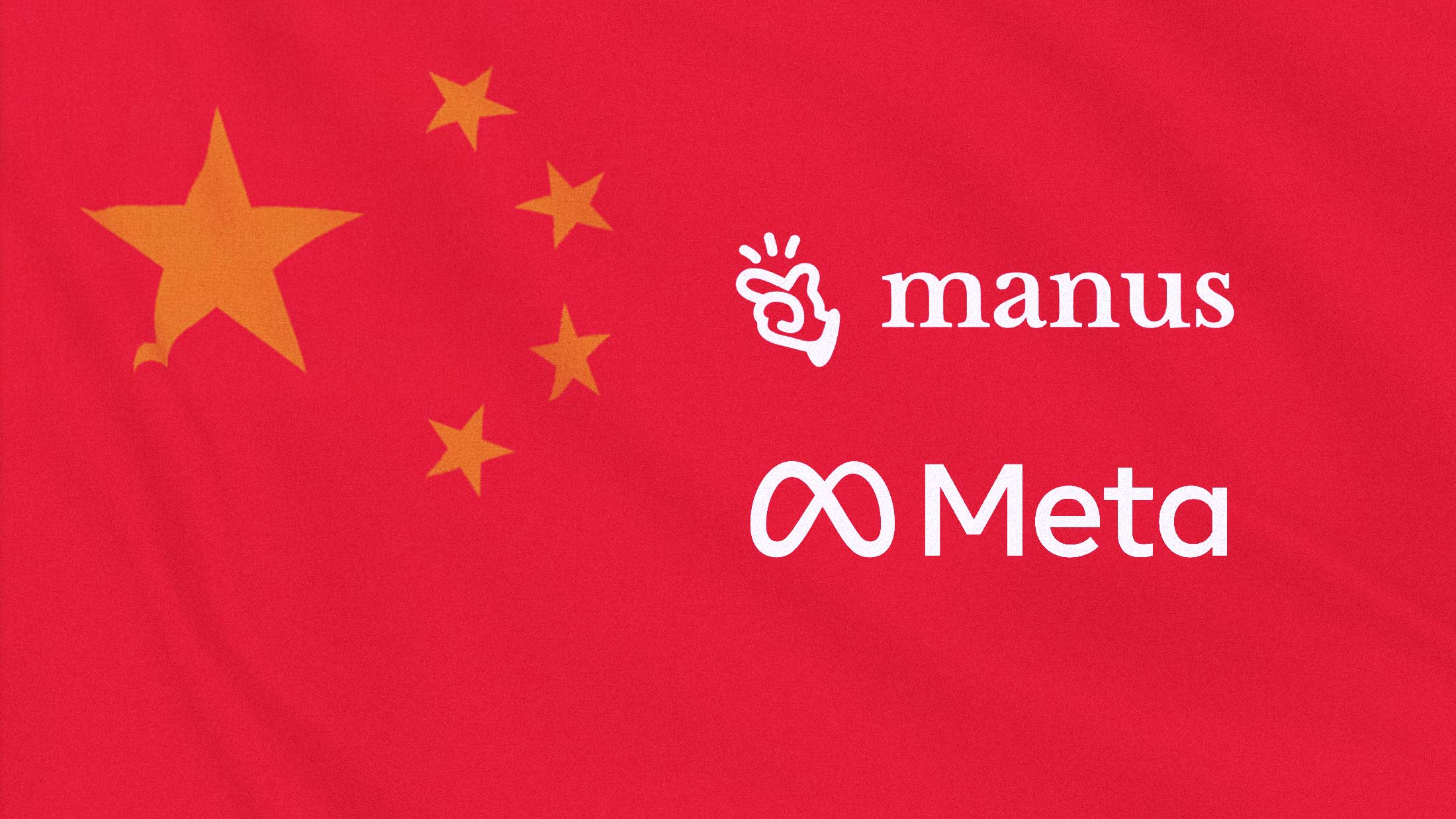
On Monday, China's National Development and Reform Commission issued a one-line order that carries enormous weight: Meta must unwind its $2 billion acquisition of Manus, the agentic AI startup that Beijing once hailed as the country's next DeepSeek.
The decision marks the sharpest escalation yet in the technology cold war between Washington and Beijing. It is the first time China has used foreign investment security review to force a US tech company to reverse a completed acquisition of a Chinese-founded firm.
How We Got Here
Manus was founded in Beijing in 2022 by Xiao Hong and Ji Yichao. The company attracted attention last year after launching what it called the world's first general-purpose AI agent, capable of autonomous multistep tasks like coding, market research, and budget preparation. After raising $75 million from Benchmark in May 2025, Manus shut down its China offices, laid off dozens of employees, and moved operations to Singapore.
The Singapore relocation was a calculated maneuver. By reincorporating its parent company, Butterfly Effect, in a third country, Manus could bypass US restrictions on investing in Chinese AI companies while sidestepping Chinese rules limiting the offshore transfer of intellectual property. When Meta announced the acquisition in December, the company said there would be no continuing Chinese ownership and that Manus would discontinue operations in China.
Beijing saw it differently. Within weeks, the Ministry of Commerce launched a probe into the transaction, examining whether Manus had violated export control laws and technology transfer regulations. In March, regulators summoned Xiao Hong and Ji Yichao to Beijing and barred them from leaving mainland China. It was the first known instance of Beijing using exit bans to impede a multibillion-dollar deal with an American technology company.
The Fallout Is Already Real
Unwinding the deal will be extraordinarily complicated. By March, roughly 100 Manus employees had already relocated to Meta's Singapore offices. CEO Xiao Hong was reporting directly to Meta COO Javier Olivan. The Manus website still says the company "is now part of Meta." As NYU Law's Winston Ma observed, reversing a digital transaction involving data, code, and operational know-how is far more complex than unwinding a deal for physical goods.
Meta has limited practical exposure to Chinese retaliation. Its consumer platforms are already blocked by the Great Firewall. But Beijing can make Manus effectively worthless by disrupting its remaining operations and holding its founders hostage to exit bans.
Broader Implications for Founders and VCs
The message from Beijing is unambiguous. Duncan Clark, an early Alibaba advisor, called it a "draconian development" and said the takeaway for founders is clear: if you start in China, you stay in China.
The Manus case has already triggered a new regulatory framework. Bloomberg reported that China is now requiring its AI startups to obtain government approval before accepting American capital. Moonshot AI, ByteDance, and StepFun have all received instructions from the NDRC. This is the inbound mirror of Washington's 2025 rules restricting American investment in Chinese AI, semiconductors, and quantum computing.
The effect is a firewall closing from both ends. American capital is restricted from going in. Chinese companies are restricted from accepting it. The result is two separate AI ecosystems, each sealed off from the other's capital markets.
China's Domestic Bet
The timing matters. The Manus decision came just days after DeepSeek released its V4 model, which is optimized to run on Huawei's Ascend chips rather than Nvidia hardware. The V4 launch is a proof point for Beijing's bet that it can build a self-contained AI stack. Nvidia CEO Jensen Huang has publicly warned that US export controls risk pushing Chinese developers permanently onto domestic silicon.
Beijing appears willing to accept that tradeoff. By blocking the Meta deal and tightening rules on foreign capital, China is making clear that it views AI talent and intellectual property as strategic national assets, not tradeable commodities.
For global founders, the calculus has changed. Singapore incorporation alone no longer insulates a company from Chinese regulatory reach. The origin of the technology, the location of core R&D, the nationality of the founding team, and the history of domestic operations all become relevant. The era of jurisdiction arbitrage in AI may be over.
The Trump-Xi summit is scheduled for next month in Beijing. Trade and technology controls are on the agenda. The Manus decision arrived weeks before that meeting, not by accident.