Anthropic just released Claude Design, a new capability that lets its AI assistant generate complete, production-ready user interfaces through natural conversation. The announcement landed Tuesday morning, and by market close, Figma's stock had dropped 6 percent.
The connection isn't subtle. Claude Design positions AI as a direct participant in the design process, capable of producing layouts, component systems, and interactive prototypes that designers would typically build in tools like Figma, Sketch, or Adobe XD. For a company that recently launched its own AI-powered features with Weave, the timing stings.
What Claude Design Actually Does
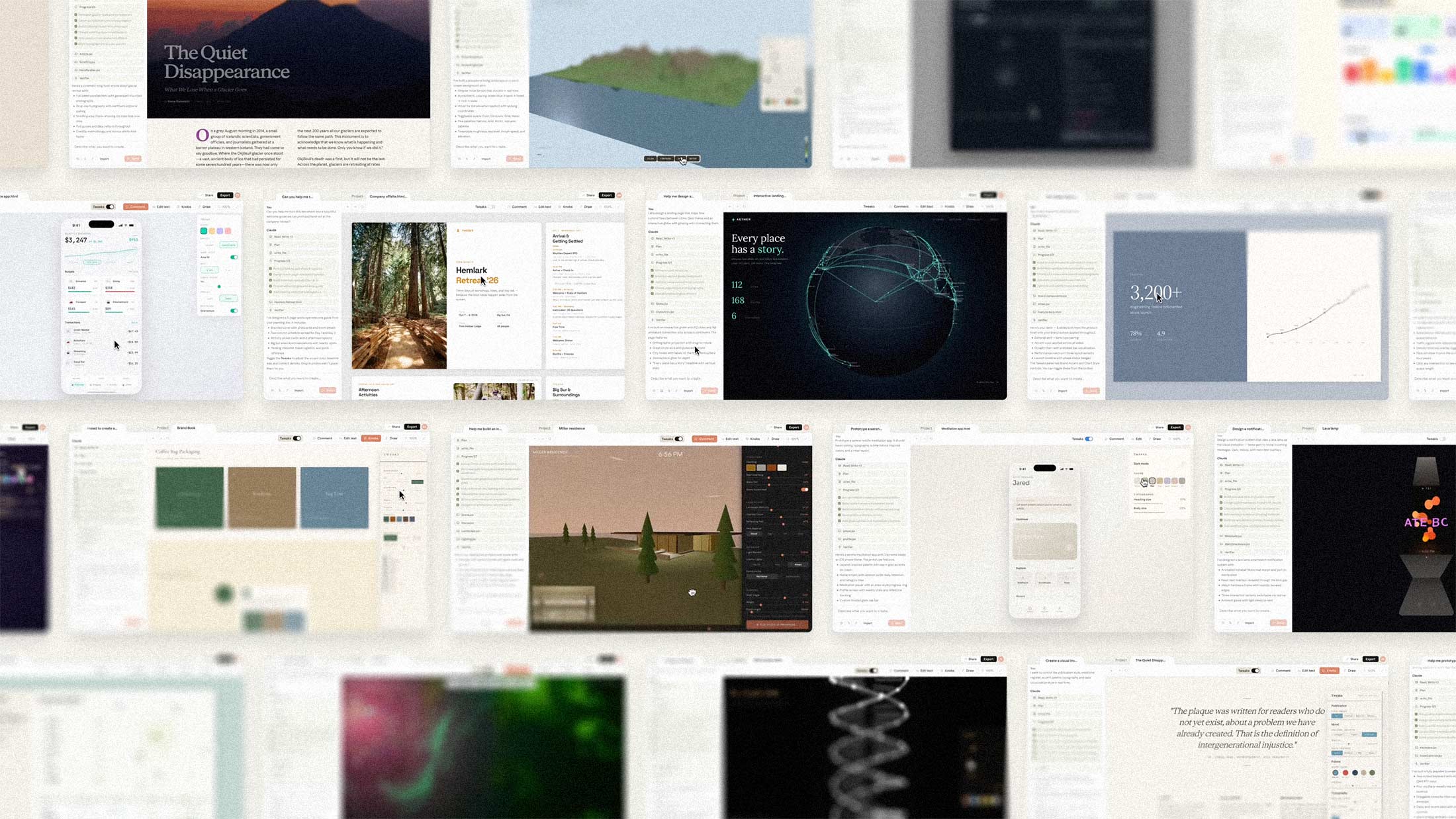
The core pitch is straightforward: describe what you want, and Claude generates it. But the implementation goes deeper than the AI image generators that flooded the market over the past two years. Claude Design outputs structured design files, not static images. It produces components with proper layers, spacing systems, and exportable assets. According to Anthropic's announcement, the system understands design tokens, accessibility requirements, and platform-specific conventions for iOS, Android, and web.
The demo video shows Claude generating a complete mobile banking app interface from a brief conversation, then iterating on specific screens based on feedback. It exports directly to Figma format, which creates an odd dynamic: Claude Design produces files for the very tool it threatens to displace.
The Designer's Dilemma
Early reactions from the design community have been split. Some designers see Claude Design as another tool in the workflow, similar to how auto-layout and design systems already automated repetitive work. Others see something more disruptive.
The concern centers on junior and mid-level design roles. If a product manager can generate reasonable interface mockups through conversation, the traditional pathway into design careers narrows. Companies that previously hired junior designers to execute on specifications might instead route those tasks through Claude.
Senior designers and design directors face a different calculus. Their value increasingly depends on strategic thinking, user research, and cross-functional leadership. Claude Design can generate screens, but it cannot conduct user interviews or navigate stakeholder politics.
Figma's Position
Figma's stock decline reflects market anxiety more than immediate business impact. The company still dominates collaborative design workflows, and Claude Design's Figma export feature actually reinforces that position in the short term. Designers using Claude will still need somewhere to refine, share, and hand off their work.
But the long-term trajectory is harder to read. Figma has invested heavily in AI features, betting that intelligence embedded within the design tool beats intelligence that generates designs externally. Figma Weave represents that strategy, letting designers build software directly from their canvas. Claude Design suggests an alternative future where the design tool becomes a viewer for AI-generated output rather than the primary workspace.
The Broader Pattern
Claude Design fits into Anthropic's broader push to make Claude useful across professional domains. The company has steadily expanded Claude's capabilities beyond text, adding code execution, extended autonomy, and now visual design. Each addition puts Claude into competition with specialized tools.
This pattern will repeat across industries. The question for incumbents is whether to integrate, compete, or retreat to specialized niches that AI handles poorly. Figma chose integration by adding AI features. The stock drop suggests investors are uncertain whether that strategy is enough.
For designers, the practical advice remains consistent with every previous wave of automation: move toward work that requires judgment, context, and human relationships. Claude Design can generate interfaces. It cannot yet understand why users abandon a checkout flow or how to align a design system with a company's evolving brand identity. Those gaps will narrow over time. The question is how quickly.