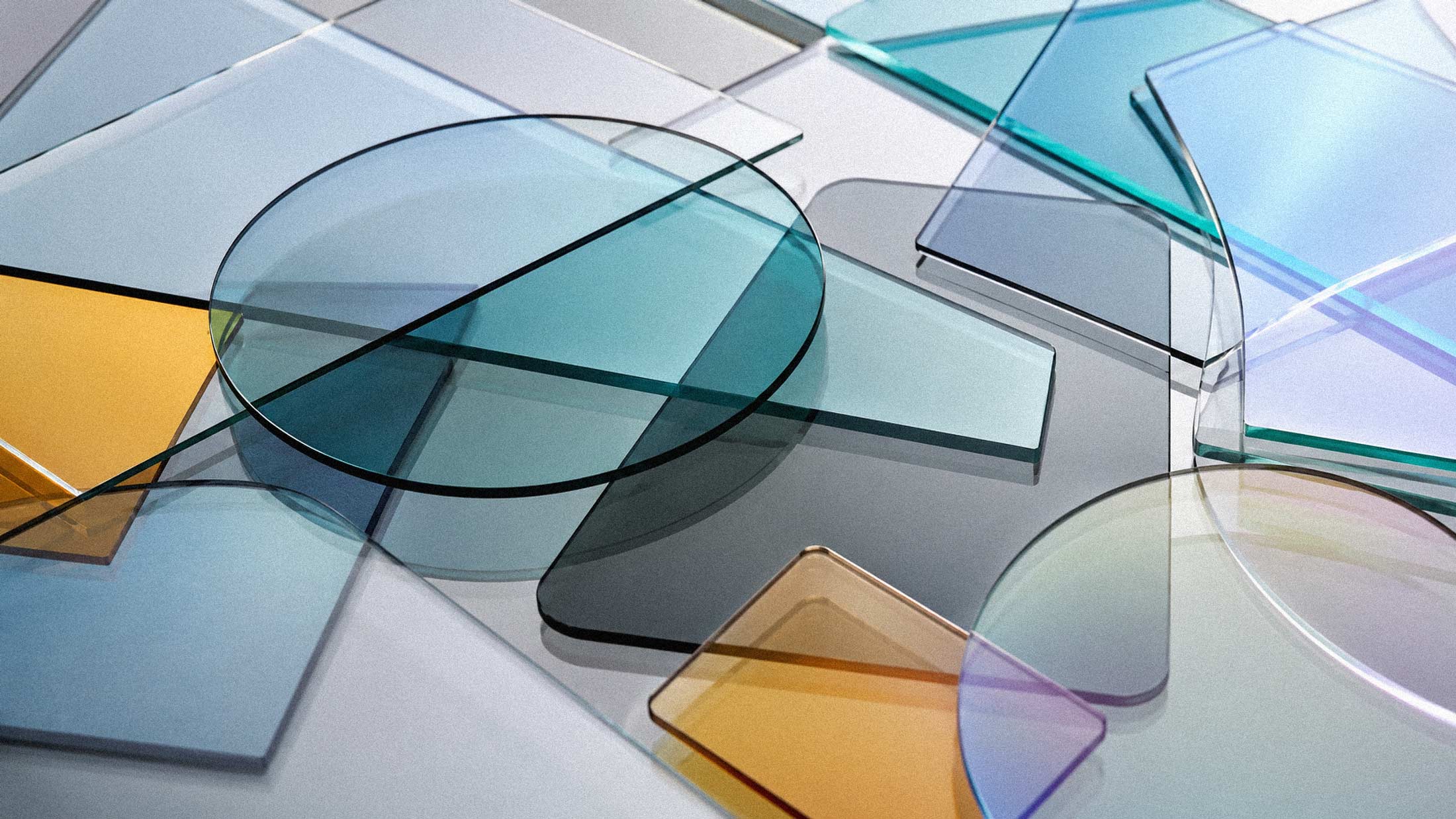
There are companies that pivot to meet the moment, and then there is Corning. The 175-year-old materials science company has spent over a century and a half refining the same core competency: manipulating glass, ceramics, and optical physics to solve problems that other firms cannot. That patient focus is now paying off as artificial intelligence infrastructure becomes the largest industrial buildout of the generation.
A Breakthrough Quarter
Corning's first-quarter 2026 results underscore the magnitude of the shift. Core sales grew 18% year-over-year to $4.35 billion, while core EPS increased 30% to $0.70. The company marked its eighth consecutive quarter of year-over-year sales growth. Operating margin expanded 220 basis points to 20.2%.
The drivers were clear: robust demand for generative AI products and a ramp in new solar products, with Optical Communications sales growing 36% and Solar up 80%. Two additional hyperscale customers signed large, long-term agreements similar in size and duration to the recently announced multiyear, up-to-$6 billion deal with Meta.
Glass That Goes Everywhere
What makes Corning unusual is not any single product line but the sheer versatility of its glass expertise. The company's innovation track record began with the development of a bulb-shaped glass encasement for Thomas Edison's incandescent lamp, a design so successful that by 1908 these glass envelopes accounted for half of Corning's business.
From there, the applications multiplied. Pyrex, introduced in 1915, offered unprecedented heat resistance for both scientific applications and kitchen use. In 1970, Corning scientists developed the first optical fiber capable of maintaining laser light signals over significant distances, paving the way for the commercialization of fiber optics in telecommunications. The company manufactured heat-resistant windows for every manned American spacecraft from Mercury through the space shuttle.
The consumer electronics era brought Gorilla Glass, the chemically strengthened cover glass that became the default material for smartphone screens. Although not called Gorilla Glass at the time, it was brought into commercial use with the launch of the iPhone in June 2007, then formally unveiled in February 2008. Corning has been one of the main suppliers to Apple since working with Steve Jobs in 2007 to develop the original iPhone. By 2020, Gorilla Glass had been featured on 8 billion devices created by over 45 OEMs.
The AI Infrastructure Pivot
The company's optical communications division is now its fastest-growing business, and for obvious reasons. Modern AI workloads require hundreds of thousands of AI accelerators working in concert and moving data at unprecedented scale. The only way to meet bandwidth and latency requirements for such deployments is to use optical fiber.
To meet the computational demands of generative AI, customers now require a new fiber-rich backend network to connect GPUs. As a result, networks require over 10 times more optical fiber compared to legacy server racks.
The hyperscalers have taken notice. In January, Corning and Meta announced a multiyear, up to $6 billion agreement to accelerate the buildout of advanced data centers in the United States. Corning will supply Meta with its newest innovations in optical fiber, cable, and connectivity solutions, and will expand manufacturing capabilities across its operations in North Carolina, including a significant capacity expansion at its optical cable manufacturing facility in Hickory.
Then came NVIDIA. The GPU giant is investing $300 million in Corning, enabling it to build three additional manufacturing facilities in the U.S. The long-term agreement will see new facilities in North Carolina and Texas to produce optical fiber for hyperscale data centers that deploy NVIDIA AI hardware. As a result, Corning will increase its U.S. optical connectivity manufacturing output by a factor of 10 and expand domestic fiber production capacity by over 50%.
Why Glass Matters to AI
Corning CEO Wendell Weeks has noted that fiber replacing copper inside server racks is "inevitable" once the number of graphics processors in each rack climbs into the hundreds. At that scale, fiber optics become more economical and more power efficient. Corning has more than 1,000 pending and granted patents worldwide related to data center applications, with more than 100 filed in the last 12 months.
This positions Corning at a structural advantage. Corning invented the first low-loss optical fiber more than 50 years ago, and no competitor has matched its manufacturing scale or vertical integration in specialty glass. The company holds a 10.4% market share as the world's largest maker of optical cables.
Corning's capabilities are versatile and synergistic, allowing the company to evolve to meet changing market needs. Today its markets include optical communications, mobile consumer electronics, display, automotive, solar, semiconductors, and life sciences.
The company revised its segment reporting structure in Q1 2026. Corning created a Glass Innovations segment, combining its former Display and Specialty Materials segments. That consolidation reflects an internal bet that glass mastery, not product categories, is the durable competitive moat.
What Comes Next
Corning is targeting a $30 billion annualized sales run rate by 2028, driven in large part by growth in its photonics business. Management guides to approximately $4.6 billion in core net sales for Q2 2026, framing the quarter as part of a multi-year growth trajectory.
The risk, of course, is concentration. Three hyperscalers now anchor much of Corning's forward pipeline. But for a company that built Edison's lightbulbs, ground the mirror for the Palomar telescope, and put glass on every smartphone screen, customer concentration is a familiar challenge. The 175-year track record suggests they know how to navigate it.