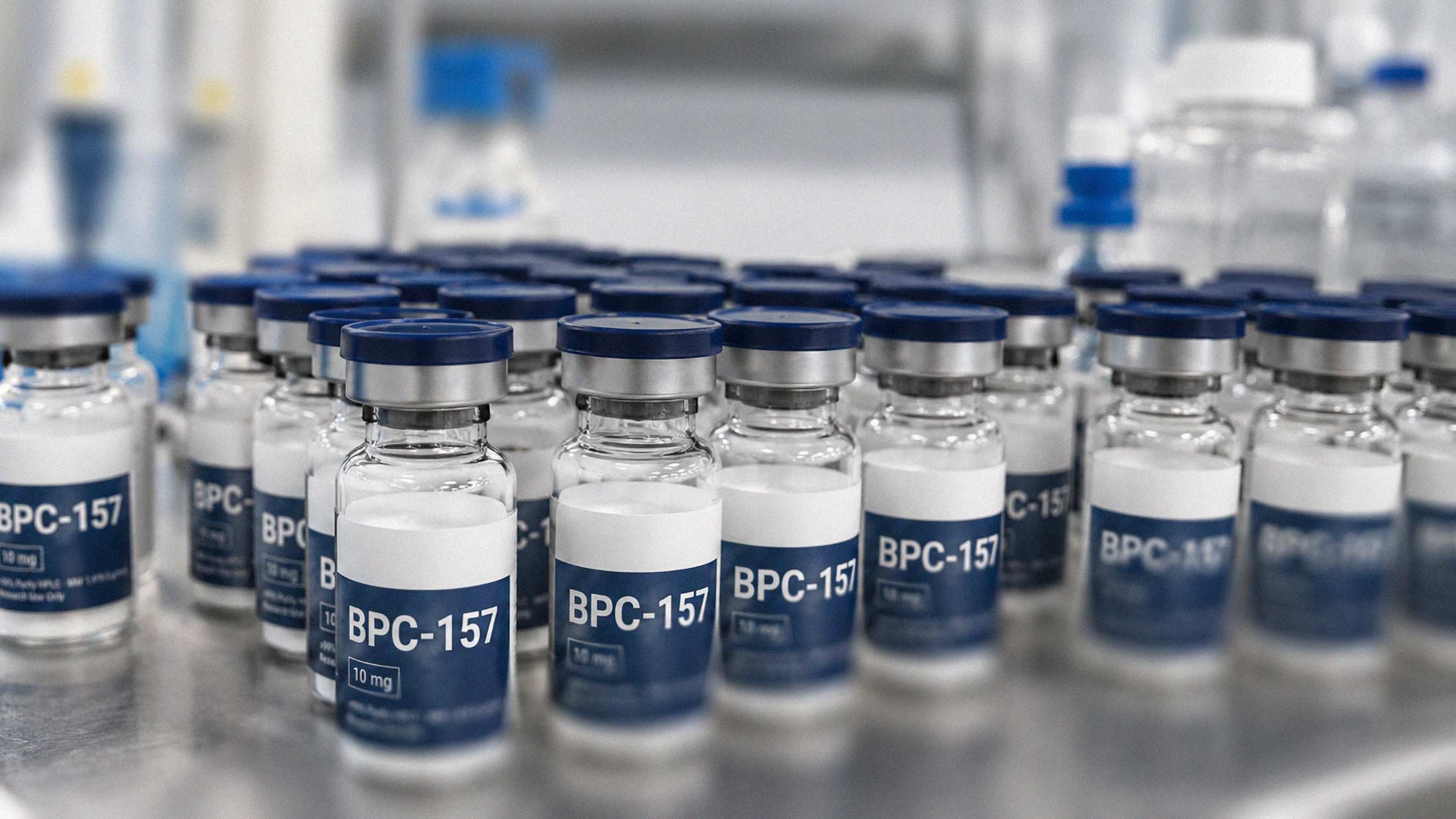
On July 23, the FDA's Pharmacy Compounding Advisory Committee voted to recommend easing restrictions on four peptides that have gained a devoted following among athletes, longevity seekers, and patients with chronic inflammatory conditions. The 8-6 votes for BPC-157 and KPV, along with favorable recommendations for TB-500 and MOTS-c, represent a significant pivot in how the federal government approaches these compounds.
The outcome is notable because FDA scientists' own analyses did not support easing restrictions on any of the four peptides considered Thursday. The advisory committee disagreed. If the FDA ultimately accepts the panel's recommendations, licensed compounding pharmacies would gain a formal legal pathway to produce these compounds for patients with valid prescriptions.
What These Peptides Actually Do
BPC-157, or Body Protection Compound-157, is a 15-amino-acid peptide originally isolated from human gastric juice. In preclinical models, it has shown effects on tissue injury, inflammatory bowel disease, and central nervous system function. The compound has a favorable safety profile, with few reported side effects in the available literature. But here is the gap that critics point to: BPC-157 has been tested in roughly 30 humans, compared to the hundreds of thousands of patients evaluated in GLP-1 drug trials.
TB-500 is a synthetic version of the active region of thymosin beta-4, a protein found in nearly every human cell. It promotes tissue repair by regulating actin, a structural protein central to cell movement. Research suggests it accelerates wound closure, supports tendon and ligament recovery, and reduces inflammation by dampening NF-kB signaling. The FDA reviewed TB-500 specifically for wound healing applications.
KPV is a tripeptide fragment of alpha-melanocyte stimulating hormone. It works by entering cells and interfering with the NF-kB pathway, which serves as the master switch for inflammatory gene expression. Research indicates it reduces pro-inflammatory cytokines like TNF-alpha, IL-6, and IL-1 beta, without broadly suppressing immune function the way corticosteroids do. Early clinical and preclinical data suggest it may help in colitis, dermatitis, and other inflammatory disorders. It can be administered orally, topically, or by injection depending on the target tissue.
The Regulatory Background
In late 2023, the FDA placed 19 widely used peptides on its Category 2 restricted list, effectively barring compounding pharmacies from preparing them. On February 27, 2026, HHS Secretary Robert F. Kennedy Jr. announced that approximately 14 of those peptides would be reclassified. The formal removal from Category 2 took effect on April 23, 2026.
But removal from the restricted list is not the same as approval. None of these peptides are FDA-approved drugs. The July 23-24 PCAC meeting was convened to evaluate whether they should be added to the 503A Bulk Drug Substances List, which would give compounding pharmacies a clear legal framework to work with them.
The process remains slow. Even with a favorable advisory committee vote, the FDA requires formal rulemaking before compounding pharmacies can act. This is the beginning of a regulatory pathway, not the end.
The Case for Cautious Optimism
Critics have raised legitimate concerns. The panel that voted on these peptides included several members with ties to the peptide industry, and some voted explicitly citing "medical freedom" rather than clinical evidence. One committee member said he voted yes because he was "disappointed at how incomplete the data was." That is not how most drug evaluations are supposed to work.
But the argument for regulated access also has merit. When compounds remain in a gray market, patients buy from unregulated international suppliers with no quality controls. A physician at one clinic who voted yes framed it directly: "As a physician, I have to make sure that I'm keeping patients as safe as possible." Pushing these compounds entirely underground does not accomplish that.
What this regulatory shift may enable is a more structured environment for clinical research. If compounding pharmacies can legally produce these peptides, and physicians can legally prescribe them, the path to rigorous human trials becomes more practical. The preclinical data on BPC-157, TB-500, and KPV is genuinely interesting. BPC-157 has shown pleiotropic effects in models of tissue injury and regenerative medicine. TB-500's mechanism of promoting cell migration and angiogenesis is well-characterized. KPV's targeted modulation of inflammation offers a different profile than blunt-force NSAIDs or steroids.
None of this means these compounds are proven therapies. It means they may deserve the chance to be studied properly. A regulatory framework that allows supervised access while demanding more data collection could strike a balance between patient autonomy and scientific rigor.
The FDA is not bound by the advisory committee's recommendations. A final decision on whether to add these peptides to the 503A list will come later, following the formal rulemaking process. For patients and clinicians watching this space, the honest summary is that access may be coming, but it is not here yet.