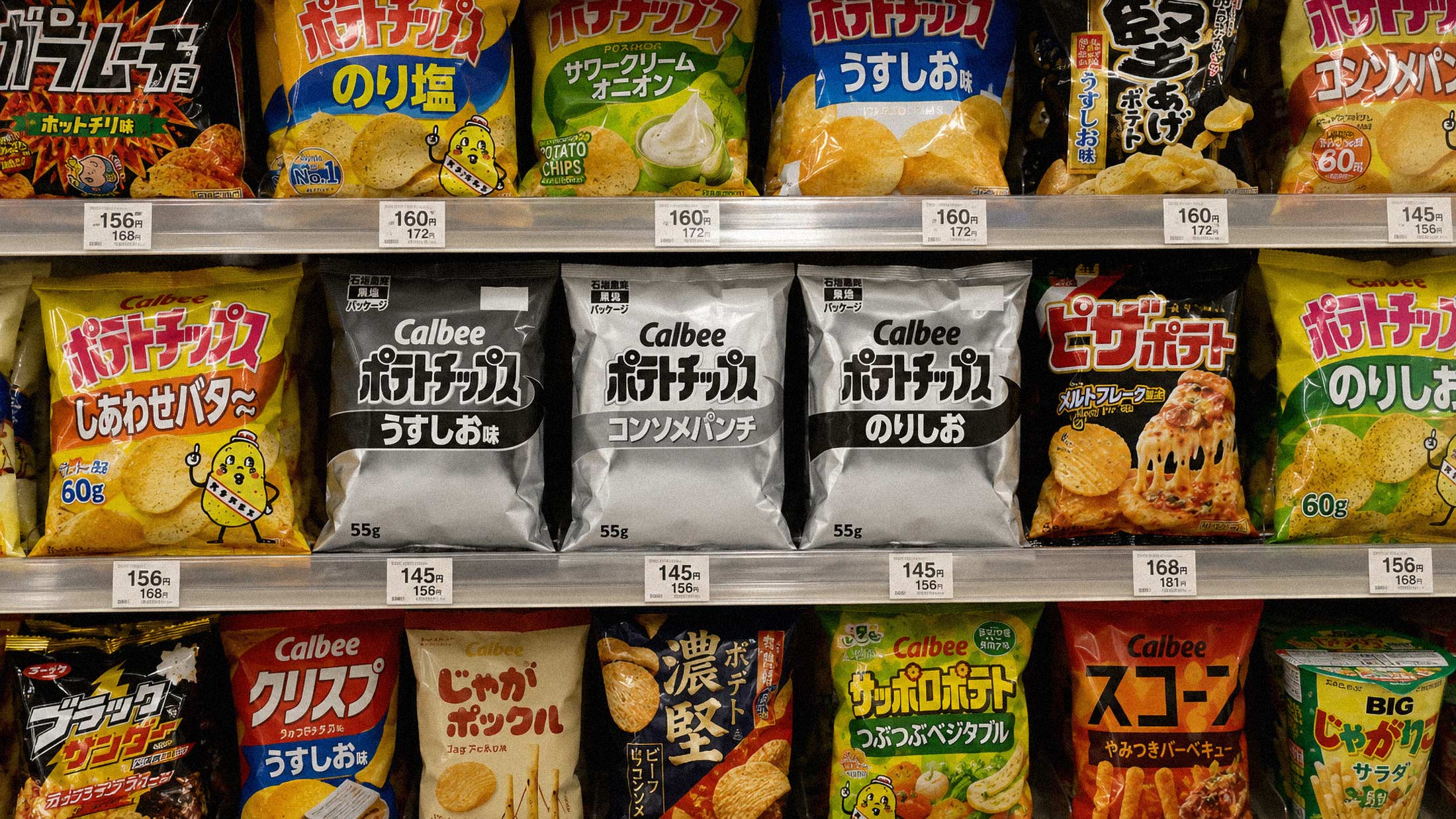
When a war breaks out halfway around the world, you expect fuel prices to spike. What you might not expect is for your snack food packaging to change color.
Reports from Japan indicate that food and beverage manufacturers are forgoing package printing as the naphtha shortage cascading from the Middle East conflict disrupts everything from plastics to inks. According to Nikkei Asia, companies are weighing whether to ship products in unprinted packaging or suspend sales entirely. A recent survey found that 44% of Japanese food and beverage manufacturers are experiencing operational disruptions from naphtha supply instability.
One beverage company has already decided to suspend container printing for 15 lactic acid beverage items starting late May, covering both its own brand and contract manufacturing for major retailers. The company considered hand-applying stickers as a workaround, but concluded it was impractical at production scale. Nikkei predicts that cases of unprinted packaging will increase rapidly after May.
The Invisible Supply Chain
The disruption traces back to the Strait of Hormuz, which has been effectively choked off since the escalation of conflict in late February 2026. The Middle East supplies the majority of Asia's naphtha, a petrochemical feedstock that feeds into everything from polyethylene packaging to the solvents used in printing inks.
As Ink World Magazine reports, major ink manufacturers including Sun Chemical, Flint Group, and INX International have all announced price increases citing raw material volatility and logistics disruptions. Shipping reroutes via the Cape of Good Hope are extending transit times by 10 to 14 days, and war-risk insurance premiums have risen sharply.
The Japanese government has responded with emergency measures, and South Korea has similarly moved to ease regulatory requirements for companies that cannot update packaging in time. Food importers and distributors facing difficulty with country-of-origin labeling will receive grace periods of up to six months.
Second-Order Effects Hiding in Plain Sight
Supply chain disruptions in tech and manufacturing often remain invisible to consumers. When a semiconductor shortage delays a product launch by six months, the only evidence is an updated press release. But packaging sits on store shelves. A bag of chips printed in grayscale instead of full color is a visible artifact of geopolitical chaos.
These second-order effects are rippling through industries far from the obvious impact zone. The same naphtha shortage affecting packaging is driving up prices for stretch film used to secure cargo, plastic food containers, and even garbage bags. LG Chem, South Korea's largest chemical company, temporarily shut down a naphtha cracker at its Yeosu complex in March before scrambling to import emergency supplies from Russia.
The Japan Times reports that food prices are set to rise this summer as a direct result. Corporate research firm Teikoku Databank found that 77% of Japanese food and beverage companies use naphtha-derived materials in their containers or packaging. One in four companies surveyed said they would struggle to maintain normal business operations if the shortage continues.
The packaging on your snack food has become an unexpected barometer of global stability. It turns out the distance between a shipping lane in the Persian Gulf and a convenience store shelf in Tokyo is shorter than anyone thought.