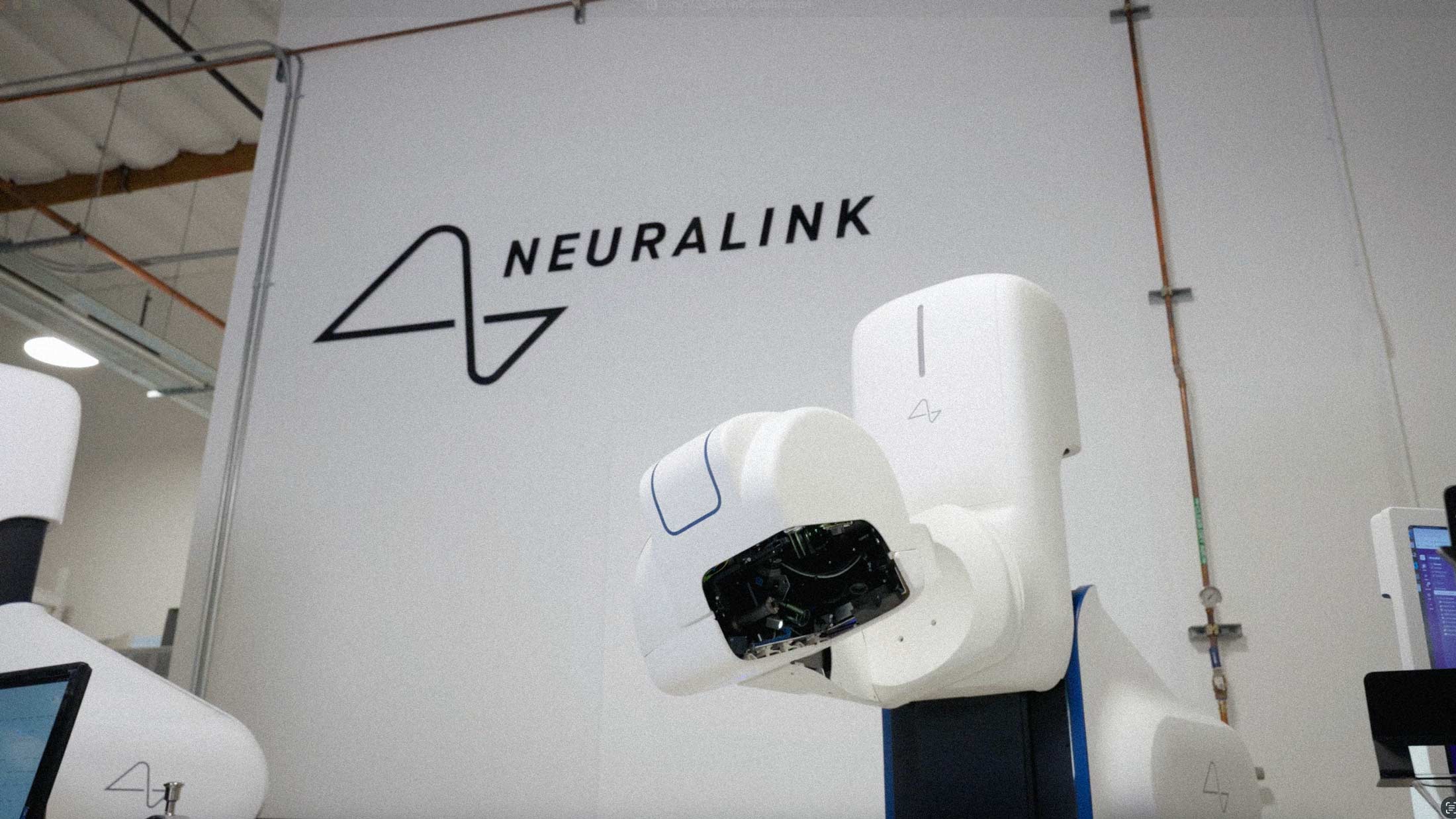
Neuralink's latest video on X shows what the company calls the most difficult part of getting a brain-computer interface into a human skull: a needle, thinner than a human hair, grasping and inserting electrode threads directly into brain tissue. Neuralink, the neurotechnology company founded by Elon Musk in 2016, is betting that by manufacturing these needles in-house using laser ablation, it can turn what was once a delicate, time-consuming neurosurgical step into something standardized and scalable.
The needle grasps and inserts each electrode thread of our implant into the brain.
— Neuralink (@neuralink) May 8, 2026
We've built the technology to produce these needles in-house, using lasers to mill features invisible to the naked eye. pic.twitter.com/29cvtLjlXo
The video features Andrew Yates, a mechanical engineer at Neuralink, walking viewers through the manufacturing floor. The message is clear: these needles are milled using lasers to create features invisible to the naked eye. According to technical documentation the company has shared previously, the laser cutting process has been optimized to reduce needle production time from 22 minutes to 6 minutes, while improving yield from 58% to 91%.
What the Robot Actually Does
The R1 surgical robot is Neuralink's answer to a fundamental constraint in brain surgery: neurosurgeons are rare, their time expensive, and the task of threading hair-thin electrodes into brain tissue is nearly impossible to perform by hand at the precision required. The robot's insertion needle is made from a 40-micrometer diameter tungsten-rhenium wire, electrochemically etched to a 24-micrometer tip. It moves on five axes, guided by eight optical coherence tomography cameras and advanced scanners that navigate brain tissue in real time.
The next-generation system reportedly completes thread insertion in just 1.5 seconds per thread, a dramatic improvement over the 17 seconds required by earlier models. The robot can now reach depths exceeding 50mm from the brain's surface, allowing access to previously unreachable areas. Neuralink claims the updated system is compatible with 99% of the global population, addressing earlier limitations around skull anatomy variations.
Through the Dura Without Removing It
One significant advancement: the robot can now insert threads through the dura mater, the tough outer membrane protecting the brain, without surgeons needing to cut it away. Musk described this as "a big deal" in a December 2025 post on X. Earlier procedures required dura removal, which created complications when the protective layer regrew and adhered to brain tissue, making explant surgeries difficult.
The latest needle design can pierce through nine layers of dura totaling three millimeters in benchtop testing. For context, that exceeds anything expected in a human patient.
Scaling to Mass Production
Neuralink announced 21 participants in its clinical trials as of February 2026, with plans to expand to several hundred by year's end. The company raised $650 million in Series E funding, valuing it at roughly $9 billion. It has expanded manufacturing capacity at a new Austin, Texas facility, with over $16 million invested specifically for producing brain chips and surgical equipment branded under the Telepathy product name.
The question of what happens inside neural systems remains as important for brain-computer interfaces as it is for AI models. Neuralink's N1 implant records neural activity through 1,024 electrodes distributed across 64 threads. Each thread is composed mostly of polyimide with thin gold or platinum conductors. The device records brain signals, processes them through onboard machine learning, and transmits commands wirelessly via Bluetooth.
Concerns Remain
Medical experts continue to raise questions about long-term biocompatibility. The brain recognizes implants as foreign objects and forms protective scar tissue, a process called glial scarring. Over time, this can degrade electrode performance, potentially requiring surgical revision. Neuralink engineers are testing new materials and coatings to extend implant longevity, though the company has not disclosed specific timelines for these improvements.
The first patient, Noland Arbaugh, experienced thread retraction after surgery, where some electrodes pulled away from brain tissue and stopped reporting data. Flexible polymer circuits may eventually help address such challenges across multiple robotics and medical applications. Neuralink says it has resolved this issue in subsequent patients.
Competitors are not standing still. Synchron has implanted its minimally invasive Stentrode in around 10 patients, while Precision Neuroscience and Blackrock Neurotech are advancing their own clinical programs. The brain-computer interface market is projected to reach $400 billion, creating what may be the most competitive neurotechnology landscape in history.
Neuralink's Blindsight implant, designed to restore vision for people who are completely blind, is scheduled for its first patient trial in 2026. The device stimulates the visual cortex to create perceptions of light and shapes. It received FDA Breakthrough Device designation in September 2024.