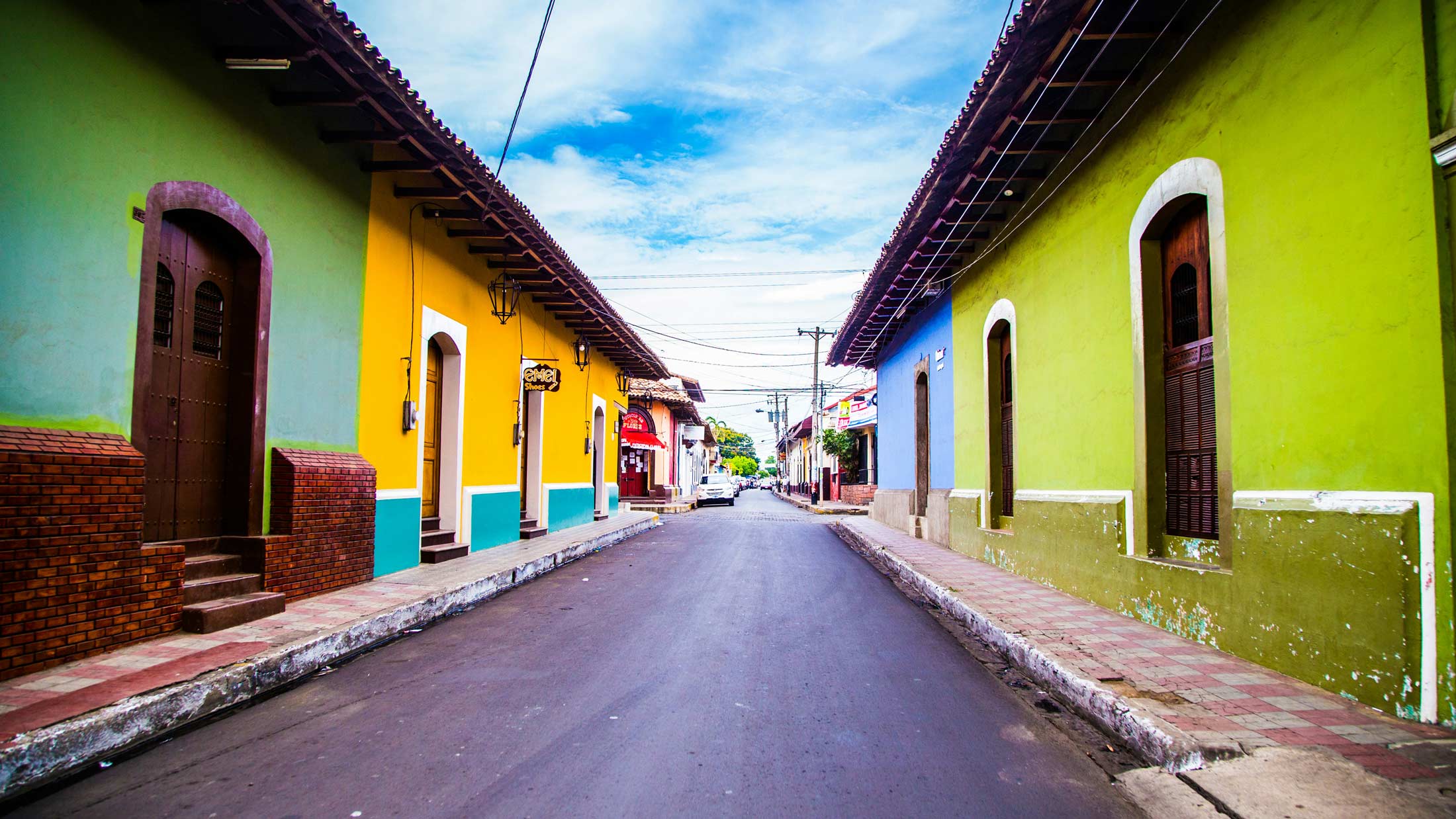
Nicaraguan President Daniel Ortega has made explicit what has been implicit for years: the Central American nation will no longer hold elections. Speaking at an event commemorating the 47th anniversary of the Sandinista Revolution in Managua on Sunday, Ortega declared, "There will be no more elections here for them to try to seize the government, to seize power."
The 80-year-old president, who has governed Nicaragua since 2007 following an earlier term in the 1980s, said he would work with the party-controlled National Assembly to erect a "wall" of laws against opponents.
The announcement came after 61 days without a public appearance, a prolonged absence that had fueled speculation about Ortega's health and political standing. He provided no implementation details, though the political infrastructure for permanent one-party rule has already been constructed through constitutional changes that took effect last year.
The Anatomy of a Closing
Nicaragua has been in a severe political crisis since April 2018, when the government responded to anti-government protests with a crackdown that left more than 300 people killed and over 2,000 injured. What began as demonstrations against a social security reform became an existential challenge to Ortega's rule. His response was to accelerate the dismantling of independent institutions.
In the 2021 presidential election, the government jailed the main opposition candidates and claimed 76% of the vote in a contest the United States and other governments refused to recognize. Constitutional reforms approved in early 2025 eliminated the separation of powers, extended the presidential term from five to six years, and elevated Ortega's wife, Rosario Murillo, from Vice President to "Co-President." The couple now controls virtually every lever of state power, including the armed forces and judiciary.
The UN Human Rights Council has accused the Ortega-Murillo government of transforming Nicaragua "into an authoritarian state" while systematically violating human rights.
Civil Society in Ruins
The organizational capacity that might have resisted this consolidation has been methodically destroyed. Since 2018, the government has forcibly closed more than 5,600 nongovernmental organizations, including humanitarian groups, religious institutions, medical charities, and universities. In August 2024 alone, 1,500 NGOs were shuttered in a single day. Thousands of Nicaraguans now live as refugees in Costa Rica, Spain, and the United States.
The Inter-American Commission on Human Rights has concluded that Nicaragua "has become a police state" with "no system of checks and balances, since all institutions respond to the decisions of the executive branch."
The Regional Shadow
Ortega's announcement cannot be separated from broader hemispheric dynamics. In his speech, he condemned the U.S. military intervention in Venezuela in January 2026, when American forces captured Nicolás Maduro and extracted him to face drug trafficking charges in New York. "They killed the entire security detail stationed there, most of whom were Cubans," Ortega said. "It's monstrous."
The Venezuela operation has cast a long shadow over leftist governments in the region. For Ortega, the message is clear: Washington may use force against leaders it considers illegitimate. The elimination of elections removes even the pretense of electoral legitimacy that Maduro had clung to, but it also removes a potential trigger for international intervention.
ACLED analyst Tiziano Breda offered a more prosaic interpretation: "Ortega and Murillo are evidently afraid at the idea that the slightest political opening could create the conditions for dissent to manifest." Rather than stage another rigged election, they have simply eliminated electoral competition.
The Limits of Sanctions
Since 2018, the United States has imposed asset-blocking sanctions on dozens of Nicaraguan officials and entities. The Treasury Department has targeted the gold sector, telecommunications regulators, and military intelligence officials. The State Department has imposed visa restrictions on more than 1,400 government officials.
Nicaragua's response has been to pass laws declaring foreign sanctions null and void on its territory, threatening to suspend operations of any company that complies with them. The regime has deepened ties with Russia, its leading arms supplier, and expanded cooperation with China.
Sunday's announcement is unlikely to trigger new Western action. The policy toolkit has largely been exhausted. European attention has drifted elsewhere. And the Trump administration's approach to the hemisphere has prioritized military action against strategic targets over sustained pressure campaigns.
Opposition figures in exile interpreted Ortega's words as confirmation of what they already knew. Juan Sebastián Chamorro, one of the presidential hopefuls jailed before the 2021 election, said the president aspires to a single-party system inspired by China. The Costa Rica-based group Nicaragua Nunca Más noted that the Sandinista Front has become a party with no real opposition within the country.
The ceremony itself told a story. Unlike previous years, no foreign leaders or their representatives attended the July 19 event. Ortega and Murillo appeared isolated, surrounded only by senior officials from their "co-presidency" and a military parade featuring Soviet-made equipment. The crowd consisted largely of state employees, many of whom had reportedly been pressured to attend.
Nicaragua is now, functionally, a family dictatorship in a hemisphere where the consequences for that designation have become unpredictable.