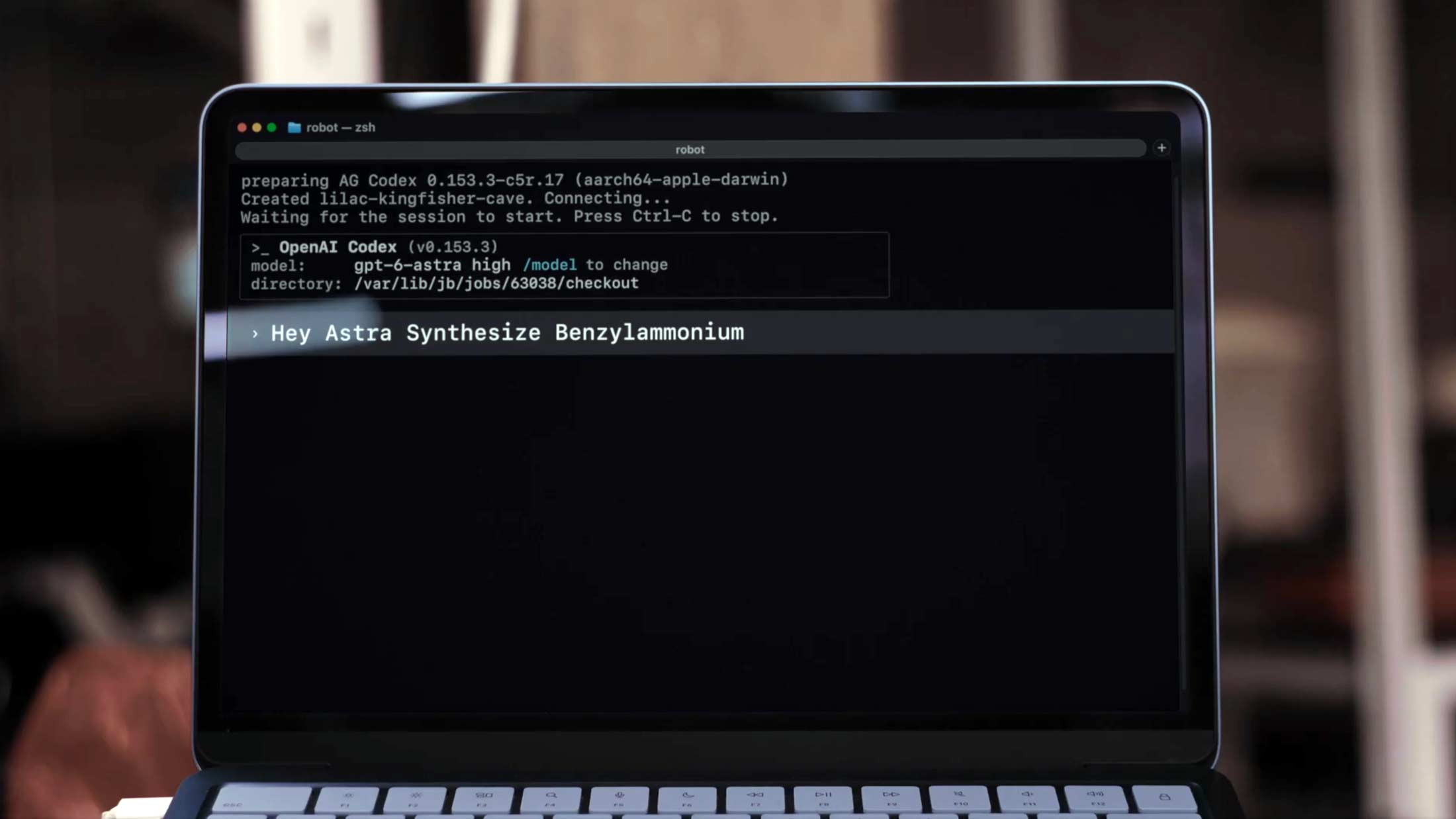
On September 21, OpenAI announced that an internal model it began training on August 28 has resolved more than 100 long-standing open problems across most areas of mathematics, in addition to a claimed proof of the Navier-Stokes existence and smoothness problem, one of the seven Millennium Prize Problems tracked by the Clay Mathematics Institute.
The company has published no proofs, no list of the problems, and no outside verification. The claim rests entirely on OpenAI's word.
The Navier-Stokes Claim
The Navier-Stokes problem, formulated for the Clay Mathematics Institute by Charles Fefferman in 2000, asks whether the three-dimensional incompressible Navier-Stokes equations always have smooth solutions, or whether those solutions can break down into singularities. The prize carries a $1 million reward. OpenAI says its system found an analytical proof showing fluid flows can develop singularities in finite time, addressing one of the four alternatives in Fefferman's formulation that would count as a resolution.
According to multiple reports, OpenAI's internal effort used around 10,000 coordinating AI agents working for 88 hours. The computational costs have been estimated in the millions of dollars. OpenAI has stated it does not intend to claim the prize money.
The Clay Mathematics Institute has not awarded anything. Martin Bridson, the institute's president, called the announcements "exciting" but stressed that the institute's rules require a proposed solution to be published in a peer-reviewed outlet, to receive general acceptance in the global mathematical community, and to have been published for at least two years before any consideration. That clock has not started.
A Dispute Over Credit
The announcement collided almost immediately with prior work by NYU mathematics professor Tristan Buckmaster and Anthropic researcher Levent Alpöge. The pair had been working on related results and achieved a breakthrough on August 15. Buckmaster published a statement on September 7, one day before OpenAI's announcement, alleging that information about his and Alpöge's progress had been passed to OpenAI and that the company's internal effort was triggered by rumors of their work.
Buckmaster further alleged that during negotiations with OpenAI's Sébastien Bubeck, he was offered a role in writing up the proof on condition that Alpöge be dropped from authorship because Alpöge works at Anthropic. Buckmaster refused. "All I had to do was throw Levent under the bus," Buckmaster said.
Bubeck has called the allegations "false and inflammatory." OpenAI's most careful statement stopped short of a full denial: "While unlikely, we cannot rule out that de-identified data derived from their usage of our products helped improve our models." That hedge matters because Buckmaster and Alpöge did their work using OpenAI's Codex tool, which by default can train on user data unless a user opts out.
25 Fields Medalists Respond
On September 11, Terence Tao, the UCLA mathematician widely considered the foremost living pure mathematician, published a statement titled "A Severe Misalignment of AI in Mathematics" co-signed by 25 Fields Medalists. The signatories span nearly half a century, from Pierre Deligne (1978 Fields Medal) to Yu Deng (2026). The statement accused AI companies of rushing publications that lack complete proofs or proper citations and warned that mathematicians "will no longer dare to make their research directions public" for fear that AI systems will race to claim credit.
Tao had previously been a proponent of AI-assisted mathematical research. His concern centers on a scarce resource: open problems. "The indiscriminate use of powerful solution-extraction tools can achieve the immediate short-term goal of solving problems at hand," Tao wrote, "but at the cost of sustaining the ecosystem for the next wave of progress."
An Advisory Group Without Authority
Alongside the September 21 announcement, OpenAI disclosed the formation of an Advisory Group on Mathematics and Artificial Intelligence, hosted at Princeton's Institute for Advanced Study. Its nine members include Timothy Gowers, Edward Witten, and Martin Hairer, all Fields Medalists or among the most cited researchers in their fields.
The group's mandate is narrow. It will advise on assessing the significance of new results and coordinating their release. Members are unpaid and can speak publicly. But OpenAI explicitly stated the group will not be responsible for advising it on how to pace internal mathematical progress. The separation is deliberate: governance of disclosure, but no brake on the research itself.
James Maynard, a mathematician at Oxford who also signed the Fields Medalists' statement, put it plainly in an NPR interview: "It wasn't about only answering this problem, it was about the human understanding behind it."
What This Means in Practice
For working mathematicians, the implications are immediate and practical. The traditional model of mathematics research involves sharing partial results, discussing directions openly, and building incrementally on others' work over years or decades. If AI systems can now take a whisper of a direction and produce a solution faster than humans can publish, the incentive structure inverts. Secrecy becomes a survival strategy. Collaboration becomes risky.
For the rest of us, the Navier-Stokes equations govern how fluids move. They matter for weather prediction, aircraft design, blood flow modeling, and ocean currents. A genuine breakthrough in understanding these equations would have engineering consequences. But a proof without explanation, produced by a system no one outside OpenAI can inspect, is not immediately useful to engineers. The knowledge sits locked inside a black box.
OpenAI VP Liam Fedus, responding to Tao's concerns, said he agrees that mathematics cannot be reduced to just the answer. He also said today's AI capabilities should not limit future possibilities. That framing is telling. OpenAI sees this as a demonstration of frontier capability, a benchmark. Whether it is also knowledge that humans can use remains, for now, an open question.
The Leiden Declaration, a petition opposing AI-assisted research practices, had passed 3,900 signatures at last count.