For most of solar's commercial history, photovoltaic meant silicon: heavy, rigid, brittle panels bolted to racks and rooftops. That paradigm served NASA's early spacecraft and, later, utility-scale farms in sun-drenched deserts. But it has also constrained where solar can go. Now a new category of lightweight, flexible films is approaching commercial viability, and the implications reach far beyond rooftops.
From Soap Bubbles to Roll-to-Roll Manufacturing
Active Surfaces, an MIT spinoff founded in 2022, is at the forefront of this shift. The company's approach is built on more than a decade of MIT research and uses perovskite, a class of materials that are cheap, abundant, lightweight, flexible, and highly efficient at absorbing and emitting light.
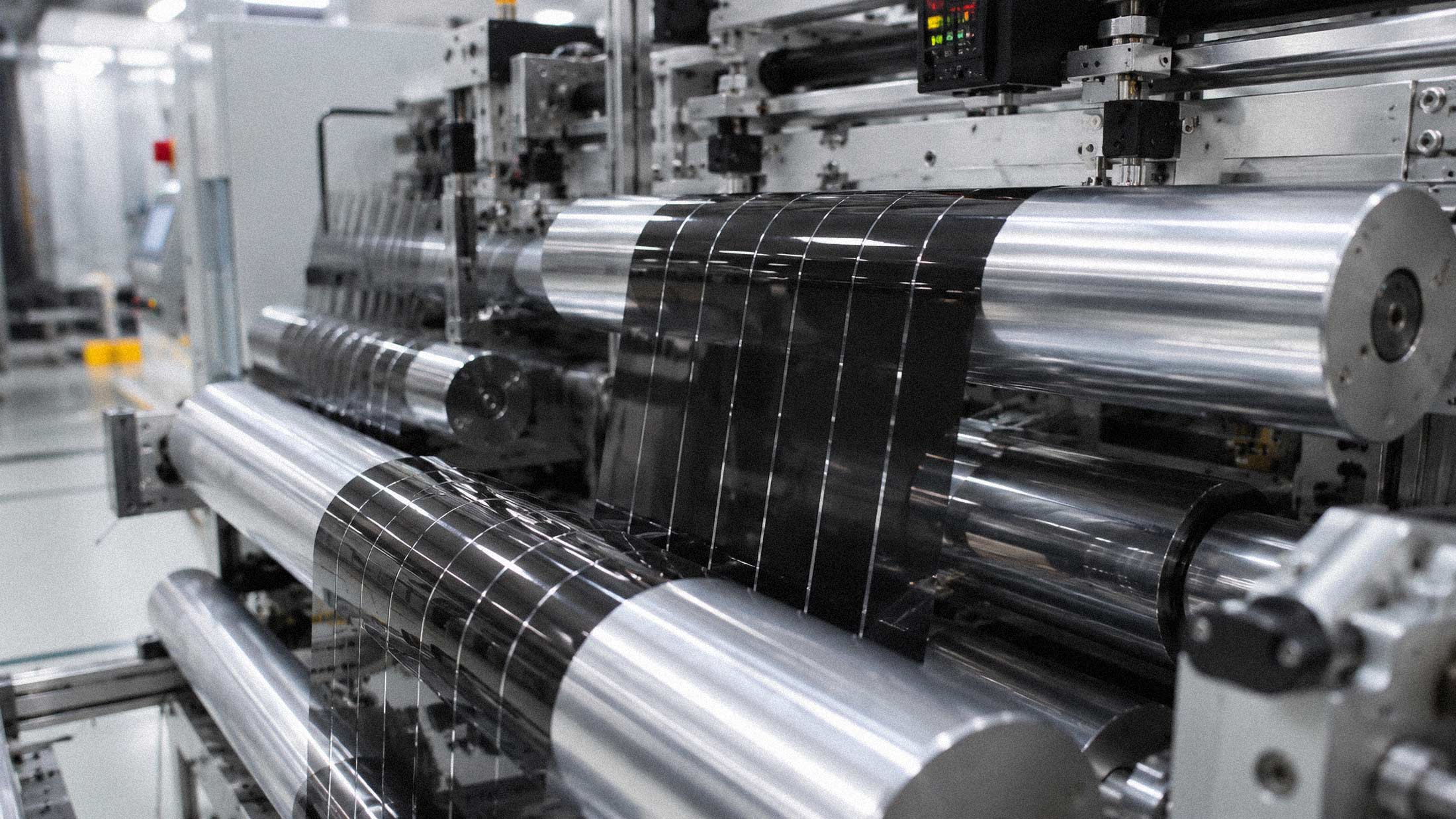
Active Surfaces deposits a novel, non-toxic perovskite ink onto thin substrates and protects the cells with a quick-drying epoxy. The finished modules are as thin as 15 microns. These films generate as much electricity as an equivalent surface area of silicon cells, and confirmed durability under realistic temperatures and humidity exceeds 10 years.
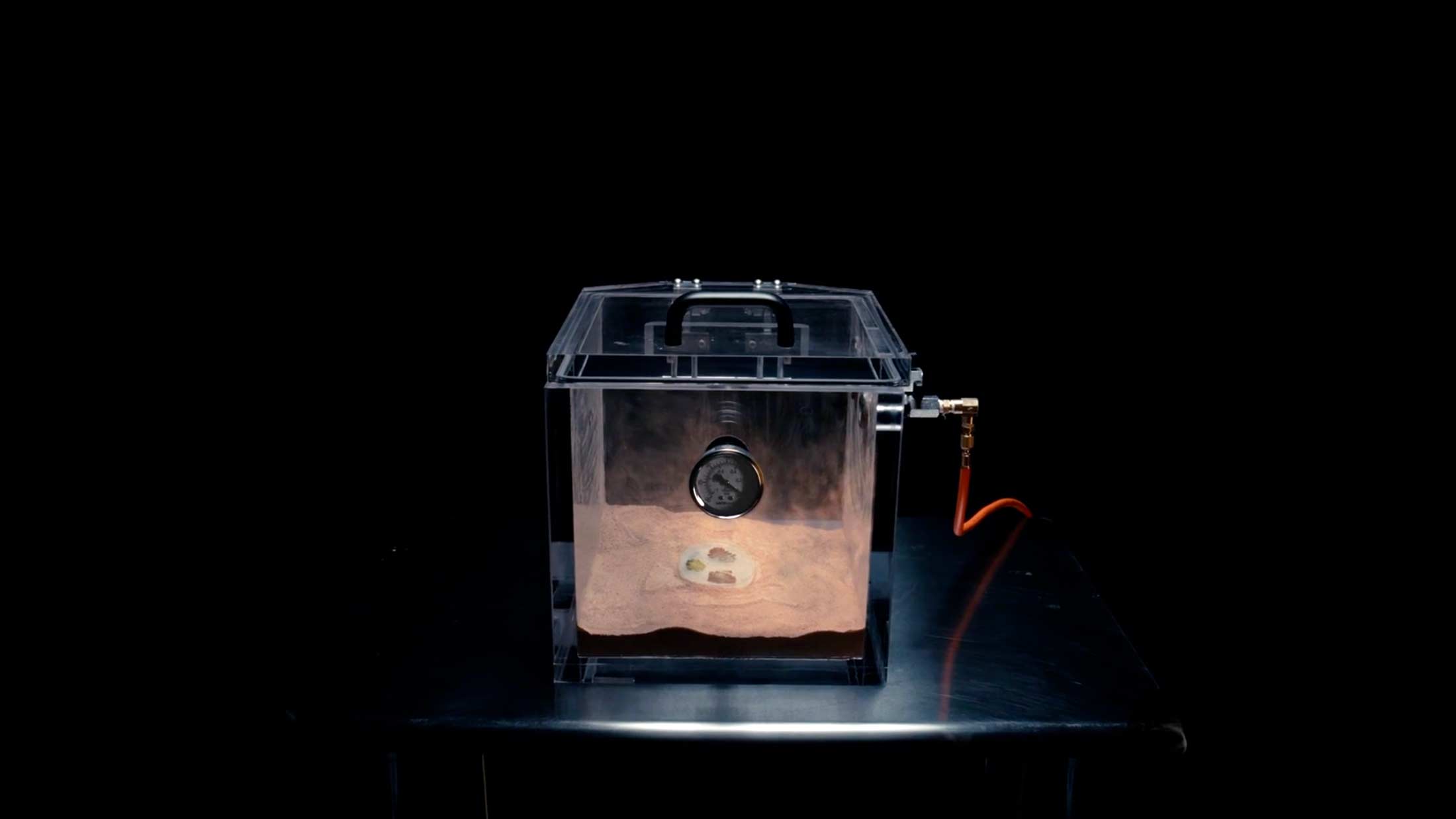
The technology's origins trace back further. In 2016, MIT's Organic and Nanostructured Electronics Lab created thin-film cells so lightweight they could sit on top of soap bubbles. In 2022, the same group introduced flexible organic thin-film solar cells integrated into fabric. Active Surfaces represents the commercial translation of that research.
The Installation Cost Problem
The real disruption here is economic. For a conventional rooftop silicon system, as much as half of the total cost is often for installation. According to co-founder Richard Swartwout, traditional panels "are not designed to be easily deployed through general construction."
Flexible films change that equation entirely. "A flexible solar panel is much more in line with how we do construction," Swartwout explains. "To put it on your roof, you would just unroll it like you would unroll an asphalt shingle or a roofing membrane."
Within the last two years, Active Surfaces has raised more than $10 million in venture capital, corporate investment, and state grants, including an October 2024 investment from Tokyo-based utility Electric Power Development Co. The company opened a 5,000-square-foot manufacturing development facility in Woburn, Massachusetts in 2024, where it is optimizing roll-to-roll printing equipment before scaling to commercial production.
The Efficiency Race
Perovskites have been the fastest-improving solar technology over the past decade. Laboratory-scale device efficiencies have increased from 3.8% in 2009 to 27% in 2025 for single-junction cells, and in silicon-based tandem configurations, to 34.85%, exceeding the maximum efficiency achieved in single-junction silicon.
Flexible variants are catching up. A Nature paper published earlier this year demonstrated a certified 33.6%-efficient flexible perovskite/silicon tandem solar cell that retained 91% of its initial efficiency after 5,000 bending cycles and demonstrated exceptional damp-heat stability. That kind of mechanical resilience unlocks applications rigid glass panels simply cannot serve: curved rooftops, vehicle-integrated photovoltaics, and lightweight building facades.
The Scale of the Opportunity
In 2024, installed solar capacity worldwide exceeded 2 terawatts. Some experts believe that by 2050 the world will need 20 terawatts of installed capacity to meet rapidly increasing demand for electricity while reducing carbon emissions. A tenfold expansion cannot happen by repeating the playbook of the last two decades. The surfaces that could host solar generation vastly outnumber the surfaces that can support heavy, rigid panels.
The implications extend beyond energy infrastructure. Flexible solar films could power distributed IoT sensor networks, extend the range of electric vehicles, and supply off-grid communications equipment. The data center buildout driving AI's expansion is straining grids worldwide; distributed generation from every available surface could help relieve that pressure.
Thin-film solar technology was originally introduced in the 1970s by researchers at the University of Delaware. It has been around for more than four decades and has proved itself in applications that crystalline silicon cannot achieve. What is different now is that perovskite efficiency has reached parity with silicon while preserving the mechanical properties that make flexible deployment possible.
Active Surfaces is one of several companies racing to commercialize perovskite films. Oxford PV shipped its first 24.5% efficiency commercial modules to U.S. utility customers in September 2024. Hanwha Qcells achieved 28.6% cell efficiency and passed certification, with commercial production planned for 2026.
The technical risk has not disappeared. Perovskite stability under real-world conditions remains a concern, and scaling roll-to-roll manufacturing to gigawatt volumes is uncharted territory. But the direction is clear. The next phase of solar deployment will not look like the last one.