Wire electrical discharge machining has always been one of those capabilities that separated serious production shops from everyone else. Industrial WEDM systems run $125,000 to $150,000 new and occupy the footprint of a compact SUV. That price tag has kept the technology out of reach for small fabricators, prototypers, and makers who could genuinely use it. Rack Robotics thinks its Betta Wire can change that equation.
What Wire EDM Actually Does
For the unfamiliar, wire EDM removes metal without mechanical force. Instead of using a blade or bit, the method uses a thin, electrically charged wire to erode material with controlled sparks. The workpiece sits submerged in deionized water, which acts as a dielectric fluid. Electrical discharge machining obtains a desired shape by using electrical discharges. Material hardness is irrelevant to the process: you can cut hardened steel, titanium, Inconel, or any conductive material.
This matters because traditional CNC mills and lathes struggle with extremely hard materials and cannot achieve the internal corner radii that wire EDM handles routinely. Wire-cut EDM is typically used to cut plates as thick as 300mm and to make punches, tools, and dies from hard metals that are difficult to machine with other methods.
The Betta Wire is shipping soon! We're pleased to reveal the success of the first 4-axis, desktop, wire EDM machine.
It sure has been a while, but good things come to those who wait! This video includes a full 4-axis cut in 19mm, 6000-series aluminum.
Full blog post below 👇 pic.twitter.com/jO0ug1HuYnAdvertisement— Rack Robotics (@RackRobotics) May 14, 2026
The Betta Wire Approach
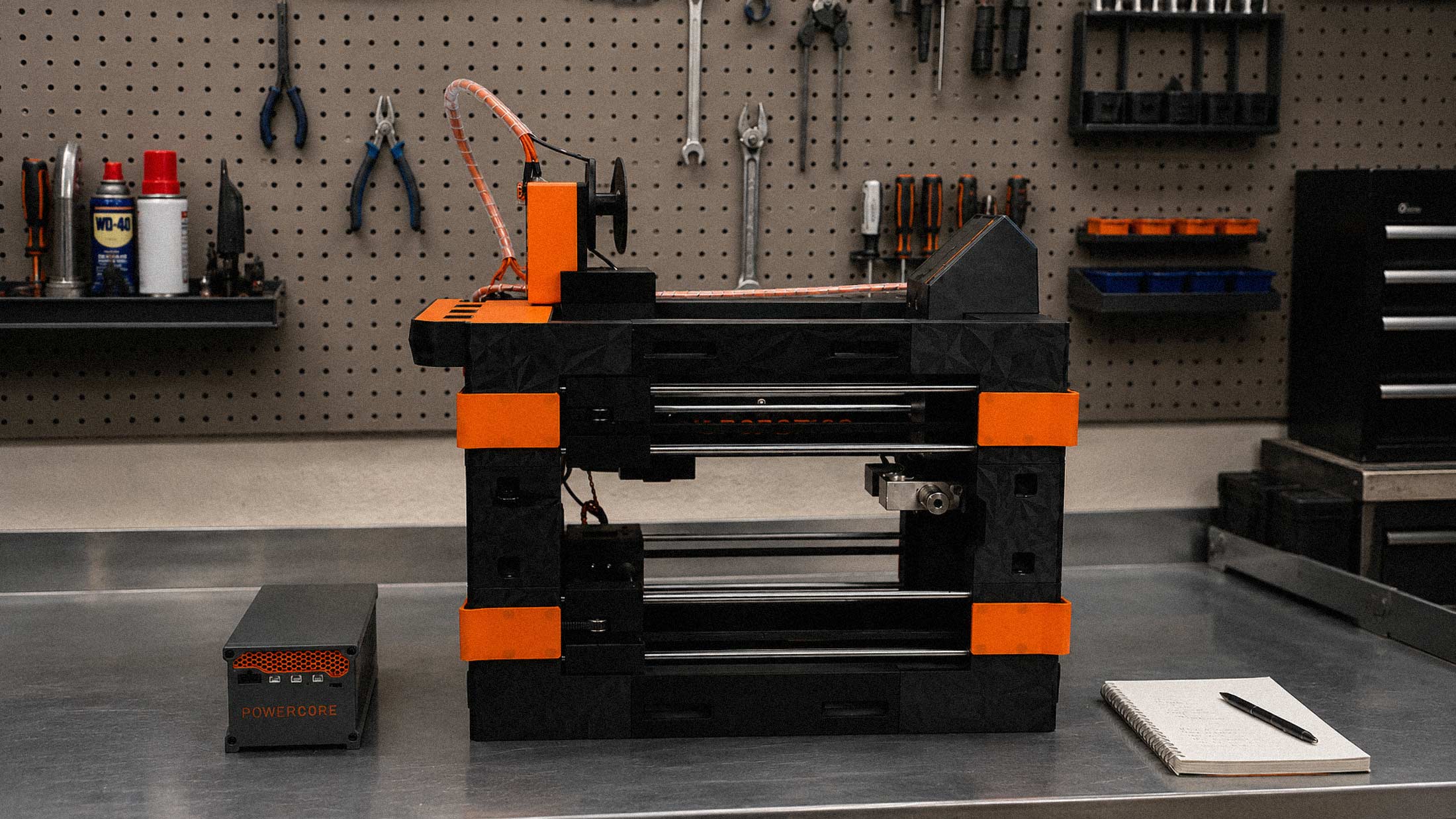
Betta-Wire V1.0 is an affordable, open-source wire EDM machine designed for enthusiasts that allows users to cut electrically conductive materials such as steel and aluminum without the need for expensive industrial equipment.
The machine's key innovation is its 4-axis capability. The Betta Wire is a dual coreXY machine where each toolhead is controlled by one coreXY system. Four motors allow movement in X, Y, U, and V axes, which permits cutting angled walls, tapers, and chamfers. That independent movement of upper and lower wire guides enables geometries that 2-axis cutters cannot produce.
The compact build area measures 100mm by 200mm, suitable for moderate-scale projects. Kinematic testing revealed the design can hit motion accuracy targets, with a goal of 50 microns and data suggesting it may do better.
The design has evolved significantly during development. A lot of thought went into keeping costs down. Rather than use expensive sealed motors, the engineers designed the double coreXY platform to keep motors out of the water bath using long drive shafts and sealed bearings. The original concept fit inside a 10-gallon aquarium, but Rack Robotics will be shipping assembled machines, as it turns out assembling them in-house requires less work than writing documentation and troubleshooting kits.
What It Can Cut
Running LinuxCNC, the machine is easy to set up and cuts everything from 2mm titanium to 16mm aluminum. Rack Robotics has demonstrated success with the Powercore V3 on difficult materials like half-inch AR500 steel. The company has validated test cuts in 4-inch thick aluminum.
Surface finish remains a consideration. WEDM actually cuts rough on a single pass compared to expectations; skim passes are normally required to improve surface quality. This is standard practice in professional shops and applies equally here.
Who This Is For
The Betta Wire targets a specific audience: makers and small shops who need to cut hard metals precisely but cannot justify industrial equipment. Knifemakers cutting blade profiles from hardened steel. Watchmakers producing custom components. Engineers prototyping stamping dies. Anyone making tooling or fixtures from materials that destroy conventional cutters.
Pre-orders have been filled and the company is no longer accepting new orders until initial batches ship and feedback comes in. The project is licensed under Creative Commons Attribution-NonCommercial 4.0, so the design files are available for those who want to study or modify the approach.
Industrial WEDM will remain the choice for production environments requiring speed, reliability, and support infrastructure. But for the hobbyist builders and small-batch fabricators who have long looked at wire EDM with envy, Betta Wire represents something new: access to a machining process that was previously gated entirely by capital.